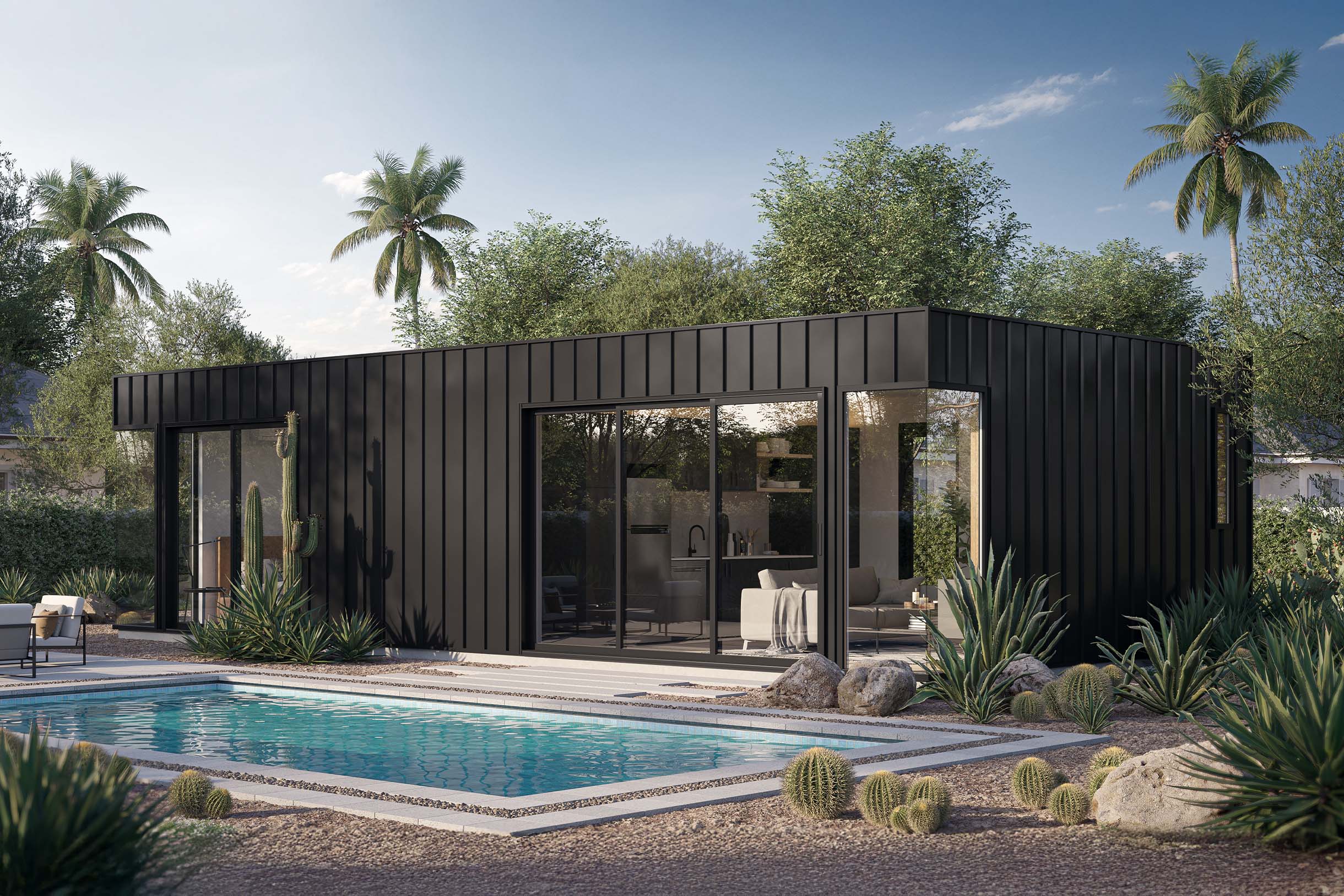
Modular home builders promise a kind of magic in the form of a home conjured in a factory, shipped to your lot like furniture from a catalog, assembled in weeks rather than months.
Of course, there are many reasons people go for this option, and we’ll never say a modular home is all-bad.
But the pitch from modular home builders sounds almost irresistible in our era of instant everything, while we’ve got a slightly more nuanced take.
It is an appealing story, one told with statistics about speed and savings that make the old ways of building seem almost quaint.
But as dreamy as it sounds, and as much as it may be the right fit for many people, some things just can’t be shipped.
There are times when permanence cannot be boxed, and that’s what we’re covering in this post.
And in Arizona, where the desert demands respect and the summer sun tests everything we build, there are good reasons why we can attest that traditional construction remains the wiser path almost all the time.
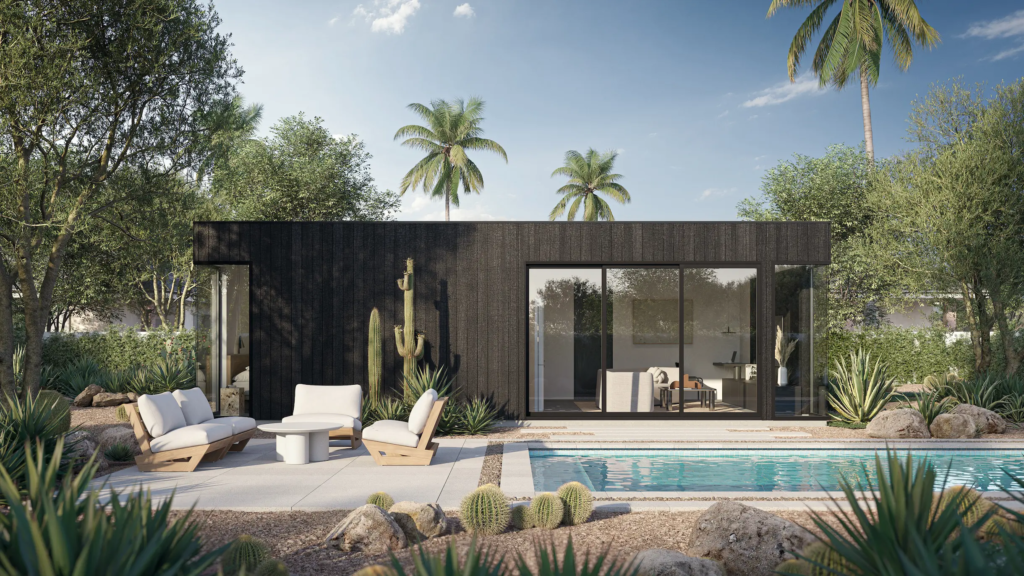
The Promise and the Fine Print
The modular home builders industry has grown substantially in recent years, with the global modular construction market reaching $89.44 billion in 2024 and climbing.
When modular home builders present their statistics, that’s a pretty compelling case, to be fair.
But market size is not the same thing as market wisdom.
Consider what Harvard’s Joint Center for Housing Studies found in 2025:
Home prices are up 60% nationwide since 2019, and sales have dropped to their lowest level in three decades.
The housing crisis is real, and the desire for faster, cheaper solutions is understandable too.
Still, the National Association of Home Builders reports that modular and panelized construction accounts for just 3% of single-family home completions, a decline from 7% in 1998.
Despite all the glossy promises modular home builders make about speed, efficiency, and cost savings, many homeowners still choose the traditional route.
It’s not that the marketing isn’t persuasive.
In fact, the opposite is usually the case.
But building a home tends to stir instincts that go well beyond spreadsheets and timelines.
After all, most people know someone who tried to shortcut the process and spent the next few years explaining why it didn’t quite work out.
According to Goldman Sachs Research, at least 3-4 million additional homes need to be built to address the housing shortage.
And most of those will be built the way homes have always been built.
The Financing Puzzle
Modular home builders can often encounter a problem because, even in this day and age, banks remain rather skeptical.
While modular home builders tout their speed advantages, the Modular Home Builders Association acknowledges that financing a modular home often involves additional steps and complications.
Many lenders view factory-built structures differently than site-built homes, sometimes requiring construction loans rather than conventional mortgages.
And that’s important on its own because a home is not just shelter.
In our view, it’s best to avoid thinking about what we build so reductively because it limits the possibilities of your build in ways you may not even conceptualize.
And it is often a family’s largest investment, for one thing among many, many others.
But that’s an important one.
So when you build with traditional methods, you’re creating something banks immediately understand, appraisers know how to evaluate without squinting, and future buyers will recognize for what it is: just a house.
Put another way, it’s a house, so it’s not this building that needs explaining at an open house.
It’s easy to understand.
The financing options for ADUs and guest homes look much the same as financing any other conventional structure, which is a meaningful advantage for Arizona homeowners trying to add real value to their property.
It’s familiar territory for lenders, and that familiarity tends to smooth the path:
The result is fewer raised eyebrows, fewer explanations.
And, on top of that, far less time spent convincing anyone that what you’re building is, in fact, a house.
Permitting
The world of permitting in Arizona can be described charitably as “complex.”
Every municipality has its own series of approvals, setbacks, and requirements.
And traditional construction methods are, quite simply, understood everywhere.
As Senate Bill 1415 has opened new doors for ADUs across Arizona, homeowners have discovered that the permitting process moves more smoothly when you are not explaining to planning departments why your home arrived on a truck.
Container homes, prefabricated units, and modular structures can attract extra scrutiny (or even outright resistance) in certain neighborhoods and municipalities across the Valley.
Traditional construction, on the other hand, sidesteps those complications altogether, and it fits in without causing a landslide of questions, hearings, or headaches.
We had a couple of clients, a retired couple in Scottsdale who wanted their daughter’s family nearby, who opted for our LIVE+ model specifically because, as they put it, they didn’t want to spend months arguing with the city about what counts as a real house.
The typical 8-month timeline for a traditionally built ADU includes permitting.
At MLC, that’s a process we tend to handle because we have spent years building relationships with local planning departments.
But essentially, while modular homes may seem on the surface like the easy option, it’s important to keep in mind that building a house isn’t just a material task.
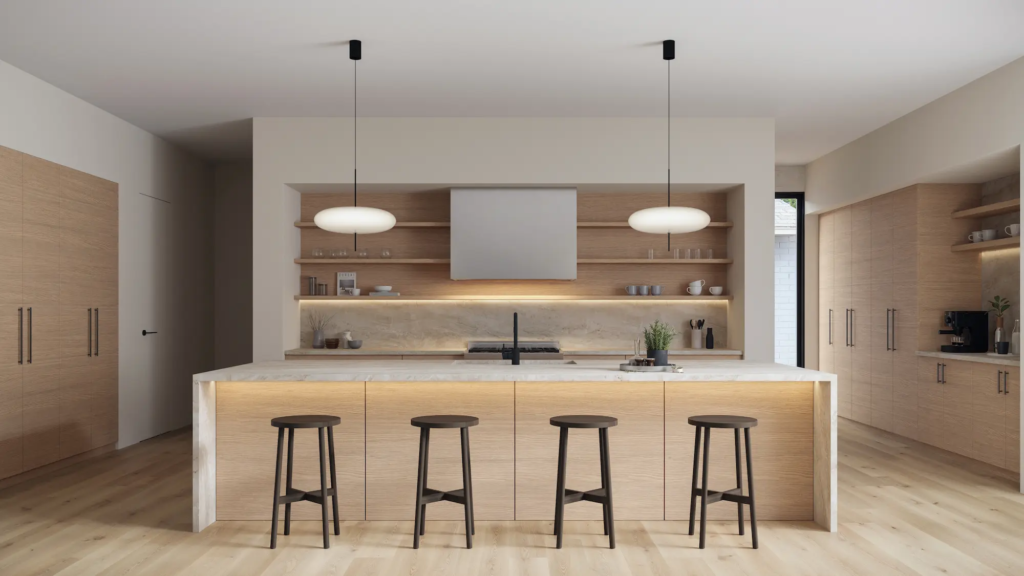
Questions of Quality
Modular home builders often claim factory construction produces superior quality control.
It is a reasonable argument in theory, and many modular home builders have genuinely improved their processes in recent years:
Controlled environments, standardized processes, no rain delays or scorching summer afternoons affecting the work.
But the best quality control is not going to happen in a factory, at least not in our experience.
At MLC, we know so well how that quality can only come from a builder who knows your land, understands your vision, and will still be answering the phone years after the final inspection.
That kind of relationship simply cannot be manufactured, and that’s the belief we hold firm beneath all we do at MLC.
The cost of building an ADU in Phoenix is a mark of not just materials and labor but also expertise, attention, and the peace of mind that comes from knowing every nail was driven under the Arizona sun on your actual property, by people who understand what that means and requires beyond a shadow of a doubt.
Property Value (The Long Game)
The U.S. Chamber of Commerce estimates a shortage of 4.7 million homes nationwide.
This deficit has driven up values across the board, but not all construction methods are made equal, nor do they benefit equally.
Traditional construction can bring value to your property in ways that modular building sometimes struggles to match.
When appraisers evaluate your home, they compare it to similar properties.
And similar, in most neighborhoods, means site-built.
A traditionally constructed guest home or ADU integrates seamlessly with your existing property.
It doesn’t look like an addition.
Instead, it looks like it was always meant to be there.
The ADU market has reached $18 billion globally as homeowners discover the potential of their existing lots.
And in Phoenix, where home prices hover around $480,000, adding a well-built, traditionally constructed ADU is, really and truly, a strategic investment, with all sorts of benefits that vary from person to person.
The Desert Asks A Lot
Arizona asks something of its buildings that many other places do not, and that’s because, as every resident knows well, summer temperatures routinely climb past 115°F.
On top of that, monsoon storms roll in fast, bringing flash floods and punishing winds, and the UV exposure is relentless, day after day.
Many modular home builders construct their units in factories hundreds of miles away, then ship them into the desert fully formed.
What that journey can’t account for are the small, stubborn realities of this climate.
Here, there’s soil that shifts, the way water actually moves across a lot when the rain finally comes, and the angle of the afternoon sun that turns one wall into a piping-hot oven on an especially sunny day.
Modular construction may gain efficiency on the factory floor, but it often gives up local adaptation along the way, so that’s the tightrope balance we’re constantly wanting to walk without falling.
And traditional construction, done on site, allows for real-time decisions.
These could include all sorts of things, like adjusting to soil conditions, drainage patterns, and the exact way your home will sit in the heat and light of an Arizona afternoon.
When you explore the differences between ADUs and tiny homes, it’s clear that an ADU built traditionally on your property is designed for that property.
In other words, not for a factory floor in another state.
The Right Reasons to Build
The National Low Income Housing Coalition’s 2025 report documents a shortage of 7.1 million affordable rental homes nationwide.
The National Association of REALTORS notes that households earning $75,000 annually can now afford only 21.2% of listings, so down from nearly half in 2019.
What these numbers show is that housing solutions are super important.
ADUs built for aging parents offer an alternative to assisted living that keeps families close.
Rental properties built on existing lots usher in income that can offset mortgage costs.
But these solutions work best when they are built to last, financed conventionally, and valued accurately.
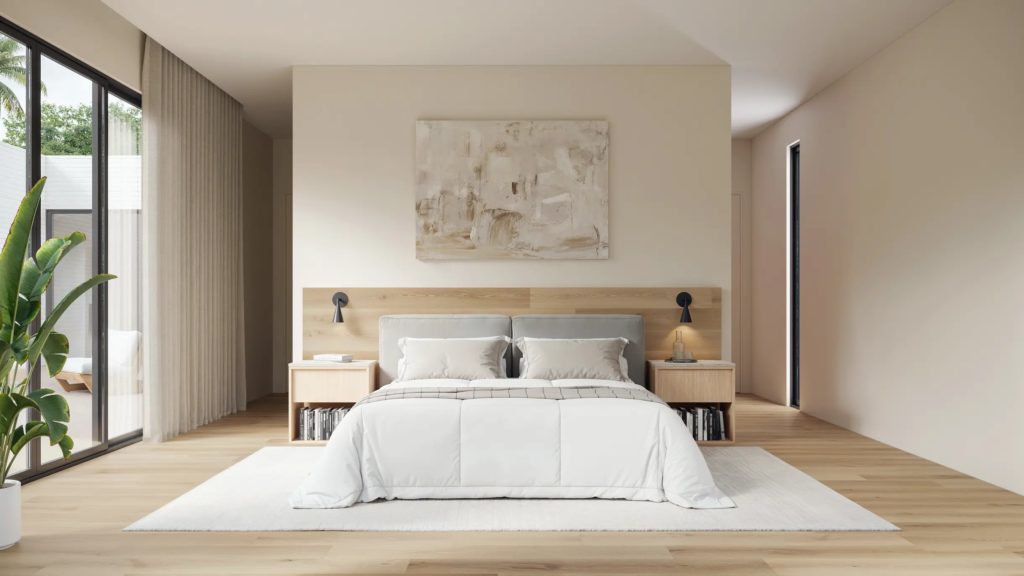
Where To From Here?
Some modular home builders will tell you that traditional construction is outdated, that the future belongs to factories.
And there’s reason to that rhyme, so perhaps it’s true.
But the future has not yet learned to replicate what a skilled craftsman can do on a sun-baked Arizona lot, listening to what the land tells them, adjusting for conditions that no factory floor could anticipate.
For now, that’s what we know with certainty.
With that in mind, getting your ADU quote is not supposed to be purely transactional, and it shouldn’t be.
In our minds, this is what should be the beginning of a conversation about what you want to build, why it matters, and how it might impact your life.
Whether you are considering a compact FLEX studio or a more spacious DWELL two-bedroom, the method is really important, with consequences that domino out in every direction.
The permanence matters, and the relationship matters too.
Modular home builders offer speed, while traditional construction offers something harder to quantify but easier to feel.
Even if it’s just the knowledge that your home was built where it stands, by hands that understood the ground beneath it.
At Minimal Living Concepts, we build ADUs and guest homes throughout the Phoenix metropolitan area using traditional construction methods, and we aim to build what we believe will last, in all senses.
If you’d like to learn more about our approach, you can check out our process or explore our pricing.
Or go ahead and schedule a call with us, and we’d be happy to chat about what you’d like to build, or you can fire away with any questions you may have.