Exploring Minimalist Living Concepts

Discover a world of inspiration for creating your dream custom home.
Explore our blog to uncover design ideas, construction insights, and expert tips for minimalist living.

ADU Plans | Minimal Living Concepts

ADU Plans: From Blueprint to Backyard Reality

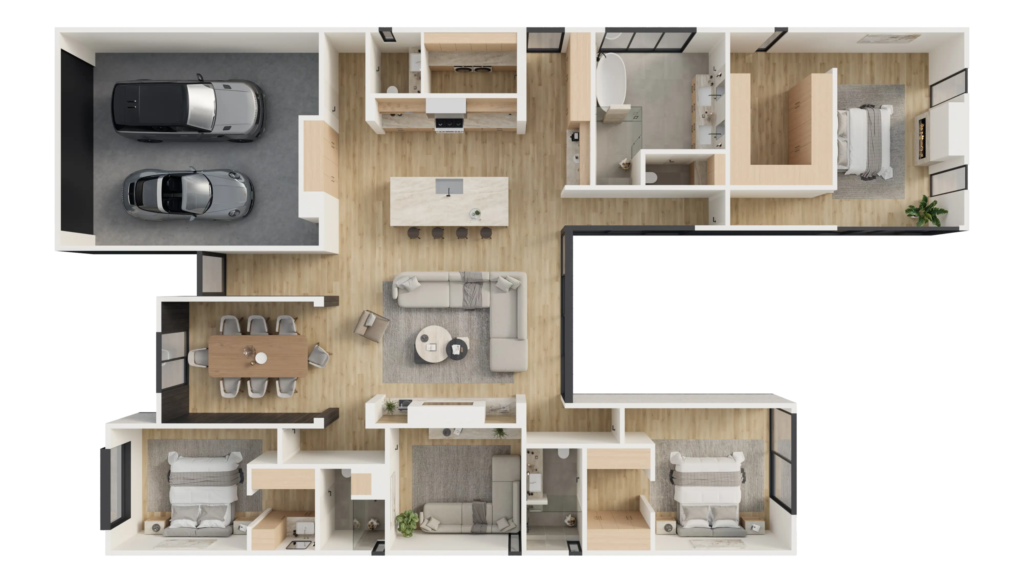
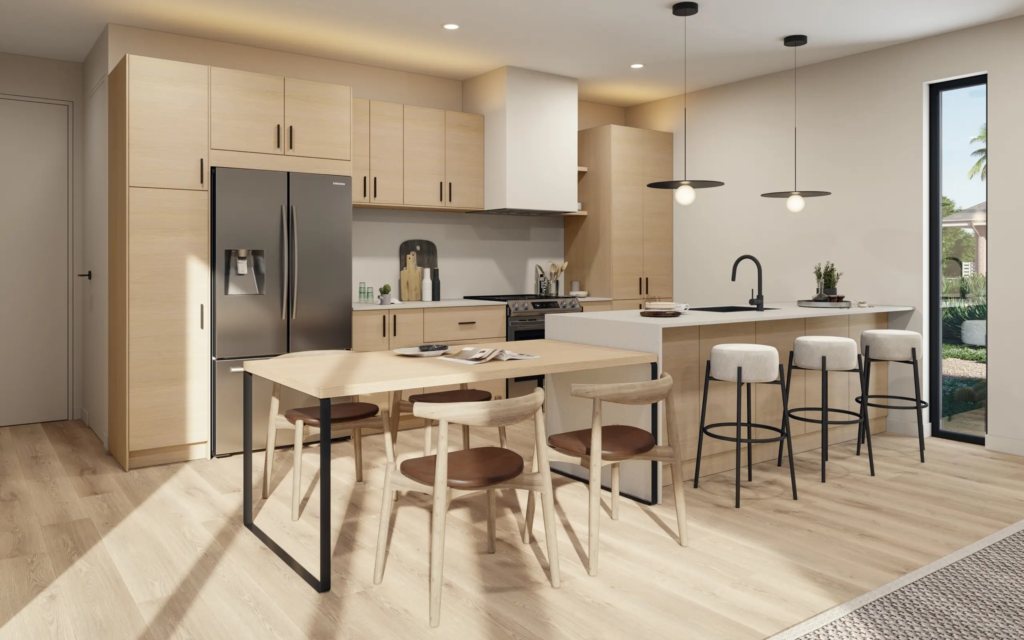
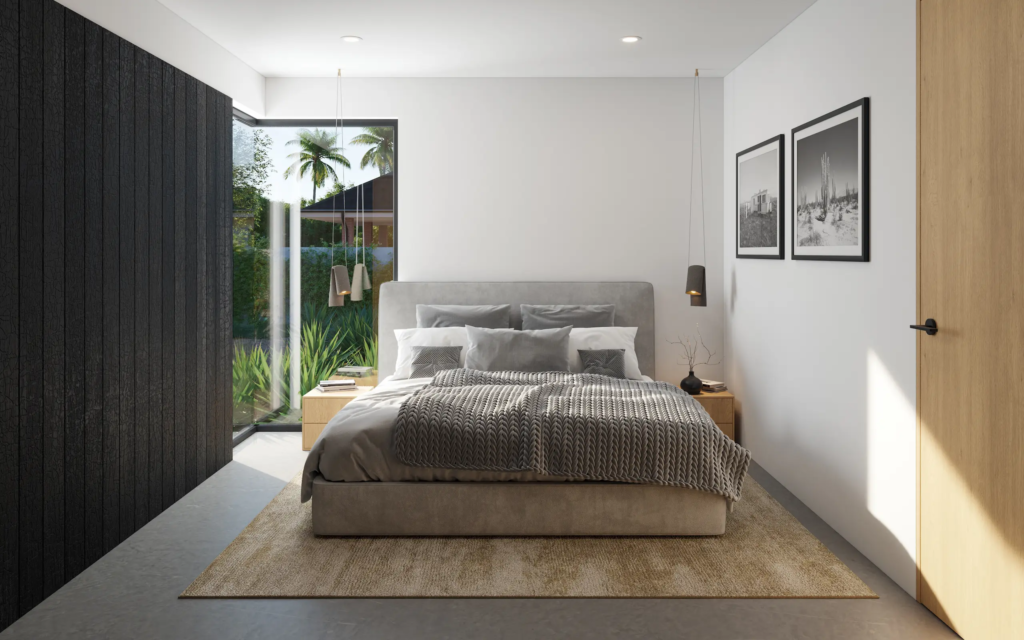
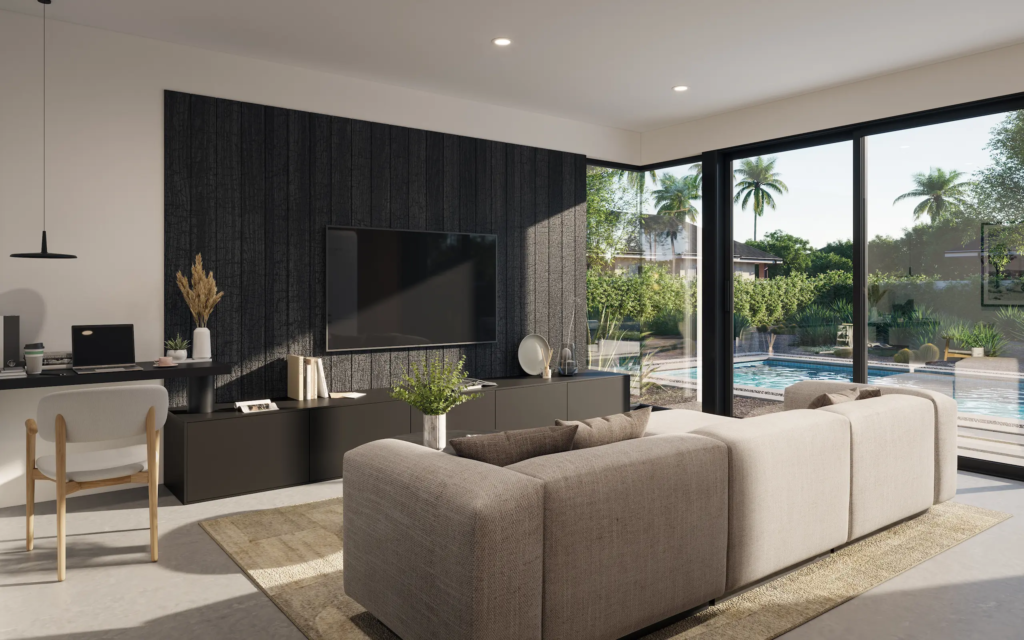
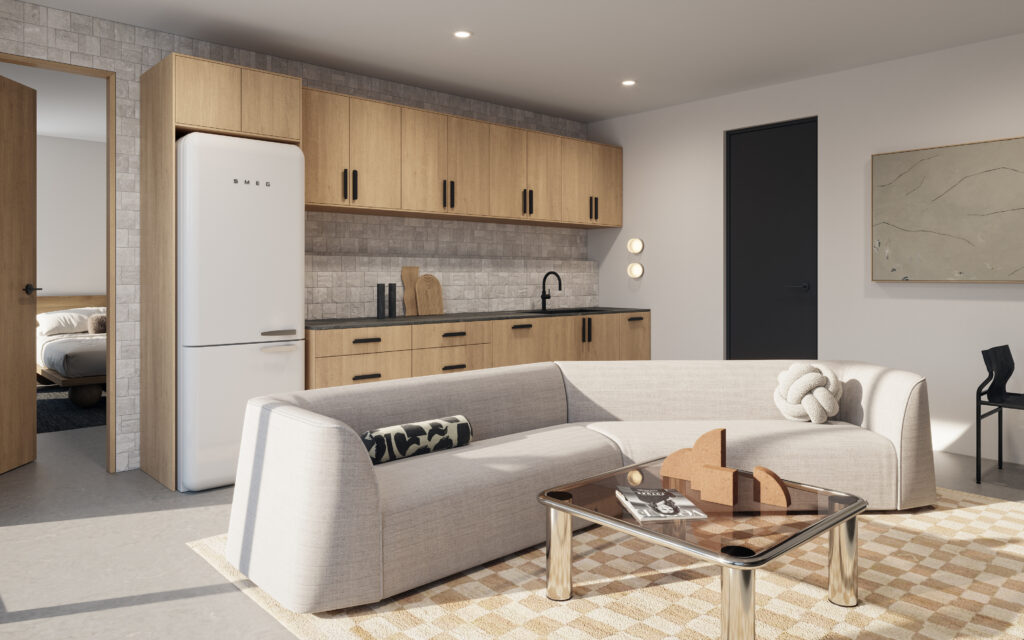
Picture this: I’m sitting at a client’s kitchen table on a gorgeous Phoenix morning, spreading out ADU plans, and watching their eyes light up with excitement. Then, those eyes immediately widen with concern.  “Wait, the bathroom door opens into the refrigerator?” Welcome to the gap between what looks good on paper and what actually works in real life. The ADU plan’s journey rarely begins with architectural drawings.  It starts with dreams, needs, maybe some Pinterest boards, and (let’s be honest) a few misconceptions about how 400 square feet actually functions when you’re living in it daily.  The ADU plans landscape has matured dramatically over the last few years.  And according to recent housing industry research, demand for auxiliary dwelling units continues accelerating as housing affordability challenges persist. But whether you build something you genuinely love, or something you merely tolerate, boils down to your ADU plans. So, what makes ADU plans actually work? Here’s what we’ve learned over the years at MLC.  Why Generic Templates Fall Short (Usually Spectacularly) Browse any online marketplace and you’ll find hundreds of ADU plans: Modern farmhouse studios, contemporary glass boxes, craftsman cottages with adorable board-and-batten siding.  They look fantastic.  Many are architecturally sound.  But the fundamental problem? They’re designed for everywhere, which means they’re optimized for nowhere. Generic ADU plans can’t know that your property gets brutal western sun from 3-7pm.  They don’t account for your neighbor’s two-story house that blocks northern light. They have no idea that mature mesquite trees cast perfect afternoon shade right where you’re thinking of building.  These contextual factors profoundly impact whether you’re running the AC constantly or enjoying natural cross-ventilation, whether you have privacy or feel perpetually exposed. I’ve watched homeowners purchase beautiful ADU plans online, excitedly submit them for permits, then discover their carefully selected design places the bathroom window directly facing the neighbor’s kitchen, positions the entrance where nobody naturally walks, or creates a structure that looks weirdly disconnected from their property’s character.  The cost of modifying generic plans often exceeds just investing in custom design from the beginning. Trust me on this one. Our approach to ADU plans and design starts with actually visiting your property before touching paper.  Where does morning sun enter?  Which areas get afternoon shade?  How do you currently move through your backyard?  These questions shape ADU plans in ways templates simply cannot anticipate. Site-Responsive Design (Where the Magic Happens) The difference between adequate and exceptional ADU plans often boils down to how thoughtfully they respond to your specific site. Solar orientation in Phoenix isn’t a nice-to-have. It’s make-or-break.  Our Flex studio design typically orients primary windows south or east, capturing gorgeous morning light while avoiding brutal western exposure.  Generic ADU plans position windows based on interior layout logic without considering actual sun paths across your lot.  The result?  You’re either running AC at full blast, or you’re feeling rather miserable.  According to the Department of Energy research, proper solar orientation can reduce cooling costs by 20-30%. One client we worked with had a stunning mature mesquite tree casting afternoon shade across the northwest corner, precisely where generic plans would’ve put a west-facing wall of windows.  We relocated glazing to capture the shade benefit while maintaining light quality.  The cooling cost difference?  About 25% lower than standard configurations.  That’s real money over years of ownership. And existing architectural relationships matter more than many people may imagine.  ADU plans should complement your main house without looking like a miniature clone.  We’ve developed approaches that offer contemporary interpretations working with traditional homes, while designs like the Dwell two-bedroom fit neighborhoods with more varied styles. Then, there are privacy considerations that require some careful attention in ADU plans.  Bedroom windows shouldn’t stare directly into neighbor’s living rooms.  Outdoor areas need screening.  Entry sequences should provide transitional space rather than opening straight into bedrooms.  I’ve seen poorly planned ADUs create neighborhood tension simply through thoughtless window placement. Finding Your Perfect Size ADU plans span a remarkable range, from cozy 300-square-foot studios to substantial 1,200-square-foot two-bedroom configurations.  Selecting the right scale involves balancing intended use, budget, lot coverage limits, and long-term flexibility. Studio configurations (300-500 square feet) work beautifully for home offices, guest rooms, or rental units.  Our Flex design exemplifies this, compact but carefully proportioned to avoid feeling cramped.  The trick in studio ADU plans is creating visual separation between sleeping, working, and living zones despite open layouts.  Strategic furniture placement or partial walls can define areas without requiring full partitions. One-bedroom plans (500-800 square feet) like our Live design provide genuine separation between sleeping and living areas, full kitchens, and bathroom facilities.  These work for older teens and young adults between life stages, aging parents needing independence, or rental scenarios attracting quality long-term tenants. And two-bedroom configurations (800-1,200 square feet) such as the Dwell approach small house territory.  These serve multigenerational scenarios or investors seeking maximum rental income from larger lots. The financial proposition shifts with scale.  Smaller ADU plans cost less to build but command lower rents.  Larger configurations cost more but attract stable tenants willing to pay substantially higher rates.  We explored this in our piece on ADUs for rental investors, where the math gets quite interesting. The Kitchen Question Whether and how to incorporate kitchens represents one of the biggest decisions in ADU plans. Kitchenettes (6-8 linear feet) work for spaces primarily used as offices or guest rooms. They let you get on with coffee-making, light meal prep, and refrigeration without consuming precious square footage.  These typically include apartment-sized appliances and minimal counter space. Full kitchens (10-15 linear feet) are for genuine independent living.  Our Live+ design incorporates full kitchen facilities that don’t feel compromised despite compact footprints.  And the secret is thoughtful appliance selection and creative storage solutions. Some ADU plans skip kitchens entirely, particularly for home offices or studios where occupants use the main house kitchen.  This saves $8,000-$15,000 in construction costs and simplifies permitting.  On the other hand, it limits rental potential and long-term flexibility. The kitchen
What Is a Casita? Minimal Living Concepts

What Is a Casita? Understanding the Southwest’s Most Versatile Living Space

Recently, I’ve been thinking about the conversations we have with Phoenix homeowners – the ones that start with square footage but quickly become about something deeper. A daughter wondering how to keep her aging mother close without sacrificing independence. A couple wondering whether they’ll have enough space in their home once the kids grow. A professional staring at their kitchen table-turned-office, wondering if working from home means never really leaving work. These are life problems that happen to have architectural solutions. The word “casita” means “little house” in Spanish, but that barely scratches the surface.  This centuries-old Southwestern tradition – guest quarters on haciendas, homes for extended family, spaces that kept people close while giving them room to breathe – has become one of the most compelling answers to challenges Phoenix families face right now. That tension between proximity and privacy, between family obligation and personal autonomy is as relevant today as it was two hundred years ago. Now casitas are solving modern versions of timeless challenges: multigenerational living without the $6,000 monthly assisted living bill, rental income without distant landlording, home offices that actually separate work from life. Here’s what makes a casita different from just another backyard structure, and why this regional tradition might be exactly what your property needs. The Historical Context To understand what a casita is, we have to first reach back into Spanish colonial architecture and Mexican building traditions that shaped the American Southwest long before modern zoning codes existed. Traditional casitas in Mexican haciendas served as guest quarters, servants’ housing, or accommodations for extended family. They were separate structures. And they made it possible to maintain connection to the main residence while preserving independence.  These weren’t afterthoughts but intentional architectural elements reflecting cultural values around family, hospitality, and multigenerational living. Its architectural characteristics include thick adobe or stucco walls providing thermal mass, small windows minimizing heat gain, and covered porches creating transitional outdoor spaces. And each one emerged from practical responses to desert climate rather than aesthetic preference.  Form followed function in the most fundamental sense. Centuries of trial and error produced solutions elegantly adapted to Southwestern conditions.   Casita vs. ADU vs. Guest House The terminology around auxiliary residential structures can feel confusing.  What distinguishes these terms, and does it actually matter? ADU (Accessory Dwelling Unit) is the formal planning terminology, the legal classification municipalities use in codes.  When Arizona Senate Bill 1415 streamlined approval processes, it specifically addressed ADUs, the regulatory category encompassing all secondary dwellings on residential properties. Guest house suggests primary function rather than style.  Guest houses emphasize temporary occupancy, ideal for visiting family, extended stays, short-term rentals.  They may lack full kitchens, often feature less storage, and incorporate design supporting transient rather than permanent living. And what is a casita?  A casita holds cultural and regional specificity. The term signals something beyond functionality. It suggests place-specific architectural identity rooted in centuries of desert living. While functionally similar to ADUs, the term evokes Southwestern architectural character and Spanish colonial heritage.  You wouldn’t call a Cape Cod cottage in Massachusetts a casita, for instance. The term implies regional architectural identity. Our approach to casita and guest home design recognizes these cultural dimensions while incorporating contemporary building systems and modern expectations.   Architectural Characteristics Several elements consistently appear in successful casitas, distinguishing them from generic structures. Low-profile forms characterize traditional casitas, single-story structures with horizontal emphasis. This responds partly to desert heat management (less volume to cool) and partly to aesthetic integration with landscape. In our minds, a casita should nestle into property rather than dominate it. Stucco exteriors provide both aesthetic consistency with Southwestern traditions and practical benefits. They offer excellent thermal mass, durability, and relatively low maintenance. The textured, monochromatic surfaces complement desert landscapes in ways vinyl siding simply cannot. Tile or flat roofs with low pitches reflect both historical precedent and climate adaptation. Clay tile provides excellent insulation, remarkable longevity, and unmistakable regional character. Flat roofs with parapet walls create clean lines while accommodating solar installations increasingly common in Phoenix. And according to plenty of research, proper roof design significantly impacts cooling loads in hot climates. Covered outdoor spaces (portales, ramadas, covered patios) can help extend living area while also providing crucial shade and transitional zones. These aren’t purely decorative; they can also be functional necessities where outdoor temperatures regularly exceed 110°F, but evenings cool comfortably. Courtyard relationships between the casita and the main house create semi-private outdoor areas serving both structures, recreating in miniature the courtyard-centered planning of traditional haciendas. Our M1, M2, and M3 designs incorporate these traditional characteristics intentionally, all while meeting contemporary codes and energy standards. Climate Responsiveness The casita architectural form succeeds in Southwestern contexts because it evolved specifically for desert conditions. In many ways, they’re adaptable to the very conditions that make Phoenix what it is. Here’s how: Thermal mass strategies inherent in traditional construction (thick stucco walls, concrete floors, minimal west-facing windows) moderate interior temperatures through thermal lag. Materials absorb heat slowly during day, release it gradually at night when outdoor temperatures drop. This passive cooling significantly reduces mechanical cooling loads. Modern casitas incorporate these principles through enhanced insulation, high-performance windows, and strategic thermal mass while adding contemporary HVAC systems. The result combines traditional climate wisdom with modern comfort.   Solar orientation, glazing faces south or east, and capturing pleasant morning light while minimizing brutal western exposure. These orienting decisions can have a major impact energy costs, and proper solar orientation can reduce cooling loads by 20-30% in Phoenix’s climate. Natural ventilation potential through cross-ventilation allows casitas to operate without mechanical cooling during shoulder seasons. The Phoenix climate offers more natural ventilation opportunities than people realize, with roughly six months feature comfortable enough conditions for passive cooling. Landscape integration (native plants providing shade, desert landscaping minimizing water consumption) extends climate responsiveness beyond the structure itself. Functional Versatility The enduring appeal of casitas reflects their remarkable functional adaptability. And among them, multigenerational living is, at least in our view here at
Man Cave Decor | Minimal Living Concepts

The Art of Man Cave Decor: Why Your Retreat Deserves Its Own Address

Okay, admittedly, man cave decor is a pretty funny phrase. But if you’ve decided you want to grant yourself to build a space that answers to no one else’s aesthetic, no one else’s schedule, no one else’s definition of what a room should be, we’ve got some thoughts and inspiration we’d love to share. For decades, men have carved out corners of basements and claimed sections of garages, hanging jerseys on cinder block walls and calling it sanctuary. It’s something we’ve seen so often, to the point where we’ve come to acknowledge this feature of the homes we work on as an inevitable part of life. And why not? But a question worth asking is: What if your man cave decor could exist without any compromise, without it being a hastily-put-together, liminal half-space in the house? If you head in with clear intentions, what could you create instead? What if the space itself, not just what you put inside it, could be designed entirely around what you want? Here are some approaches we’ve tried and tested and now would like to share with you. The Evolution of the Personal Retreat The concept of man cave decor has transformed dramatically in recent years. What once signified a hand-me-down couch and a television balanced on milk crates has become something far more intentional. And rightly so. According to the Bureau of Labor Statistics, men spend an average of 5.5 hours daily engaged in leisure activities. That is a significant portion of life dedicated to unwinding, so it probably deserves better than a borrowed basement. On top of that, the global bars and nightclubs market reached $101.9 billion in 2024, with sports bars leading the segment, clear evidence that men are eager to get into dedicated spaces for entertainment. But when you’re out and about all the time, you’re sacrificing other things: proximity to family, for instance, or the ability to avoid spending too much money every time you want to unwind with friends. Interior designers at HGTV have written about how the best man cave decor creates an atmosphere where interests become immersive experiences. That can be achieved in sports bars with multiple screens, billiard rooms that rival private clubs, and home theaters where sound and darkness conspire to transport you elsewhere. So after that, the question naturally becomes, where do you put all this in a home and make it work?   The Problem With Borrowed Space Most man cave decor advice we’ve come across seems to assume you are working with what is left over, so that’s where we’re veering away from what you’ll traditionally find online as guidance here. The unfinished basement springs to mind, as does the garage where the car used to live and the spare bedroom that never quite worked for anything else. But what we’ve found is that borrowed space comes with borrowed compromises. Your home theater disturbs the household, and your poker nights end early because the noise travels. Or worse, your man cave decor choices (the vintage signs, the neon, the wall of guitars) clash with the aesthetic you and your partner have cultivated throughout the rest of the house. That’s an interior designer’s worst nightmare! These sorts of tensions, in our opinion, is not at all trivial because they impact the experience of living in a house as a whole, in a way that is disruptive where there should be cohesion. With that in mind, it’s perhaps worth considering that a CNN survey of interior designers found that the most successful man caves share a common trait:  They exist as distinct environments, separated enough from daily household traffic that they feel genuinely like an escape. That’s something we at MLC have found to be palpably true when building and designing homes. Building Separation: The ADU Solution Traditional man cave decor advice falls short when it tells you what to hang on the walls but not how to build walls worth hanging things on. An ADU solves the separation problem entirely. Instead of converting existing space, you create new space. Instead of negotiating with the household aesthetic, you establish your own. The ADU market has grown to $18 billion globally, driven partly by homeowners who want flexible space for work, guests, and, yes, personal retreats. Building a dedicated structure for your man cave decor ambitions means soundproofing is built in from the start. It means your cigar lounge does not leave your main house smelling like smoke, and it means the game goes into overtime without anyone asking you to turn it down.   What Man Cave Decor Really Requires Before discussing leather recliners and neon beer signs, let’s talk about what your man cave decor actually needs from the building itself. To begin with, we’ll go with two words: climate control. Arizona summers exceed 115°F with brutal regularity. Your man cave decor, from the pool table felt to the leather seating to the electronics, all suffer in poorly climate-controlled spaces. Traditional garage conversions struggle with this; a purpose-built ADU handles it from the foundation up. Then, there’s sound management. We’ve found, through our building processes, that people want to watch games in immersive environments. And that’s backed by the fact that the sports bar market alone holds billions of dollars of value. Your home version needs sound that stays inside, and this requires planning during construction, not afterthought acoustic panels stapled to drywall. And lastly, dedicated electrical. Between the 75-inch television, the gaming console, the mini-fridge, the sound system, and whatever vintage arcade cabinet you have been eyeing, your man cave decor has major electrical demands that will need to be considered so you don’t overload your home. A dedicated structure comes with dedicated circuits that will keep everything running without a hitch. The Man Cave Decor Checklist Once you have the right space, the fun begins (this is the part we really enjoy at MLC). Here is what the best man caves share a lot of the time (with flexibility,
modular home builders | Minimal Living Concepts

Why Traditional Construction Outshines Modular Home Builders: A Case for Building What Lasts

Modular home builders promise a kind of magic in the form of a home conjured in a factory, shipped to your lot like furniture from a catalog, assembled in weeks rather than months. Of course, there are many reasons people go for this option, and we’ll never say a modular home is all-bad. But the pitch from modular home builders sounds almost irresistible in our era of instant everything, while we’ve got a slightly more nuanced take. It is an appealing story, one told with statistics about speed and savings that make the old ways of building seem almost quaint. But as dreamy as it sounds, and as much as it may be the right fit for many people, some things just can’t be shipped. There are times when permanence cannot be boxed, and that’s what we’re covering in this post. And in Arizona, where the desert demands respect and the summer sun tests everything we build, there are good reasons why we can attest that traditional construction remains the wiser path almost all the time. The Promise and the Fine Print The modular home builders industry has grown substantially in recent years, with the global modular construction market reaching $89.44 billion in 2024 and climbing. When modular home builders present their statistics, that’s a pretty compelling case, to be fair. But market size is not the same thing as market wisdom. Consider what Harvard’s Joint Center for Housing Studies found in 2025:  Home prices are up 60% nationwide since 2019, and sales have dropped to their lowest level in three decades. The housing crisis is real, and the desire for faster, cheaper solutions is understandable too. Still, the National Association of Home Builders reports that modular and panelized construction accounts for just 3% of single-family home completions, a decline from 7% in 1998. Despite all the glossy promises modular home builders make about speed, efficiency, and cost savings, many homeowners still choose the traditional route.  It’s not that the marketing isn’t persuasive. In fact, the opposite is usually the case. But building a home tends to stir instincts that go well beyond spreadsheets and timelines.  After all, most people know someone who tried to shortcut the process and spent the next few years explaining why it didn’t quite work out. According to Goldman Sachs Research, at least 3-4 million additional homes need to be built to address the housing shortage. And most of those will be built the way homes have always been built.   The Financing Puzzle Modular home builders can often encounter a problem because, even in this day and age, banks remain rather skeptical. While modular home builders tout their speed advantages, the Modular Home Builders Association acknowledges that financing a modular home often involves additional steps and complications. Many lenders view factory-built structures differently than site-built homes, sometimes requiring construction loans rather than conventional mortgages. And that’s important on its own because a home is not just shelter. In our view, it’s best to avoid thinking about what we build so reductively because it limits the possibilities of your build in ways you may not even conceptualize. And it is often a family’s largest investment, for one thing among many, many others. But that’s an important one. So when you build with traditional methods, you’re creating something banks immediately understand, appraisers know how to evaluate without squinting, and future buyers will recognize for what it is: just a house. Put another way, it’s a house, so it’s not this building that needs explaining at an open house. It’s easy to understand. The financing options for ADUs and guest homes look much the same as financing any other conventional structure, which is a meaningful advantage for Arizona homeowners trying to add real value to their property.  It’s familiar territory for lenders, and that familiarity tends to smooth the path: The result is fewer raised eyebrows, fewer explanations. And, on top of that, far less time spent convincing anyone that what you’re building is, in fact, a house. Permitting  The world of permitting in Arizona can be described charitably as “complex.” Every municipality has its own series of approvals, setbacks, and requirements. And traditional construction methods are, quite simply, understood everywhere. As Senate Bill 1415 has opened new doors for ADUs across Arizona, homeowners have discovered that the permitting process moves more smoothly when you are not explaining to planning departments why your home arrived on a truck. Container homes, prefabricated units, and modular structures can attract extra scrutiny (or even outright resistance) in certain neighborhoods and municipalities across the Valley.  Traditional construction, on the other hand, sidesteps those complications altogether, and it fits in without causing a landslide of questions, hearings, or headaches. We had a couple of clients, a retired couple in Scottsdale who wanted their daughter’s family nearby, who opted for our LIVE+ model specifically because, as they put it, they didn’t want to spend months arguing with the city about what counts as a real house. The typical 8-month timeline for a traditionally built ADU includes permitting. At MLC, that’s a process we tend to handle because we have spent years building relationships with local planning departments. But essentially, while modular homes may seem on the surface like the easy option, it’s important to keep in mind that building a house isn’t just a material task. Questions of Quality Modular home builders often claim factory construction produces superior quality control. It is a reasonable argument in theory, and many modular home builders have genuinely improved their processes in recent years:  Controlled environments, standardized processes, no rain delays or scorching summer afternoons affecting the work. But the best quality control is not going to happen in a factory, at least not in our experience. At MLC, we know so well how that quality can only come from a builder who knows your land, understands your vision, and will still be answering the phone years after the final inspection. That kind of relationship simply
Tiny Home Cost | Minimal Living Concepts

Tiny Home Cost: Understanding the Real Investment in Minimal Living

The tiny home cost conversation starts with a number, but it ends somewhere far more interesting. “Why does this cost more than the $50,000 I saw on Instagram?”  A friend asked me this recently, genuinely puzzled, and I had to laugh.  It’s a fair question.  The tiny home that launched a thousand Pinterest boards rarely comes with a price tag that tells the whole story.  Site prep, utility connections, permits, design choices that compound in unexpected ways, but the real investment in minimal living deserves an honest breakdown. In this post, we’re going to focus on what that looks like, where money actually gets spent, and what investment in minimal living delivers across timelines that matter. The Foundation Question (It’s More Interesting Than It Sounds) Tiny house cost calculations diverge dramatically based on one fundamental decision: permanent or portable. Those trailer-mounted tiny homes that dominated early movement aesthetics?  They carry a certain appeal (mobility, theoretically simplified permitting, romantic notions of freedom).  But they also introduce complications that impact long-term costs substantially.  Trailers require specialized construction to withstand road travel.  They depreciate rather than appreciate.  Banks won’t finance them as real estate.  Insurance runs higher.  And honestly, in many Phoenix municipalities, they face zoning restrictions that make legal placement genuinely challenging. Arizona Senate Bill 1415 has actually streamlined ADU approval for permanently-sited structures, but this legislative support doesn’t extend to mobile units.  The distinction matters enormously, both for upfront tiny home cost and long-term financial implications. Our approach involves traditional construction on permanent foundations.  Yes, this introduces higher initial costs.  But it delivers structures that banks will actually finance, cities will permit without extraordinary effort, and future buyers will recognize as legitimate property improvements.  Research shows permanently-sited ADUs typically return 60-80% of construction costs in immediate property value increase, something trailer-mounted units simply cannot claim. The foundation itself?  We’re talking $8,000-$15,000 depending on soil conditions.  That’s a substantial line item, absolutely.  But it’s also the difference between a depreciating asset and an appreciating one, between something you can finance and something requiring cash payment upfront. Breaking Down the Build (Where Your Money Goes) Let me walk you through where tiny house cost actually accumulates in a typical 400-square-foot studio build. Site preparation often surprises people. Even when you own the land, getting it build-ready involves grading, clearing, establishing access for construction equipment, and often protecting existing landscaping. Budget $5,000-$10,000 here. A sloped lot requires more extensive grading. Properties with established trees need careful equipment routing. Desert landscaping demands restoration post-construction. Foundation and framing represent the structural core, roughly $20,000-$30,000 for a quality build using our traditional construction methods. This includes concrete work, lumber framing, roof trusses, and sheathing. The precision required in small spaces actually increases per-square-foot costs compared to larger structures. Every inch matters when you’re working with 400 square feet. Utility connections add another $8,000-$15,000. Running electrical service from your main panel, connecting to existing water lines, tying into sewer or septic systems, and none of this is optional. Some properties need utility capacity upgrades to handle additional load. Most require trenching across landscaped areas. Windows and doors in compact spaces carry a disproportionate impact on livability. We’re talking $3,000-$6,000 for well-insulated, properly-sealed openings. Arizona heat makes this non-negotiable. Cheap windows might save $1,500 upfront but cost multiples of that in cooling expenses, as the Department of Energy research clearly demonstrates. Interior finishes represent where tiny home cost diverges most dramatically based on your choices. A basic bathroom with standard fixtures runs $8,000-$12,000. Upgrade to custom tile work and higher-end fixtures? You’re looking at $15,000-$20,000 pretty quickly. Kitchen installations (even compact ones) range from $6,000 for simple setups to $15,000+ for thoughtfully designed spaces. HVAC systems run $4,000-$7,000 for mini-split installations that efficiently heat and cool small spaces. These systems deliver targeted climate control without extending whole-home ductwork, making them ideal for ADU applications. Flooring, drywall, painting, trim work (these “finish” items collectively add another $12,000-$18,000). None of these categories feels individually extravagant, but they compound quickly. Permits and fees in Phoenix typically run $2,000-$4,000, varying by municipality and project scope. The permit approval process involves plan reviews, multiple inspections, and administrative fees that exist regardless of structure size. Why the Design Premium Matters Here’s something worth understanding: design quality matters exponentially more in compact spaces than conventional homes. Poor space planning in a 2,000-square-foot house means one awkward room.  Poor space planning in a 400-square-foot dwelling?  That’s daily frustration with every single activity.  This is why our design consultation process involves detailed conversations about how you’ll actually use the space, not just aesthetically, but functionally across different times of day and seasons. Custom design adds $3,000-$8,000 to project costs typically, but the return shows up in livability that off-the-shelf plans simply cannot deliver.  One client described their M1 design as “the first tiny space that didn’t feel like I was constantly working around the architecture.”  That’s what thoughtful planning delivers. Storage solutions in minimal spaces require creative thinking.  Standard closets and cabinets waste precious volume.  Multi-functional furniture, built-in storage, vertical space optimization, these elements demand design attention that generic plans overlook.  Research on small-space living shows perceived space quality correlates more strongly with storage adequacy than actual square footage.   The Arizona Context  Tiny home cost calculations in Phoenix carry specific regional considerations that impact budget significantly. Summer cooling demands serious attention.  Inadequate insulation or undersized HVAC creates miserable living conditions from May through September.  We’ve found that investing an additional $2,000-$3,000 in enhanced insulation and appropriately-sized cooling systems pays back through reduced utility costs within three years.  The Phoenix climate makes cutting corners on temperature control a particularly poor economy. Desert landscaping restoration after construction typically runs $3,000-$5,000.  The gravel and native plants that characterize regional landscaping require careful removal, storage, and replacement around new structures. Water efficiency features (low-flow fixtures, tankless water heaters, efficient appliances) add modest upfront costs but deliver ongoing savings in a region where water rates continue climbing, according to Phoenix Water
At Home Gym | Minimal Living Concepts

The At Home Gym: Personal Wellness Through Architectural Intention

There’s a moment, about three weeks into any gym membership, when the excuses start winning.  The drive feels long.  Someone’s always hogging the squat rack.  But what if the commute was twelve steps across your backyard?  We’ve been watching Phoenix homeowners completely rethink their relationship with exercise by building dedicated workout spaces on their own property, and the results go far beyond skipping traffic. The Spatial Economics of Home Wellness Traditional home gym equipment fills rooms in ways that most homeowners don’t anticipate.  A basic setup (power rack, bench, weights, cardio machine) requires roughly 150-200 square feet of dedicated space.  Add flooring considerations, ventilation needs, and mirror placement, and you’re looking at a significant spatial commitment. This is where the conversation about ADUs in Arizona becomes particularly interesting.  Rather than converting existing living areas or crowding a garage, dedicated structures offer purpose-built solutions.  A client recently described their Flex studio addition as “the room that changed how I start every day.”  They’d struggled with gym memberships, with motivation, with consistency.  But having an at home gym just steps from their main house, which was climate-controlled, private, and always accessible, changed their relationship with exercise completely.  Morning workouts became a simple step in the flow of routine rather than something preceded by a long mental negotiation. There’s also money to consider, as ever. Say a gym membership in Arizona runs around $58 monthly. That will total nearly $700 annually.  Factor in drive time, scheduling constraints, and membership fees for multiple family members, and the investment in dedicated home gym equipment and space begins looking remarkably sensible.  Within 5-7 years, the space pays for itself through eliminated memberships alone, never mind the property value increase.   Design Principles for Movement Spaces Creating an effective at home gym requires more than clearing floor space and ordering equipment.  The architecture matters, no doubt about it. And ceiling height, for one thing, can be more impactful than one might think. Standard 8-foot ceilings feel constraining during overhead movements: pull-ups, overhead presses, even certain yoga poses.  Our traditional construction approach usually considers 9 or 10-foot ceilings, a way of opening the spatial experience considerably.  And then, as is always the case for a gym, flooring requires some careful consideration too. Rubber mats work for basic setups, but serious home gym equipment, especially Olympic lifts or heavy deadlifts, demands proper subflooring.  We’ve found that reinforced floor joists and specialized rubber flooring prevent both structural damage and noise transmission.  And these considerations can be particularly important in two-story configurations or when the gym shares walls with living spaces. While ventilation also often gets overlooked, it’s hard to forget about after that first summer workout.  Arizona heat is the kind of heat that makes climate control feel less like a luxury and more like basic survival.  And when you’re working out, home gyms churn out way more heat and humidity than a regular room. In other words, they genuinely need extra air movement to stay comfortable. That’s where mini-split systems come in. They deliver cool, focused airflow right where you need it, without having to overhaul your entire home’s HVAC setup.  Efficient, cost-friendly, and wonderfully sensible (especially when you’re trying not to melt mid-workout). And finally, natural light can completely change the experience.  Access to natural daylight during exercise, and a good view if you can get it, makes any workout that much more enjoyable.  Our M2 design, among many others, incorporates substantial window placement that our clients consistently cite as their favorite feature, and that’s an approach we bring to gym-building too. It makes the space feel lighter, more airy, bigger. The Multigenerational Advantage Convenience ranks as the primary factor in exercise adherence for older adults, as having equipment steps away eliminates transportation barriers while maintaining independence. Aging parents who might struggle with gym commutes suddenly have accessible options.  That’s something we’ve explored in more detail in our piece on ADUs versus assisted living facilities. On top of that, young children benefit from normalized movement patterns too. An at home gym is a great way to integrate exercise into family culture rather than imposed obligation, and that’s especially true if you can lean into the joy, and playfulness, of working out. Research on habit formation through environmental design supports the idea of environmentally embedding wellness behaviors. You may not think it at first, but in our experience at MLC, an at home gym can serve multiple generations simultaneously, each with distinct needs and capabilities. We’ve even had a client share how their guest homes evolved into teenage workout spaces, where their kids felt safe and enthusiastic about working out, providing an at-home outlet and valuable personal space in one go.   The Investment Perspective Convenience is the thing that makes home gyms actually stick.  Research on exercise habits consistently shows that proximity beats motivation, when the barrier to working out is a twelve-second walk across your backyard rather than a twenty-minute drive, consistency follows.  That’s the practical advantage a dedicated fitness space delivers: it removes the friction that derails most fitness routines. And building one has never been more straightforward.  Arizona Senate Bill 1415 streamlined ADU approval processes across Phoenix neighborhoods, making dedicated wellness structures increasingly feasible.  The legislative environment now actively supports this kind of property enhancement. Then there’s the financial upside.  Property values have a funny way of jumping when wellness features are part of the package.  Homes with dedicated fitness spaces tend to sell for noticeably more than comparable properties without them, as buyers aren’t just shopping for square footage anymore, they’re shopping for lifestyle.  A home gym signals thoughtfulness, health-consciousness, and a property that’s been genuinely invested in.  In competitive markets, that’s a powerful differentiator. The real estate agent referral program we’ve developed reflects growing recognition among professionals that auxiliary structures, especially those designed for specific lifestyle purposes, significantly enhance marketability.  From a buyer’s perspective, a home with its own gym speaks directly to health-minded purchasers, often in higher income brackets, often knowing
ADU House | Minimal Living Concepts

ADU House: The Backyard Solution Reshaping American Housing

Last month, I watched sunlight pour through the windows of a neighbor’s newly completed ADU.  They’re using it as an art studio, which is a good reminder: these backyard buildings aren’t just about square footage.  They’re solving problems traditional housing markets can’t touch, from aging parents who need proximity to adult children priced out of rentals and remote workers desperate for dedicated space.  And sometimes, they’re just a place to paint. So, what drives demand? And how do ADU house design choices impact livability? What’s the financial proposition, and why might it make increasingly compelling sense? Let’s dive in. Why Traditional Construction? Here’s where we need to talk about something that sounds boring but genuinely isn’t: construction methodology. I’ve watched this debate unfold countless times.  Prefabricated ADU houses promise rapid installation and lower costs.  The reality?  More complicated.  At MLC, our commitment to traditional construction methods comes from experience, not ideology. Site-built ADU houses respond to specific conditions, drainage patterns, solar orientation, prevailing winds, relationship to existing landscaping.  Prefab units impose standardized solutions onto unique contexts.  And here’s the kicker: banks actually care about this distinction.  Traditional construction gets financed as permanent property improvement.  Prefab units?  They occupy murky territory between manufactured housing and real estate, complicating both initial financing and eventual property sales. The permit approval process proceeds more smoothly with traditional construction too.  Inspectors understand conventional systems.  This familiarity translates into fewer delays and faster completion.   From Studio to Two-Bedroom: Finding Your Fit The ADU house category encompasses remarkable variety, each configuration serving distinct purposes. And according to the National Association of Home Builders, nearly 40% of builders incorporated smaller auxiliary structures into projects in 2023.  In Arizona specifically, Senate Bill 1415 streamlined approval processes, removing regulatory barriers that made these projects prohibitively complex.  Our Flex studio design (roughly 400 square feet) works beautifully as home offices, guest accommodations, or rental units.  We’ve watched clients configure these in remarkably diverse ways.  One created a photography studio with specialized lighting.  Another generates $1,100 monthly rental income housing a graduate student. The M1 design adds bathroom facilities and more deliberate separation between living and sleeping areas.  These appeal to families housing adult children or accommodating aging relatives who value independence. Our Live one-bedroom configuration (700-800 square feet) functions as complete residences with full kitchens, separate bedrooms, and living areas.  The Dwell two-bedroom approaches 1,000 square feet, accommodating small families comfortably. Multigenerational Living Without the Friction Here’s something that doesn’t show up in financial spreadsheets but matters enormously:  ADU houses solve the proximity-versus-privacy problem. Traditional multigenerational living creates friction.  Different sleep schedules, varying cleanliness standards, dietary preferences, these accumulate into real stress.  But an ADU house offers an elegant resolution:  Proximity measured in footsteps, but separate thresholds, separate utility meters, separate living rhythms.  Adult children establishing careers appreciate affordable housing near family without surrendering autonomy.  Aging parents value assistance availability without becoming burdens. We compared this against assisted living in our piece on ADUs versus assisted living facilities.  The financial comparison is striking: assisted living in Phoenix averages $4,500-$6,500 monthly according to Genworth’s Cost of Care Survey.  Even financing an ADU through home equity produces monthly costs substantially below this, while maintaining property ownership.   The Design in the Details Creating successful ADU houses requires attention to nuances that distinguish adequate shelter from genuinely pleasurable spaces: Solar orientation in Phoenix carries huge implications. Southern and western exposures generate intense heat (our M2 design incorporates passive solar strategies reducing summer cooling costs by 20-30% for this very reason). Ceiling height profoundly affects perceived spaciousness. Standard 8-foot ceilings feel constraining. Our preference for 9-10 foot ceilings transforms spatial experience, creating volume that compensates for limited floor area. Storage design demands creativity beyond standard closets. Built-in storage, vertical space use, multi-functional furniture … all these elements distinguish thoughtfully designed ADU houses from cramped boxes. Research on residential satisfaction consistently identifies storage adequacy as among the strongest predictors of occupant satisfaction.   The Construction Journey Building an ADU house follows a relatively predictable timeline when approached systematically. Initial design consultation spans 2-4 weeks.  During this time, we encourage clients to tour completed ADU houses to experience actual spaces that take abstract discussions and spin them into a very clear, tangible understanding. Permit processing occupies 4-8 weeks.  Site preparation and foundation work requires 2-3 weeks.  Framing and exterior closure takes 8-12 weeks.  Interior finishes require 8-10 weeks.  And all in all, the complete timeline typically spans 7-9 months, though we encourage planning for 8-10 months just to be sure there’s some cushion time.   The Rental Market Reality The Phoenix ADU house rental market exhibits consistent demand across demographics. Young professionals value location over square footage (a 400-square-foot ADU in a desirable neighborhood commands premium rents). Graduate students seek quiet, affordable housing near campuses.  Downsizing retirees increasingly seek small, manageable housing without multifamily environments. Current Phoenix rental data shows consistent demand with vacancy rates substantially below multifamily markets. Single-family neighborhoods with ADU availability remain relatively uncommon, creating supply constraints supporting stable rents. Phoenix-Specific Considerations Climate control, in our beloved but baking-hot Phoenix, is always going to need some attention.  Summer temperatures regularly exceed 110°F, so undersized cooling or inadequate insulation isn’t merely uncomfortable but genuinely dangerous (and ultimatley, won’t cut it in the long term).  The Phoenix climate makes quality systems non-negotiable. Water efficiency grows increasingly important as Arizona faces supply constraints.  Phoenix Water Services provides rebates for conservation measures, partially offsetting efficient fixture costs.   Making Your Decision The ADU house question ultimately resolves into whether investment aligns with your specific circumstances. Certain scenarios prove particularly compelling: homeowners with significant equity seeking retirement income, families anticipating adult children returning home, couples planning to age in place wanting housing flexibility, remote workers needing dedicated workspace, or investors seeking improvements generating immediate rental income while building equity. Getting your quote begins with understanding your goals and constraints.  Our pricing structure reflects transparent accounting, where investment typically ranges $75,000-$150,000 depending on size and finishes, with most
Gardenhouses | Minimal Living Concepts

Gardenhouses: Arizona’s Answer to Multi-Generational Living and Creative Freedom

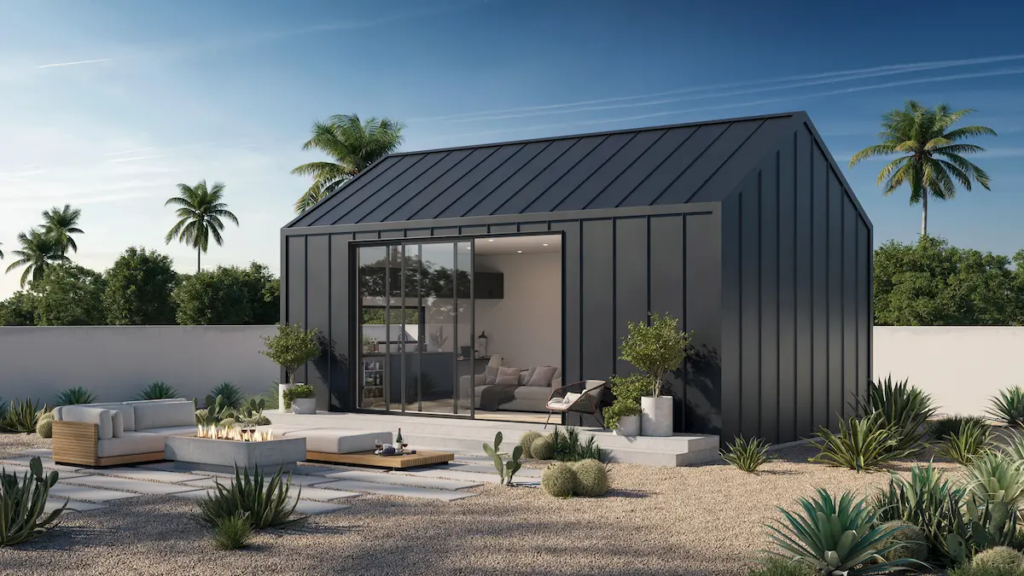
Gardenhouses are reshaping Arizona’s residential landscape in ways few anticipated, and we actually witnessed this firsthand walking through a client’s property in Paradise Valley last spring.  Among the mesquite trees, we stood in an underused corner of their two-acre lot, between a heritage citrus grove and the desert garden they’d cultivated for twenty years. The client wanted a flexible sanctuary, one that accommodated her mom’s artistic passions (she wanted a room for her to paint in), a quiet desk area so she herself could work from home, and a way to intertwine their lives at the end of the day too, over good food and conversation. These are the kinds of dreams gardenhouses are starting to adapt to here in Arizona. Once relegated to storing rakes and potting soil, they’re the unassuming Swiss Army knife of accessory structures, solving everything from housing challenges to creative block.  These versatile buildings are fully changing how we think about our properties, our families, and our futures.   Beyond Tool Storage To appreciate today’s gardenhouse renaissance, let’s go back in time and understand its humble origins.  Traditional gardenhouses served purely utilitarian purposes, protecting tools from monsoon rains, storing fertilizer away from curious pets.  These structures rarely exceeded 100 square feet and often consisted of prefabricated metal sheds that baked in summer sun. Today’s gardenhouse inhabits an entirely different universe.  According to research from the American Institute of Architects, accessory structures now represent the fastest-growing segment of residential construction, with gardenhouses leading the charge in temperate climates.  These modern incarnations range from 400 to 1,200 square feet, incorporating full bathrooms, kitchens, climate control, and architectural details that rival main residences. And the shift reflects broader societal changes that accelerated dramatically since 2020.  The Pew Research Center reports that 59.7 million Americans now live in multigenerational households, a figure that has quadrupled over five decades.  And it makes sense, given that gardenhouses provide elegant solutions to the spatial and privacy challenges these arrangements create. Unlike additions that permanently alter main homes, gardenhouses offer flexibility. Today’s art studio becomes tomorrow’s home office, next year’s guest suite, or eventually, comfortable quarters for aging parents.  And we believe it’s this versatility that explains why understanding what it takes to build a house has become relevant even for those not planning traditional home construction. Considering the possibilities of a gardenhouse could completely change your lifestyle. The Arizona Advantage Arizona’s unique climate and lifestyle create ideal conditions for gardenhouse development.  Our 300+ days of sunshine enable year-round construction schedules impossible in northern states.  The minimal rainfall (Phoenix averages just 8.03 inches annually according to National Weather Service data) reduces moisture-related maintenance. And trust those of us at MLC who’ve worked elsewhere in the country, those sorts of issues plague gardenhouses in humid climates. But the advantages extend beyond weather.  Arizona’s outdoor living culture means gardenhouses become natural extensions of daily life rather than seasonal retreats.  The journey between main house and gardenhouse becomes a pleasant passage through desert gardens.  This integration is precisely why building a home in Arizona means thinking beyond the main house: our properties function as unified ecosystems. The desert environment does present unique challenges that demand specialized expertise.  Phoenix experiences temperature swings of up to 30 degrees Fahrenheit in a single day. These thermal cycles stress building materials, causing expansion and contraction that can destroy inadequately designed structures. And then, of course, solar orientation becomes critical in gardenhouse design.  We’re going for a gardenhouse, not a greenhouse after all! Unlike cooler climates where southern exposure maximizes beneficial solar gain, Arizona gardenhouses require careful shading strategies.  We position structures to minimize western exposure, incorporate deep overhangs calculated for our specific latitude, and specify low-E windows that reject heat while maintaining visibility.  These passive design strategies can reduce cooling costs by up to 40% according to Department of Energy research.   The New Economics of Gardenhouse Investment The financial mathematics of gardenhouse construction have shifted dramatically, making these structures strategic investments rather than luxury amenities. Construction costs for quality gardenhouses typically range from $125 to $275 per square foot, depending on finishes and systems.  This pricing reflects the reality that gardenhouses require the same structural integrity and mechanical systems as primary residences.  And while modular homes are Phoenix’s smartest solution for many applications, gardenhouses often benefit from site-built construction that can navigate unique property constraints and maximize integration with existing landscapes. The return on investment manifests through multiple channels too.  Zillow’s research indicates that homes with ADUs sell for 35% more on average than comparable properties without these structures.  For a $600,000 Phoenix home, this premium translates to $210,000 in additional value, often exceeding the gardenhouse construction cost. Also, rental income provides another compelling return stream.  AirDNA’s market analysis tell us that Phoenix short-term rentals average $175 per night with 68% occupancy rates.  Put another way, a well-appointed gardenhouse can generate $3,500 to $4,500 monthly in gross rental income. But perhaps the most valuable returns resist simple financial quantification: the ability to provide independent living space for adult children struggling with housing affordability, the option to age in place with live-in care, the flexibility to pursue creative passions. These benefits profoundly impact quality of life and save a pretty penny in the long run too. Designing Multi-Functional Spaces Modern gardenhouse design creates environments that adapt seamlessly to evolving needs.  This requires understanding both current requirements and anticipating future possibilities, a design philosophy that parallels the art of luxury home renovations in its attention to detail and long-term thinking. The most successful gardenhouses incorporate what we call “convertible infrastructure,” systems and layouts that support multiple uses without extensive renovation.  We specify electrical systems with capacity for future EV charging, understanding that today’s art studio might become tomorrow’s garage apartment.  Plumbing rough-ins anticipate potential kitchen or bathroom additions. Natural light strategies prove particularly crucial as well.  Unlike main homes with windows on all sides, gardenhouses often face orientation constraints due to property lines or privacy concerns.  We employ clerestory windows,
ADU Builder Near Me | Minimal Living Concepts

Finding the Right ADU Builder Near Me: A Phoenix Homeowner’s Guide

In all honesty, finding the right ADU builder near me can mean the difference between a successful investment and an expensive mistake.  I’ve seen this firsthand, with a client who called us six months after they hired a contractor, staring at a half-finished ADU with crooked walls and windows that wouldn’t close properly. They’d gone for the cheapest quote but called a halt when they realised they were heading toward $20,000 over budget due to minor mistakes that could have been anticipated. This scenario plays out too often across Phoenix’s booming ADU market, so it’s important to find someone who knows the landscape, knows the rules and regulations, and knows how to get the job done safely, swiftly, but also completely.  The explosive growth in accessory dwelling unit construction has attracted everyone from exceptional craftsmen to opportunistic amateurs.  Understanding how to identify truly qualified ADU builders near you, and knowing what questions to ask, separates successful projects from costly disasters.   Understanding Your ADU Builder Options The search for “ADU builders near me” yields an overwhelming array of options, from large production builders to solo operators working from pickup trucks.  Each category offers distinct advantages and challenges. The residential construction industry includes over 650,000 firms nationwide, according to Harvard’s Joint Center for Housing Studies, but fewer than 5% specialize in accessory dwelling units.  This specialization matters because ADUs present unique challenges that differ significantly from standard home construction. Large production builders bring systemized processes and financial stability to ADU projects.  These firms typically employ full-time project managers and offer comprehensive warranties.  And yet, their standardized approaches may struggle with unique site conditions.  Knowing full well how much it costs to build a house with these builders can help set baseline expectations. Boutique ADU specialists represent the sweet spot for many homeowners.  These firms focus, most of the time, on accessory structures, developing deep expertise in local regulations and proven construction methods.  Meanwhile, custom home builders sometimes venture into ADU construction, bringing high-end expertise and attention to detail.  Their experience with the art of luxury home renovations works well for premium projects, though their rates may exceed typical ADU budgets. Why “Near Me” Matters More Than You May Think Let’s put it simply: Local builders bring invaluable advantages that distant contractors struggle to match. And honestly, permitting expertise tops the list.  Each Arizona municipality maintains unique ADU regulations that change frequently.  According to the National Association of Home Builders, over 70% of construction delays stem from permitting issues.  Local ADU builders maintain relationships with planning staff and can navigate bureaucratic challenges that confound outsiders. Climate knowledge also profoundly impacts ADU durability, also in many more ways than people generally anticipate, and that’s more than true in Arizona’s extreme environment.  The National Weather Service documents that Phoenix experiences the nation’s most extreme urban heat island effect. Local ADU builders understand that standard construction techniques fail in our desert climate.  They specify materials rated for 120-degree surface temperatures and orient structures to minimize cooling loads.  And then of course, there are supply chain relationships, which can offer practical advantages.  When materials shortages arise (and this is an increasingly common occurrence according to Associated General Contractors data), established relationships ensure project continuity.  Local builders can also respond quickly to warranty issues.   Red Flags to Watch For Certain warning signs consistently predict poor outcomes, regardless of how appealing initial presentations might seem. Key warning signs include: Unlicensed or improperly licensed contractors (the Arizona Registrar of Contractors reports unlicensed contractors account for 80% of complaints) Suspiciously low bids falling more than 20% below regional benchmarks High-pressure sales tactics demanding large deposits before permit approval Vague contracts using phrases like “standard quality” or “builder’s discretion” One client told us their original ADU builder had promised a fixed price, then kept adding charges for “unexpected” site conditions that should have been obvious during initial evaluation.  They ended up switching to us mid-project, which your ADU kitchen renovation costs less than you think shouldn’t be derailed by contractor incompetence. How to Evaluate ADU Builders Effectively Systematic evaluation requires looking beyond marketing materials to examine actual capabilities and track records. Here are some things you can look for to evaluate who you’re working with: Portfolio review should focus on completed projects similar to your vision.  Request addresses of completed ADUs and drive by them yourself.  Observe how structures have aged and if sites appear professionally finished.  Quality ADU builders confident in their work willingly share project locations. Reference checks must go beyond provided lists.  You can also ask around. For instance, many building officials offer relevant insights about whether the ADU builder completes projects on time and responds to inspection corrections promptly.  There are also plenty of suppliers who can confirm whether bills are paid promptly, a key indicator of financial stability. Review the builder’s financial rating, complaint history, and disciplinary actions.  This information is public, but so often, people don’t turn toward it, even though it often reveals all the patterns that sales presentations can so carefully obscure. Avoid falling into the trap of that obfuscation, and you’ll land up saving yourself plenty of time and money. Technology and Systems Matter Modern ADU construction demands sophisticated understanding of building systems and technology integration, areas where quality ADU builders distinguish themselves. HVAC systems for ADUs require careful design, and mini-split systems provide efficient zoned cooling but require proper sizing and placement.  Quality builders perform Manual J calculations and specify systems with high SEER ratings. And solar readiness represents another consideration that separates forward-thinking builders from those stuck in the past.  The Solar Energy Industries Association reports that Arizona ranks third nationally in solar adoption. With this in mind, ADU builders can orient roofs for optimal solar exposure and provide structural capacity for panel loads. Not that long ago, we completed a project where the homeowner specifically wanted solar preparation.  Including the proper structural supports and electrical rough-ins during construction cost less than $2,000. After looking it up to
Casita | Minimal Living Concepts

Why Casitas Are Changing Arizona Backyards Into Multi-Generational Havens

Casitas are reshaping how Arizona families approach multi-generational living, and we at MLC are seeing this play out in real time across Phoenix.  The casita, Spanish for “little house,” has evolved from cultural tradition into Arizona’s practical answer to housing affordability, aging in place, and remote work demands.  These compact structures, typically ranging from 400 to 800 square feet, have deep roots in Spanish colonial architecture but have evolved into a modern housing solution perfectly suited to Arizona’s lifestyle and climate.  It’s designed to provide both independence and proximity for extended family members, generate rental income, or serve as dedicated workspace.  With their historical origins in Spanish colonial settlements dating back to the 1700s in Arizona, casitas offer a time-tested approach family life. And the casita has renewed value today, as we face affordability challenges, aging-in-place needs, and the demand for flexible living arrangements. Today, these compact dwellings might be thought of as a return to multi-generational living wrapped in contemporary comfort.   The Many Lives of a Casita One of the most compelling aspects of casitas is their remarkable versatility.  While multi-generational living may be the most common application, these structures adapt to whatever your life demands.  Remote workers are increasingly converting casitas into dedicated home offices, creating professional separation from household distractions without the commute or expense of external office space.  Fitness enthusiasts are transforming them into private gyms, complete with equipment, mirrors, and climate control that would be impractical to accommodate in a main home.  Guest houses represent another popular use, offering visiting friends and family genuine privacy and comfort rather than the awkwardness of a spare bedroom.  And for homeowners looking to offset mortgage costs or generate passive income, casitas function beautifully as rental units. Phoenix’s robust rental market means a well-designed 600-square-foot casita can generate $1,200 to $2,000 monthly. But perhaps most valuably, casitas don’t lock you into a single purpose.  That home office can become a guest house when relatives visit, then transition into rental income if your financial priorities shift, and eventually serve as an aging parent’s residence.  This flexibility to evolve with your changing needs makes casitas one of the most strategic investments you can make in your property. From Colonial Architecture to Modern Solution Casitas trace their roots to Spanish colonial architecture, where main houses were surrounded by smaller structures for extended family and workers.  These auxiliary dwellings appeared in Arizona settlements as early as the 1700s, built from adobe with flat roofs and small windows to combat desert heat. And in my mind, today’s return to casitas reflects pressing economic realities.  The Federal Reserve Bank of St. Louis reports that Arizona home prices have increased 140% since 2015.  And casitas provide an elegant solution, essentially ADUs with their own spin. Adult children can save for down payments while living affordably, aging parents maintain autonomy while staying close, and homeowners generate rental income to offset mortgages. Casitas require the same quality construction as main homes, just in concentrated form. And contrary to what may be popular belief, they can be relatively affordable to build too (when the building’s done right, of course).   The Economics Behind the Investment To construct a casita, the costs typically range from $175,000 to $250,000 for a 600-square-foot structure.  While this investment seems substantial, multiple value streams often justify the expense, and you can squeeze a lot out of this space for a relatively low price. The National Association of Realtors reports that properties with accessory dwellings sell 20% faster and command 10% premiums over comparable homes.  Rental income is also a perfect way to ensure fairly immediate returns, with Phoenix casitas generating $1,200 to $2,000 monthly for long-term rentals, according to Rentometer data. The flexibility casitas provide proves equally valuable.  They can change, adapt, move with the times, and move with a family or individual as they age, grow, change, and take on new passions and hobbies. Sometimes, nurturing and nourishing your life means looking beyond the main house to accommodate all sorts of possibilities beyond traditional walls.   Maximizing Every Square Foot In a smaller space, finding ways to maximize every square foot through intelligent design can help squeeze out every bit of what a casita has to offer.  Open floor plans are a first thing springing to mind, as they so easily eliminate unnecessary hallways. High ceilings can also create spatial volume without expanding footprints.  Built-in furniture serves double duty, with window seats providing storage, murphy beds converting bedrooms into offices, kitchen islands offering dining surfaces. The kitchen deserves particular attention since it often determines a casita’s livability.  Fortunately, your ADU kitchen renovation may cost less than you think when planned strategically.  And apartment-sized appliances deliver full functionality in compact footprints. Technology integration enhances casita functionality.  The Consumer Technology Association reports that smart home devices can reduce energy consumption 23% through automated climate control and lighting.   Designing for Arizona’s Climate Arizona’s extreme climate shapes every aspect of casita design … and every aspect of pretty much all our designs here at MLC. It really is one of the first things we think about when putting pen to paper. Summer temperatures exceed 115°F, so skipping this consideration really isn’t an option if you don’t want to drown in the kind of heat that makes mirages. Winter temperature swings of 40 degrees in a single day are another battle, and those require a completely different set of design approaches. The National Renewable Energy Laboratory emphasizes that proper orientation and insulation can reduce cooling costs by 35% in hot climates.  And so, smart casita design starts with orientation, minimizing western exposure while maximizing northern light.  Deep overhangs calculated for Phoenix’s 33.4° latitude block summer sun while admitting warming winter rays. And the importance of material selection cannot be overstated. Traditional stucco over frame construction provides durability and thermal mass, while cool roof coatings reflect solar radiation.  The Cool Roof Rating Council documents that reflective roofing can reduce surface temperatures by 50°F.  One client recently
Tiny Home Plans | Minimal Living Concepts

Tiny Home Plans: Rethinking Traditional Floor Plans for Arizona’s Climate

Tiny home plans, especially the ones downloaded from popular websites, so rarely account for Phoenix’s 115-degree summers, and I see this problem repeatedly with new clients.  The floor plan spread across my desk last week showed 380 square feet configured with surgical precision: Dining table folding into the wall, stairs concealing storage drawers, sleeping loft tucked beneath a peaked roof.  Honestly, something felt immediately off. And then I put my finger on the fact that this tiny home plan had been designed for Portland’s mild climate.  In Phoenix’s extreme heat, that loft would become borderline, if not wholly, uninhabitable. Most tiny home plans circulating online assume moderate climates and lifestyle patterns that don’t match Arizona’s unique demands.  So at MLC, we run on the belief that creating successful tiny homes in the desert requires fundamentally reimagining how these compact spaces function. But once the tiny home is adapted for our full-throttle heat, there’s a lot to love. Even if you don’t think of yourself as a tiny house person right off the bat, you may want to give this article a glance. In today’s post, we’ll speak realistically to all a tiny home can contain and how to make it a welcoming sanctuary, even in the hot sun.   Why Generic Plans Don’t Fit Arizona Tiny home plans proliferate across the internet, promising dream homes in miniature footprints.  There’s been a buzz around them for years now. Now, there are well over 10,000 tiny houses nationwide, with thousands more in planning stages.  Yet, most available floor plans originate from regions with vastly different environmental demands than Arizona faces. Consider thermal dynamics alone.  The International Energy Conservation Code establishes different climate zones requiring distinct building approaches.  Phoenix sits in Zone 2B (hot and dry), while Portland occupies Zone 4C (mild and marine).  A tiny home plan optimized for Portland’s gentle summers creates misery in Arizona’s extreme heat. Sleeping lofts that work beautifully in moderate climates become uninhabitable when exterior temperatures exceed 110 degrees and heat rises into confined spaces.  One couple told us they spent their first summer in a pre-designed tiny home sleeping on the main floor because the loft was “like a sauna at midnight.” That phrase really stuck in my mind. It sounds awful. This mismatch is why understanding how much it costs to build a house is so essential even for tiny homes.  Adapting generic plans to Arizona’s climate often requires such extensive modifications that custom design becomes more economical.   Space Efficiency Meets Desert Living Successful Arizona tiny home plans balance competing demands, maximizing limited square footage while managing extreme temperatures, providing privacy within open concepts, and creating homes that feel spacious despite compact dimensions. Traditional tiny home plans often emphasize vertical space utilization through sleeping lofts accessed by ladders or narrow stairs.  While this strategy works in moderate climates, Arizona’s heat stratification makes upper levels uncomfortable for much of the year.  Temperature differentials of 15-20 degrees can crop up between floor and ceiling levels in poorly designed spaces. That’s why, in our minds, the best Arizona tiny home plans instead emphasize single-level living or incorporate mechanical ventilation ensuring loft comfort. And unsurprisingly, the kitchen-living relationship proves particularly crucial in tiny home plans.  Open concepts maximize spatial perception, but cooking heat becomes problematic in already-challenging climates.  We position kitchens along north walls with operable windows for cross-ventilation, an approach reflecting principles from the art of luxury home renovations. There’s also storage integration to consider, which distinguishes livable tiny home plans from those that photograph well but function poorly.  Arizona’s outdoor lifestyle demands space for hiking gear, camping equipment, and seasonal items.  Built-in storage using every vertical surface, under-stair cavities, and raised floor platforms provides necessary capacity without cluttering limited floor space.  The National Association of Professional Organizers recommends planning 10-15% of tiny home square footage for storage. That’s significantly more than traditional homes require proportionally.   Site Orientation: The Often-Forgotten Factor Most downloadable tiny home plans assume ideal site conditions. They anticipate a perfect setup with level ground, unrestricted solar orientation, and standard utility connections.  Arizona’s diverse topography and intense solar exposure make site-specific adaptation essential.  A floor plan that works perfectly facing north might become uninhabitable when rotated ninety degrees. And solar orientation dramatically impacts tiny home comfort and efficiency.  The U.S. Department of Housing and Urban Development recommends minimizing western exposure in hot climates, yet many tiny home plans position large windows symmetrically without considering orientation. Tiny home floor plans that we’ve found work well in Arizona concentrate glazing on north facades for consistent indirect light. These should also be limiting east and west openings to small, high windows that admit light without heat. This orientation sensitivity explains why building a home in Arizona means thinking beyond the main house.  Tiny homes must integrate with existing structures, landscape features, and solar patterns.  A floor plan perfect in isolation might fail when positioned relative to property constraints. Understanding how long it takes to build an ADU helps set expectations for custom tiny home plans.  And while pre-designed plans might seem faster, site-specific adaptations often negate time savings.  Custom plans developed alongside site evaluation typically require 6-8 weeks but prevent costly mid-construction modifications.   Creating Distinct Spaces Within Tiny Footprints At MLC, we believe that the most inviting and effective tiny home plans consider how to build psychological spaciousness through careful zoning. That’s true even within studios under 400 square feet. How can this be done? There are a few ways, but the most effective ones we’ve tried and tested include manipulating ceiling heights, floor levels, and visual barriers to define distinct areas without walls.  The Environmental Design Research Association identifies spatial variety as crucial for psychological comfort in compact living. Consider a 350-square-foot floor plan we recently developed for a Tempe property.  Rather than one uniform space, varied ceiling heights create three distinct zones: Entry and kitchen: nine-foot ceilings for functionality Living area: nine feet with clerestory windows admitting light without sacrificing privacy Sleeping
Poolhouse | Minimal Living Concepts

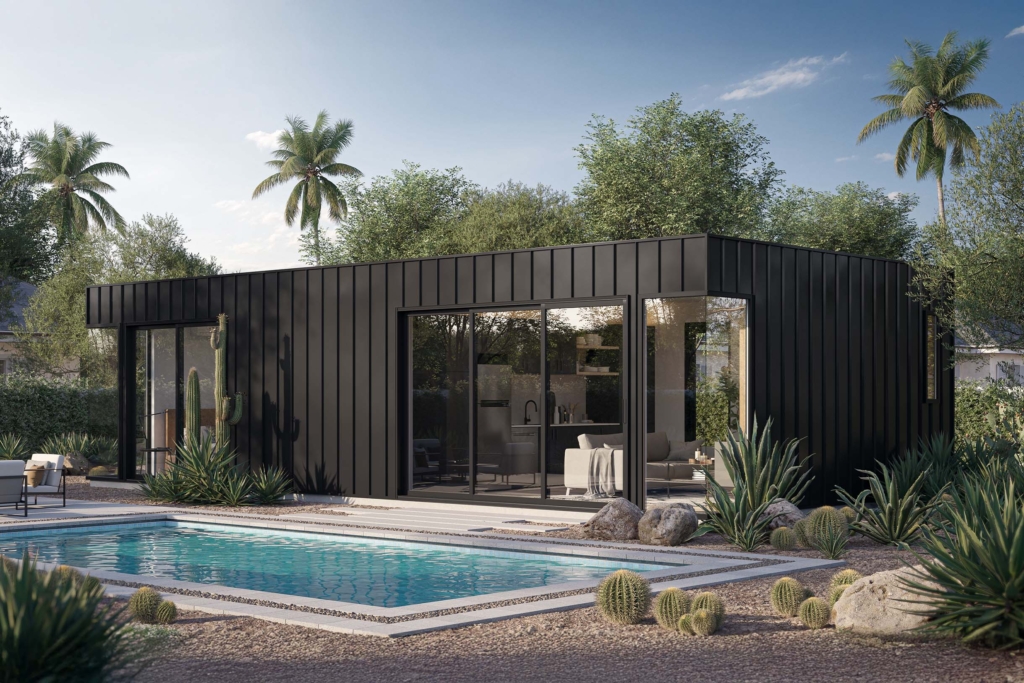
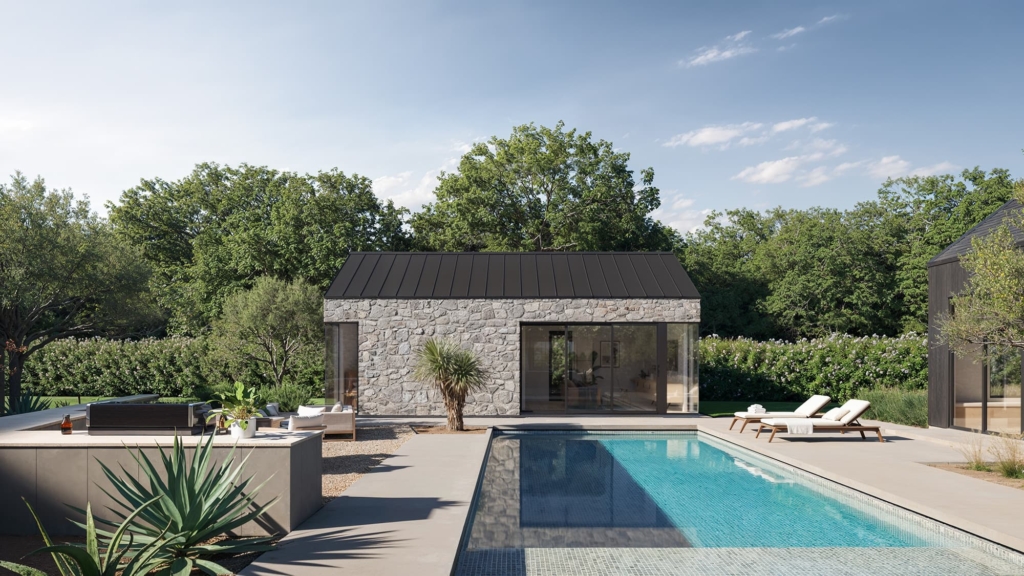
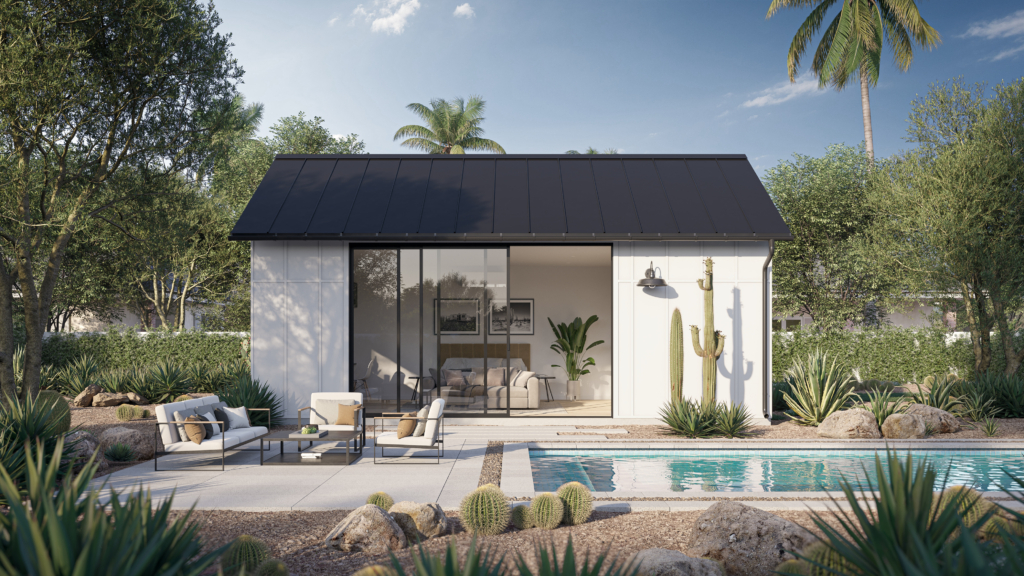
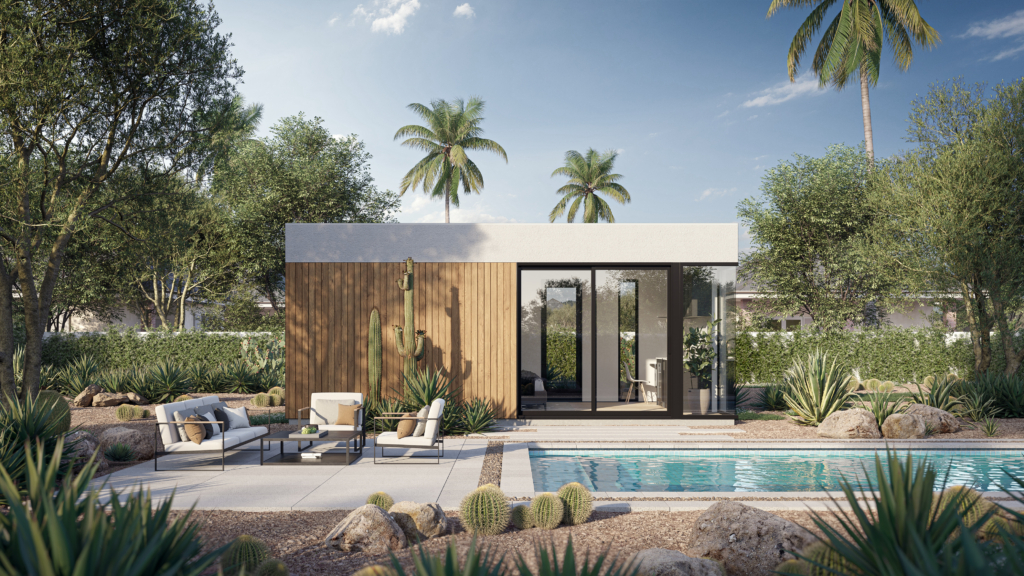
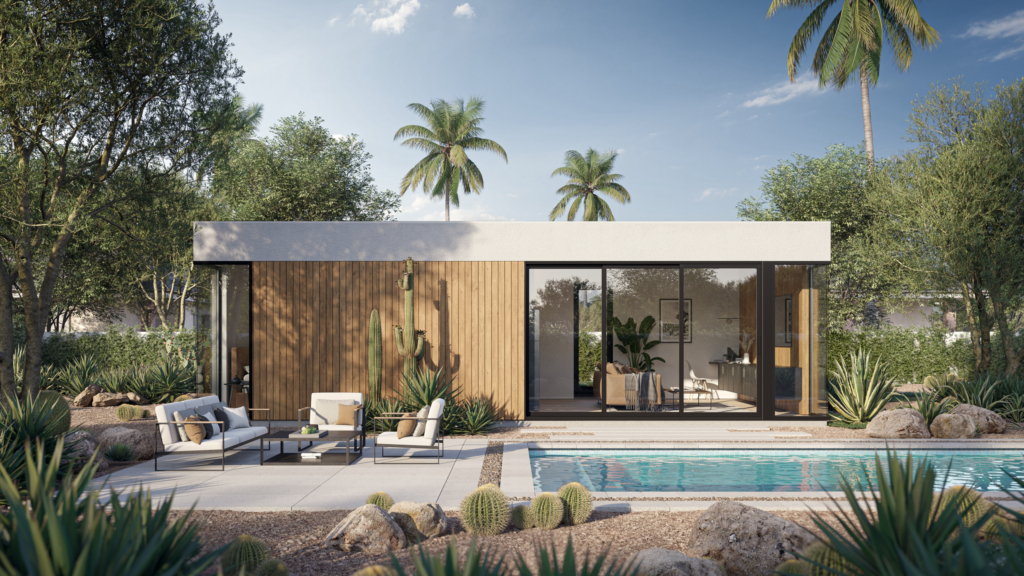
The Poolhouse: Arizona Living Takes a Thoughtful Turn

In this last summer’s roaring heat (it was definitely above 100 degrees), I was standing in a client’s backyard near Camelback Mountain, watching the late afternoon sun cast long shadows across their pool deck, which led to their poolhouse. Their grown children had long since left for college, but the pool remained, a brilliant blue reminder of countless birthday parties and weekend gatherings. Something was missing from the picture, though. And I was there to help them take that poolhouse, which at the time was a storage space for a pile-up of pool floaties, and spin it into a waterside oasis. That was, by a long shot, not the only poolhouse I worked on that summer, which speaks to how popular they’re becoming across Arizona right now.  The poolhouse is a popular choice, and it’s evolving from simple utility structure to dreamy, breezy living space.  And I’ve come to see that it can really be the beating heart of outdoor living, that there are so many more possibilities today than there have ever been for poolhouses.  Let’s explore what’s possible beside the pool.   Today’s Popular Poolhouse The traditional poolhouse served a purely functional role, as a place to change clothes, store chemicals, and perhaps grab a cold drink.  But today’s poolhouses are taking new forms. According to research from the Global Accessory Dwelling Unit Market, the ADU market has grown from $18 billion in 2024 to a projected $19.65 billion in 2025, with a compound annual growth rate of 9.19%.  There’s been a shift in how homeowners think about auxiliary structures, clearly.  What explains this dramatic evolution?  My gut feeling is that the answer lies in the convergence of several 2025 trends: First, remote work has altered our relationship with home spaces.  Second, multigenerational living has become increasingly common as families seek alternatives to expensive senior care facilities.  Third, the potential for rental income has transformed poolhouses from pure expense to potential investment.  When you combine these factors with Arizona’s year-round outdoor living climate, the modern poolhouse is quite a natural solution to multiple challenges (a reality that aligns with why building a home in Arizona means thinking beyond the main house in the first place). Unlike the prefab solutions many assume dominate this market, we’ve discovered that traditional construction methods offer superior flexibility and value for poolhouse projects.  Traditional construction allows us to navigate the unique challenges of poolside environments while maximizing the structure’s potential as a true accessory dwelling unit.  While modular homes are Phoenix’s smartest solution for many applications, poolhouses benefit from the customization that site-built construction provides.   The Arizona Context: Desert Meets Water Building near water in the desert presents challenges that have to be taken into account for the best product.  The Sonoran Desert’s extreme temperature swings, from 120-degree summer days to near-freezing winter nights, create thermal stress that can destroy poorly designed structures.  Construction costs have reached $162 per square foot nationally, with significant regional variations.  In Phoenix, where construction costs remain relatively moderate at $218 per square foot for multifamily construction, the key lies in selecting materials that can withstand both intense UV radiation. Understanding how much it costs to build a house in Arizona helps set realistic expectations for poolhouse projects as well. This is where we believe our expertise with traditional construction methods becomes particularly valuable.  We specify acrylic concrete coatings designed specifically for Arizona’s climate, providing heat-reflective and non-slip surfaces that keep pool decks comfortable even in peak summer.  These same principles extend to the poolhouse structure itself, where we employ deep overhangs, strategic window placement, and enhanced insulation to create comfortable interior spaces without excessive cooling costs. In terms of landscaping, desert-adapted plants like palo verde trees provide essential shade while consuming minimal water.  We position these elements to create natural windbreaks and shade patterns that protect the structure while enhancing the overall aesthetic.   The Poolhouse as Strategic Investment The economics of poolhouse construction have taken a bit of a swing recently.  According to Angi’s 2025 data, new construction costs average $150 per square foot nationally, with luxury features potentially pushing costs to $500 per square foot or more. For a 600-square-foot poolhouse in Phoenix, construction costs typically range from $185,000 to $235,000, depending on finishes and features.  Still, when configured as a legal accessory dwelling unit, this same structure can generate substantial returns.  Recent market analysis shows ADU rental income ranging from $1,940 to $2,600 monthly for long-term rentals, with short-term vacation rentals potentially generating up to $5,000 monthly in prime locations. In my mind, the versatility of a well-designed poolhouse creates what economists call “option value.” That’s the ability to adapt the space as circumstances change.  Today’s rental unit might become tomorrow’s home office, next year’s guest suite for aging parents, or eventually return to generating rental income when family needs shift yet again.   Design Philosophy for Dual-Purpose Excellence Creating a poolhouse that is dreamy for both poolside service and independent living requires a consideration of the inherent tension between these roles.  A structure optimized solely for pool use might feature large pass-through windows, minimal insulation, and water-resistant materials throughout.  Conversely, a pure ADU prioritizes privacy, energy efficiency, and residential comfort.  The modern poolhouse must, I believe, achieve both. We typically position the structure to create distinct spatial zones, a pool-facing area with easy access for wet feet and casual gatherings, and a more private section suitable for overnight guests or long-term residents.  Technology integration has become essential to modern poolhouse design too.  ADU market research indicates that 45% of new ADUs incorporate smart home technologies, with this percentage rising to nearly 60% for poolhouse configurations.  Smart locks allow homeowners to provide temporary access codes for pool maintenance or short-term renters.  Climate control systems can be programmed to maintain different temperatures for different uses (cooler during pool parties, more moderate for overnight guests). If you want a kitchen, there are a few considerations.  Counter to conventional wisdom, your ADU kitchen renovation costs
modular ADUs with basements | Minimal Living Concepts

Modular ADUs with Basements: Why Arizona’s Underground Reality Challenges the Prefab Dream

Walk into any Phoenix home builder’s office and mention you want the see the modular ADUs with basements, and you may see some expressions shift to confusion or concern. The truth about building basements under ADUs in Arizona is like a poorly kept secret at a neighborhood barbecue – everyone knows it’s complicated, but nobody wants to be the first to explain exactly why. Adding a basement to a modular home costs $20,000 to $29,000 on average nationwide. But in Arizona? Double that, then add the cost of a jackhammer operator’s therapy sessions after encountering caliche. We’ve been building custom ADUs and guest homes at Minimal Living Concepts long enough to know that what works in Michigan doesn’t necessarily translate to the Sonoran Desert.  And when it comes to modular ADUs with basements, the desert has its own rules – ones written in calcium carbonate and enforced by expansive clay soils that affect foundations across Arizona.   The Modular ADUs with Basements vs. Arizona’s Underground Reality Modular ADUs seduce with their efficiency.  Factory-built precision, weather-independent construction, and that magical promise of 10% to 20% cheaper than traditional homes according to industry data.  For homeowners looking to add an ADU for aging parents or rental income, these promises sound perfect. But the brochures won’t be so upfront about how modular homes require permanent foundations – and in Arizona, “permanent” and “underground” have a complicated relationship. The average cost of building a foundation for a modular home is $6,000 to $20,000 nationally.  In Phoenix, we’re looking at the high end of that range before we even start dealing with our special desert challenges – challenges that make traditional ADU construction more practical. The Factory Floor Meets Desert Floor We recently consulted with a family who’d fallen in love with the modular ADU concept.  They wanted to maximize their property value with a guest home that included basement storage.  They’d done their homework, selected a reputable manufacturer, even picked out their floor plan.  What they hadn’t factored in was that their North Scottsdale lot sat on what contractors affectionately call “God’s concrete” – caliche so dense it might as well be bedrock. The foundation that would have cost $15,000 in Ohio was around $45,000 after factoring in specialized excavation equipment and extended labor hours.  And that’s before even considering the ADU permitting requirements set by Arizona’s Senate Bill 1415.   Breaking Down the Real ADU Basement Costs You’ll hear some numbers that we’d consider the more optimistic projections from modular home manufacturers who’ve never tried to dig under an Arizona ADU. But we’re inclined to underpromise and overdeliver – which means to say, we strive for realism when it comes to costs. According to HomeGuide’s 2024 foundation cost data, a basic poured basement with 8-foot walls, an egress window, insulation, and stairs will cost between $35,000 to $40,000 for a 1,600 SF home. And after that, for a typical ADU of 600-800 square feet, you’re still looking at $25,000-$30,000 before Arizona-specific challenges: Caliche removal: $10,000-$20,000 Soil stabilization for expansive clays: $5,000-$15,000 Enhanced waterproofing: $8,000-$12,000 Specialized drainage: $5,000-$10,000 Total ADU basement cost: $53,000-$87,000 The thing is, modular homes can’t sit on simple concrete slabs.  They typically require basement or pier-and-beam foundations with crawl spaces.  Even if you wanted to skip the basement entirely, you’re still going to be looking at significant foundation costs that could eat up your entire ADU budget. Our approach with models like the Flex Studio Addition uses traditional construction methods that allow for more foundation flexibility – something that matters when every cubic yard of excavation costs a premium. Why ADU Basements Are Rare in Arizona People assume we don’t build basements under ADUs because it’s hot.  But we believe the real reasons run deeper – quite literally so. Arizona’s expansive soils contain high clay content and can shrink and expand significantly with moisture changes.  You could find yourself building your dream ADU basement for storage or utilities, only to watch it crack like an egg as the surrounding soil plays accordion with every monsoon season. The Caliche Chronicles Caliche is prevalent throughout Arizona, particularly the Sonoran Desert.  This calcium carbonate-rich layer is incredibly difficult to excavate, requiring powerful machinery and significant investment – costs that can make your ADU timeline stretch from 8 months to over a year. We’re talking about a naturally occurring cement layer that laughs at standard excavation equipment.  Breaking through caliche requires specialized tools that can add $100 to $200 per cubic yard to your excavation costs.  And for even a small ADU basement, you’re looking at removing hundreds of cubic yards.   Modular ADUs and Foundation Requirements Modular ADUs arrive at your site in pieces – large, heavy, precisely engineered pieces that need a foundation capable of supporting them without any flex or movement.  Unlike traditional ADU construction where we build up from the foundation, adapting as we go, modular homes demand perfection from day one. The foundation must be exactly level, precisely squared, and strong enough to support the concentrated loads of the module connection points.  We’re really not exaggerating – so the truth is, you may well be looking at costly modifications or structural issues that could violate Arizona’s ADU requirements. Modular home delivery costs average $5,000 to $15,000, assuming the house is being built in your region and your site is ready and accessible.  In Arizona’s established neighborhoods where ADUs are most popular, delivery becomes its own adventure.   The Hidden Economics of Underground ADUs About 16.6 percent of homes built in the U.S. in 2023 had basements, compared with about 37 percent in 2000, according to Census Bureau data.  Arizona’s percentage varies year by year, but it’s always less than 5%, and for ADUs it’s virtually zero. Here’s what those same dollars could buy you with traditional ADU construction from MLC:  Our Live One-Bedroom provides expanded living areas above ground, where you can actually enjoy Arizona’s practically-year-round days of sunshine. And – you can do that for less than
5 Bedroom Prefab Homes | Minimal Living Concepts

5 Bedroom Prefab Homes: Space, Luxury, and Why We Build Differently

The family of seven standing in our Phoenix showroom last month wasn’t looking for a mansion, but they needed one of our 5 bedroom prefab homes that actually worked for their reality. And this family was after the kind of space that holds morning chaos and evening calm, that expands and contracts with the rhythms of multigenerational life.  With 42% of new homes having four or more bedrooms, you’d think finding this space would be simple.  Yet most of those bedrooms are afterthoughts, tucked into corners where sunlight barely reaches, where nobody really wants to live. After twenty years building homes under Arizona’s vast skies, we’ve learned to read between the floor plans.  What families really need isn’t always what the glossy prefab catalogs are selling.   The Reality of Large Family Living in 2025 The desert teaches patience.  It shows you how things that appear simple from a distance – a mountain ridge, a canyon system – reveal infinite complexity as you approach.  The same is true for large family homes. The average American household consists of 2.51 people.  If you need five bedrooms, you’re already swimming against the current of modern home design.  The entire housing industry has optimized for smaller families, and it shows in everything from kitchen layouts to the assumptions builders make about storage needs. We recently worked with a family who’d toured six different 5 bedroom prefab homes, each advertised as “perfect for large families.”  In every single one, the fifth bedroom was either a converted office or what one manufacturer optimistically called a “flex room” – marketing speak for “we ran out of ideas.” Nearly four-in-ten men ages 25 to 29 now live with older relatives, according to Pew Research Center data.  And so, the American household is restructuring itself in real-time.  Here in Arizona, we’re witnessing three distinct groups searching for five-bedroom homes: traditional large families (becoming rarer but still significant), multigenerational households (exploding in growth), and work-from-home families needing dedicated office spaces.  Each group moves through space differently, needs different privacies and gatherings – and yet prefab manufacturers keep pushing the same cookie-cutter solutions.   Understanding Prefab: What It Really Means There’s a seductive simplicity to the prefab promise.  The cost of a 5-bedroom modular home runs $187,500 to $262,500, which sounds like finding water in the desert compared to traditional construction.  But that number is doing some pretty heavy lifting. “Prefab” encompasses everything from manufactured homes that arrive on wheels to high-end modular construction that rivals custom builds.  At Minimal Living Concepts, we’ve watched families get burned by not understanding these distinctions.  Manufactured homes work beautifully on rural land but wither under HOA scrutiny in most Phoenix neighborhoods.  Modular homes can be virtually indistinguishable from traditional builds once complete, but the journey there involves cranes, massive trucks, and prayers that your narrow Phoenix street can accommodate them. The National Association of Home Builders reports modular construction can reduce build time by 30-60%, but they’re comparing best-case scenarios.  In reality, especially for five-bedroom homes, the logistics often eat up those time savings like the summer sun evaporates morning dew.   The True Cost of 5 Bedroom Prefab Homes Let’s walk through the real numbers together, not the marketing fiction that dissolves under scrutiny: A prefab shell starts at $187,500-$262,500.  Site preparation adds $5,000-$20,000.  The foundation – and in Arizona, this matters more than most places – runs $15,000-$25,000.  Utility connections: $10,000-$35,000.  Assembly: $25,000-$50,000.  Interior finishing: $50,000-$150,000. Suddenly, that “affordable” prefab is pushing half a million dollars, and we haven’t even talked about Arizona-specific costs yet. In Phoenix, where summer temperatures soar above 115°F and even the cacti seek shade, proper cooling for 3,000+ square feet isn’t exactly optional if you want to live a comfortable life. Your HVAC system alone could run $15,000-$25,000.  Just recently, we reviewed a prefab quote for a family that looked fantastic until they realized the included HVAC system was sized for moderate climates.  The upgrade to handle our desert extremes added $8,000 to their “turnkey” price.   Space That Works Most five-bedroom floor plans are just three-bedroom plans with rooms tacked on like afterthoughts.  The flow is wrong, the common areas are undersized, and nobody thought about where seven people’s shoes accumulate like tumbleweeds at the door. When we design custom homes through our proven process, we start with how families actually move through their days.  Five bedrooms typically means 6-8 people sharing 2.5 or 3 bathrooms.  Ever watched four teenagers navigate this bottleneck before school? Not the most desirable dance.  About 9% of households have three or more children – and they’re desperately searching for homes that work, not just bedroom counts.  A family of seven can generate hundreds of laundry loads a month.  Where does it all go?  Prefab manufacturers, focused on maximizing marketable square footage, consistently underdeliver on storage.  Closets are afterthoughts, and pantries are European-sized. There’s nowhere for the life that accumulates – sports equipment, holiday decorations, the bulk groceries that large families depend on. And while we may not want clutter, sizable storage does make a big difference to the sanctity of a space.   Arizona’s Unique Challenges for Large Prefab Homes Building in Arizona isn’t like building anywhere else.  The City of Phoenix Planning & Development Department has specific requirements that many national prefab companies don’t fully grasp.  But beyond regulations, there’s the reality of our landscape. Picture a semi-truck carrying a 14-foot-wide, 60-foot-long module trying to navigate Phoenix streets in July.  The module was built in a climate-controlled facility in Indiana, and it’s now sitting in 115-degree heat, materials expanding, adhesives softening, while waiting for the crane that’s stuck in traffic on I-10.  We’ve seen delivery delays add weeks to projects because modules arrived during monsoon season.  One family watched their dream home sit in a staging area for three weeks because the crane operator wouldn’t work in the sudden winds that sweep across the valley. Our soil doesn’t care about precision engineering either. Expansive soils, caliche layers,
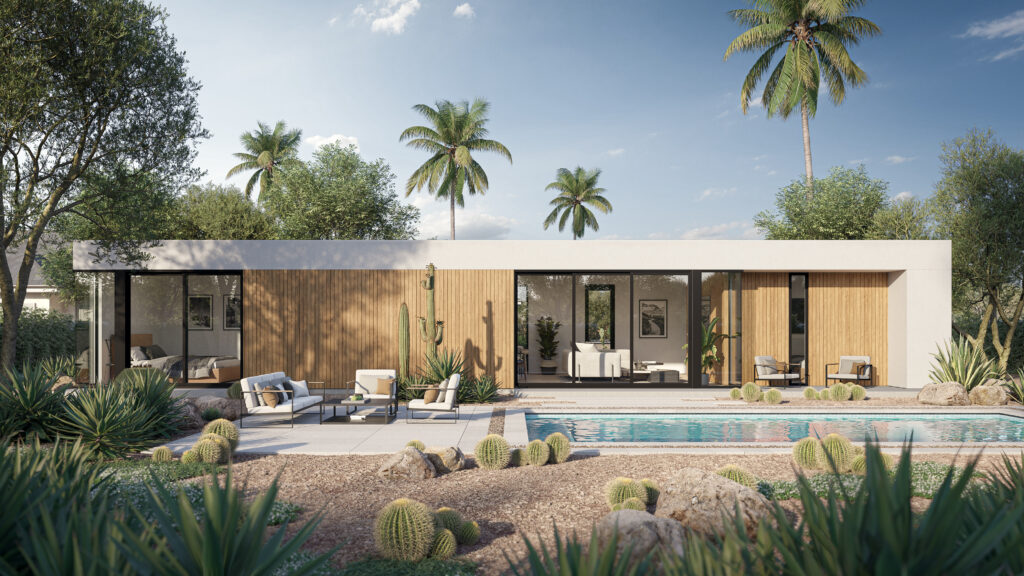
Multi-Family Modular Homes | Minimal Living Concepts

Multi-Family Modular Homes: Why Arizona’s Housing Solution Isn’t What You Think

The cranes arrive at 6 AM, and by noon there are entire multi-family modular homes on a foundations that were empty yesterday. Watching modular construction happen feels like cheating – kind of like someone discovered a housing industry glitch and nobody’s talking about it. But the thing about shortcuts in construction is that they usually lead somewhere you didn’t plan on going. According to a recent Zillow analysis, the U.S. faces a shortfall of 4.5 million housing units, and everyone’s scrambling for solutions that sound too good to be true. Multi-family modular homes promise to solve our housing crisis with factory precision and assembly-line efficiency. The math looks beautiful on paper – something like 30% faster construction, 20% lower costs, and weather-proof building conditions. Yet from our vantage point in Phoenix, where we’ve chosen to keep building ADUs the traditional way for a litany of reasons, we keep seeing the same pattern:  What works in theory doesn’t always survive Arizona’s reality. The desert has a way of humbling even the best-laid plans. Let’s explore why.   The Promise vs. The Phoenix Reality Multi-family modular construction arrived in Arizona with fanfare and promises.  Modular home building costs 10 to 20 percent less than stick-built homes, are built 30% to 60% faster, and last just as long. Those numbers are seductive to developers. But statistics gathered in Pennsylvania factories don’t always translate to Phoenix job sites. The Factory Floor Fantasy Climate-controlled factories where walls rise without weather delays, where precision machinery cuts every board to perfection, where quality control happens at every station. The Modular Building Institute’s research shows modular buildings were completed 25-30% faster on average when compared to site-built buildings. That timeline and precision is not to be sniffed at. In controlled conditions, with established supply chains, near major transportation corridors, this works beautifully. At the same time, Phoenix sits miles away from the nearest major modular manufacturing hub.  Every module travels through desert heat that warps materials, mountain passes that limit transport sizes, and inspection checkpoints that don’t care about your timeline. Our climate creates unique challenges that factory builders rarely anticipate.  Modular units designed for moderate climates arrive here unprepared for 115-degree surface temperatures and 40-degree temperature swings.   Understanding Multi-Family Modular Construction A multi-family modular construction of any kind isn’t a typical home, nor is it your neighbor’s tiny house. We’re discussing sophisticated building systems where entire apartment units – complete with plumbing, electrical, and finishes – are constructed in factories and assembled on-site. The average cost of a modular duplex is $100 to $200 per square foot for a complete turn-key installation.  But that range hides massive variation from basic dormitory-style housing to custom architectural designs that often cost more than traditional construction, once transportation and assembly factor in. And assembly isn’t just a matter of stacking and fitting things together like Lego pieces.  Each connection point between modules requires precision work. There needs to be weatherproofing, structural connections, utility hookups, and finish work to hide seams.  In multi-family projects, multiply these connection points by every unit, every floor, every utility run. There’s a lot to think about.   The Real Cost Breakdown Modular home prices fall between $80 and $160 per square foot. But, as ever, there’s a little more to that spread (detailed below): The Hidden Cost Multipliers Transportation: Each module requires specialized transport with permits, escorts, and route planning.  From East Coast factories to Phoenix? Add $15,000-$30,000 per module. Crane Operations: Setting modules requires heavy equipment.  In Phoenix, crane rental runs $5,000-$10,000 per day, plus operators, plus site prep. Site Adaptation: Modular units arrive with standard utility connection points that never align perfectly with your site. Foundation Precision: Traditional foundations have some forgiveness – you can adjust as you build.  Modular foundations must be perfect before the first module arrives. And costs don’t disappear with modular construction. In fact, they can even increase due to additional inspections and unfamiliar building systems. When you factor in all costs, the savings are just one factor in a web of others – and they may land up shrinking considerably.   Why Traditional Construction Works in Urban Arizona We’re not anti-innovation at MLC, but we are pro-reality. Every tradesperson in Phoenix knows our building codes, understands our climate, and has supplier relationships that work.  They know which concrete mix handles our soil, which roofing materials survive our sun, which HVAC systems actually cool in August. This institutional knowledge doesn’t exist in distant factories, and our building process draws from decades of local expertise. At the end of the day, one of the most reassuring aspects of traditional construction is that it allows for adjustments.  With modular, changes after factory production starts trigger massive cost overruns or are simply not possible.   The Financing Maze Banks understand traditional construction.  They have decades of data, established procedures, and comfort with the process.  Modular multi-family construction projects, though, require opening a new chat.  Which explains why most banks require higher down payments for modular construction – 25-35% versus 20-25%—along with shorter construction loan terms and additional inspections. Property insurance for modular construction creates its own challenges. During transport? During assembly? After completion? Each phase requires different coverage, often from different carriers, with coverage gaps that can leave developers exposed.   Site Challenges Factory Builders Don’t Always Foresee Phoenix lots aren’t flat prairies waiting for modular units.  They’re puzzles of existing utilities, elevation changes, easements, and access restrictions. A typical two-bedroom apartment module measures 14 feet wide, 60 feet long, and 11 feet tall.  Now imagine maneuvering that through established Phoenix neighborhoods with mature trees, narrow streets, and overhead power lines. Modular projects need all utilities ready for immediate connection when modules arrive.  Miss one coordination meeting, have one utility delay, and you have expensive modules sitting on trucks with nowhere to go.   Phoenix’s Regulatory Landscape Phoenix just updated its ADU regulations.  House Bill 2720 mandates that municipalities with populations over 75,000 must allow at least one attached and
How much does it cost to build a house | Minimal Living Concepts

How Much Does It Cost to Build a House in 2025: The Ultimate Guide

Let me start with a conversation I had last week: A successful executive called me, frustrated beyond belief: “I’ve been looking at homes in Paradise Valley for eight months. Everything decent is either overpriced or feels like it was designed in 1995. I’m ready to build, but every contractor I talk to gives me a different number, and none of them can tell me when it’ll actually be finished.”, he said. “How much does it cost to build a house?”, he asked. Sound familiar? Building your dream home in 2025 represents a significant investment that demands careful financial planning and understanding, but it’s also the path to getting exactly what you want instead of settling for what’s available. The cost to build a house varies dramatically based on location, design choices, and market conditions, making it essential to grasp the full scope of expenses before starting your custom home journey.   The Market of Building a Home In the United States, house construction costs have shown notable regional variations. While the national average for a custom home ranges from $300 to $500 per square foot, luxury markets like Phoenix/Scottsdale often command premium rates for high-end construction, and for good reason. We understand that building a custom home is both a financial and emotional investment. Our experience serving sophisticated clients has shown that transparency in pricing and a clear understanding of costs from the start leads to more successful projects and satisfied homeowners. No one wants to be halfway through construction and discover their budget was fantasy. Your dream home’s cost will reflect your unique vision, chosen location, and desired level of luxury, making it crucial to partner with a builder who can provide accurate cost projections and maintain transparent communication throughout the process. At Minimal Living Concepts, we specialize in providing comprehensive solutions for your custom home needs in Phoenix, Arizona, delivering the kind of modern, resort-style homes our clients actually want to live in.   Average Cost of Building a House Here’s the truth no one wants to tell you upfront: The average cost to build a house in 2025 ranges from $350,000 to $1.5 million, depending on location, size, and specifications. This represents a significant premium compared to the median existing home sales price of $410,000. But here’s why that premium makes sense: The cost disparity reflects the advantages of new construction – modern designs, energy efficiency, customization options, and never having to wonder what the previous owner did wrong. Regional Cost Variations for Custom Homes: Northeast Region: $425,000 – $1.8 million Southeast Region: $300,000 – $1.2 million Midwest Region: $290,000 – $1 million Southwest Region: $320,000 – $1.4 million West Coast: $450,000 – $2 million Premium markets like Phoenix-Scottsdale command higher prices, with luxury custom homes starting at $1,500,000. These properties feature high-end finishes, smart home technology, and resort-style amenities that elevate their value beyond standard new construction. When you’re paying Phoenix prices, you’re getting Phoenix lifestyle. I’m going to break down how much does it cost to build a house per square foot. Cost Per Square Foot Breakdown: Entry-Level Custom: $350-400/sq ft Mid-Range Custom: $400-500/sq ft Luxury Custom: $500-800+/sq ft The price variations stem from regional labor costs, material availability, and local building codes. Markets with strict environmental regulations or limited buildable land typically see higher construction costs. Supply chain dynamics and labor market conditions also influence pricing, with some regions experiencing 15-25% cost increases due to resource constraints. Building in master-planned communities adds another layer of cost consideration. These developments often require specific architectural guidelines and premium materials, pushing costs toward the higher end of regional ranges. The trade-off comes in the form of established infrastructure, community amenities, and typically stronger property value appreciation,plus neighbors who actually maintain their properties. However, not everyone needs a sprawling mansion. For those looking for simplicity without compromising on quality or functionality, focused design approaches can deliver maximum impact within budget constraints. The key to defining how much does it cost to build a house is understanding what matters most to your daily life and investing accordingly.   Breakdown of Construction Costs for a Custom Home Building a custom home involves multiple cost components that contribute to the total investment. After years of transparent pricing with our clients, we can break down exactly what you can expect for each major element: Construction Element Cost Range Foundation and Site Work $35,000 – $100,000 Framing $85,000 – $175,000 External Elements $95,000 – $200,000 Mechanical Systems $75,000 – $150,000 Interior Finishes $100,000 – $225,000 Premium Upgrades $50,000 – $175,000 Foundation and Site Work: $35,000 – $100,000 This is where your lot characteristics really matter. I’ve seen projects where foundation work was straightforward, and others where we needed extensive engineering solutions. This includes all the necessary groundwork and preparation for your home: Excavation and grading (varies wildly based on your lot’s slope) Concrete foundation pouring Waterproofing and drainage systems Retaining walls (if required—and in our market, they often are) Framing: $85,000 – $175,000 This is where modern design philosophy meets structural reality. Framing forms the skeleton of your house, and those beautiful open-concept spaces and floor-to-ceiling windows require serious engineering. It consists of: Lumber and structural materials (engineered lumber for those big spans) Labor for frame construction Roof trusses and sheathing Wall framing and subflooring External Elements: $95,000 – $200,000 These are the features that give your home its exterior character and determine how it handles our desert climate: Roofing materials and installation (crucial for energy efficiency) Windows and doors (we oversize everything for better views and natural light) Siding or exterior finish (materials that actually hold up to UV exposure) Insulation and weatherproofing Mechanical Systems: $75,000 – $150,000 Every modern home requires efficient mechanical systems, and in Phoenix, your HVAC system isn’t optional—it’s survival equipment: Electrical wiring and fixtures (we plan for today’s technology needs) Plumbing pipes and fixtures HVAC installation (oversized for July comfort) Smart home technology integration Interior Finishes: $100,000 – $225,000 This is where your personality shows and
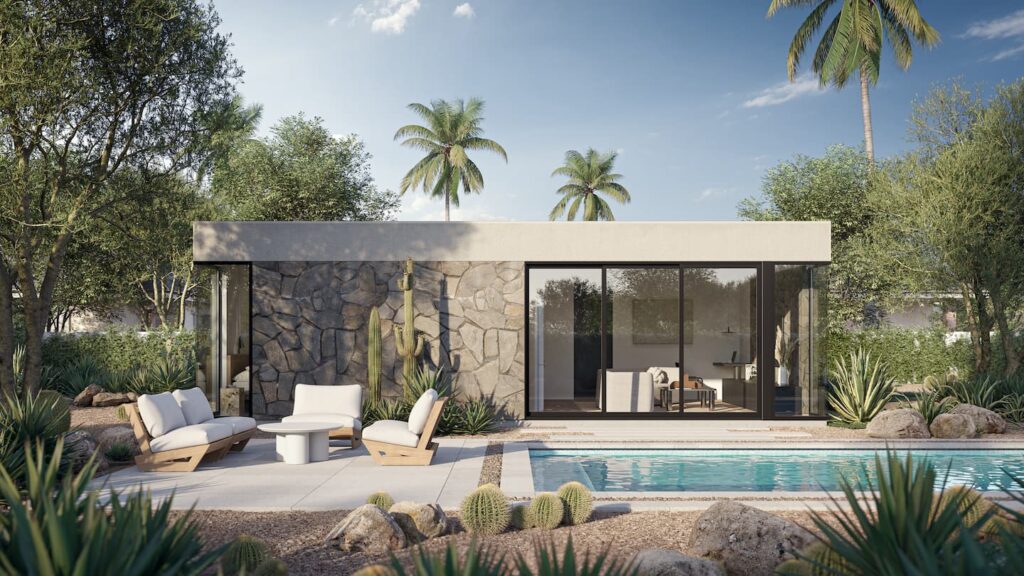
Luxury Home Renovations | Minimal Living Concepts

The Art of Luxury Home Renovations: Why Phoenix Homeowners Are Rewriting the Rules

Luxury home renovations aren’t supposed to fail within eighteen months – but “the marble had already started to etch from our hard water” when my clients called us last spring. Their Paradise Valley kitchen, imported wholesale from a Coastal Living magazine spread, simply wasn’t designed for the desert we live in… This is a story we know well here at Minimal Living Concepts – because Phoenix luxury home renovations face challenges that coastal designers rarely consider.  The temperature swings that can reach 40 degrees in a single day will crack imported stone within months. Our UV index laughs at “fade-resistant” fabrics. And then there’s the reality that we actually want to cook outside in January. After years of working with Phoenix homeowners who’ve learned these lessons the hard way, we’ve gathered insights that might save you from your own marble-etching moment – and help you create something that stays sturdy in the desert.   The Phoenix Paradox: When Less Space Means More Living Twenty years ago, most Phoenix luxury homes looked like they’d been airlifted from Orange County suburbs. Closed-off formal dining rooms, dark wood everything that absorbed heat like a solar panel, and almost no connection to the backyard where everyone actually gathered. Today’s luxury home renovations tell a different story. They breathe with the desert air, flow seamlessly to outdoor spaces, and use materials that actually belong here. The shift is aesthetic, for one thing, but it also reflects a deeper understanding of place.  We recently worked with a Scottsdale couple who owns a 5,200-square-foot estate.  Their renovation budget was $275,000.  Their request was to help them live more efficiently in less space by converting unused rooms into an ADU that would become their primary residence, while transforming the main house into a rental property. This might sound like downsizing – but in our view, it’s right-sizing with precision. The National Association of Home Builders reports that the average American home has grown by 1,000 square feet since 1973. Yet, research from UCLA’s Center on Everyday Lives of Families found that families actively use only 40% of their home’s square footage. Here in Phoenix, we’re finally addressing this disconnect.   Material Intelligence: What Actually Works in the Desert The first rule of Phoenix luxury home renovations? Respect the elements. Our desert climate brings peculiar challenges that demand specific solutions.  When summer surface temperatures on dark materials can exceed 180 degrees, proper material selection becomes essential – because of that bright, burning sun we know so well. That stunning reclaimed barn wood from Vermont will crack like brittle candy in our 10% humidity.  The outdoor kitchen with standard stainless steel? Watch it become a 200-degree hazard by June. There’s an art to understanding which materials truly work here: Sintered stone that laughs at 118-degree days Powder-coated aluminum from companies like Alumawood that maintains its finish for decades Local materials that have already made peace with the desert Sealed surfaces that won’t become mineral deposits after one monsoon One client we had, insisted on Italian marble countertops until we showed them samples that had been exposed to Arizona sun for six months. The fading told its own story. They chose locally-sourced quartzite instead – similar beauty but with superior resilience. According to the U.S. Department of Energy, proper home design can reduce cooling costs by up to 30%.  In luxury renovations, this translates to materials that work with our climate, not against it.   The Outdoor Revolution: Where Phoenix Leads the Nation Walk into any thoughtfully designed Phoenix luxury home. Massive sliding glass panels – some spanning entire walls – replace traditional windows, so that boundaries melt away. Kitchen counters extend through pass-throughs to outdoor bars.  Materials flow continuously from inside to out, as if the distinction never mattered. This is how we live, and it’s how we envision luxury too. When the American Institute of Architects reports that 70% of firms see increased demand for outdoor living spaces, Phoenix has already evolved beyond basic patio covers. We recently completed an ADU project where the living space literally flows onto a ramada through 20-foot retractable walls.  The homeowners can entertain inside while guests gather outside, conversation flowing as naturally as the evening breeze. Consider these moments of connection: Pass-through windows that transform into serving counters Flooring materials that continue from kitchen to pool deck Automated pergolas from companies like Struxure that adjust to sun angles Herb gardens positioned just outside, within arm’s reach We helped design an outdoor living space where the distinction between interior and exterior became purely academic.  The cost was around $125,000 – but the family now spends 80% of their time in this hybrid space. And that’s as true in July as it is in December.   The Smart Home Reality Check Today’s luxury home renovations embrace technology that enhances rather than dominates our lifestyle. Smart features are impressive, but they aren’t about impressing anyone. They’re best wielded, at least in our minds, to create spaces that respond intelligently to our environment.  Climate control learns your patterns (saves 20-30% on energy costs according to Nest’s energy studies).  Water leak detection systems prevent the $50,000 disasters we’ve all heard about enough times. Lutron lighting systems adjust color temperature throughout the day – which just makes sense here, where natural light quality shifts dramatically from dawn to dusk. Ultimately, choosing smart technology requires understanding what matters: Worth Every Penny: Zoned HVAC that knows which rooms get afternoon sun Automated shade systems that prevent heat gain before it happens Pool equipment that adjusts to our extreme temperature swings Skip Unless You Love Gadgets: Refrigerators that Instagram your groceries Mirrors that give you the weather (you live in Phoenix—it’s sunny) Voice-controlled everything (buttons still work fine)   The ADU Advantage: Luxury’s Best-Kept Secret Instead of renovating your entire home, what if you could create a jewel box of luxury in your backyard? ADUs (Accessory Dwelling Units) are revolutionizing luxury renovations in Phoenix.  For the cost of a high-end kitchen
modular ADUs with basements | Minimal Living Concepts

Why Building a Home in Arizona Means Thinking Beyond the Main House

Today, building a home requires forward-thinking and flexibility. A couple weeks ago, a client called us with a question that’s becoming increasingly common: “Can we add a second unit to our property for my aging parents?” The answer, thankfully, was yes – and it opened up a conversation about how building a home today means something fundamentally different than it did even five years ago.   The Quiet Revolution Happening in Arizona Backyards Here’s something that might surprise you: California experienced a remarkable surge in ADU construction, with nearly 27,000 units permitted in 2023, marking a dramatic shift in how Americans approach homebuilding. Arizona is catching this wave too. And when you’re building a home in the Valley, you’re not just creating four walls and a roof anymore. You’re designing a home full of possibilities – spaces that can evolve with your family’s needs, generate income, or provide that perfect balance of togetherness and independence that modern families crave. We’ve been watching this shift unfold right here in our backyard, so to speak, at Minimal Living Concepts, and it’s been reshaping our approach for some time. The numbers tell a compelling story about why this matters. According to Pew Research, nearly 60 million U.S. residents lived with multiple generations under one roof by 2021, and more than half of Americans currently live in a multigenerational household. These stats indicate that real families are finding creative solutions to real challenges through design.   Building Smart: Why Traditional Construction Still Wins There’s a certain romance to the idea of converting a shipping container into a home or dropping a prefab unit onto your property. Trust me, we get it – and of course we do! The appeal is undeniable, and it informs a lot of what we do. But here’s what years of experience have taught us alogside ideas like this: traditional construction methods remain the gold standard for a reason. While container homes and modular units have their place, they often hit roadblocks that traditional builds simply don’t face. This understanding shapes everything we do, from our ADU design philosophy to our construction methods Every wall we frame, every foundation we pour – it all happens right there on your property, using time-tested methods that have been refined rather than replaced. The result are homes and ADUs that banks love to finance, cities readily permit, and buyers eagerly purchase down the road. Consider the financial reality of building in Arizona today. Construction costs typically range from $100 to $200 per square foot, with total costs varying widely based on location and specifications (see our cost calculator and budgeting guide). When you’re making this level of investment, you want certainty – not experimental building methods that might create headaches down the road.   The ADU Advantage: More Than Just Extra Space Let’s talk about what an Accessory Dwelling Unit can really do for your property. Beyond the obvious benefit of additional living space, ADUs represent one of the smartest investments you can make in Arizona real estate right now. Picture this scenario: You build an 800-square-foot ADU on your property. Your recent college graduate moves in, saving on rent while getting established. A few years later, it becomes a home office or creative studio. Eventually, it might house an aging parent or generate rental income. Some homeowners have reported generating enough monthly rental income to pay off construction loans in just a few years. While every market differs, the principle remains: ADUs offer remarkable financial flexibility. The growth trajectory is unmistakable. Industry analysts project the ADU market will grow steadily over the next decade, with growth rates exceeding 6% annually. But numbers only tell part of the story. What we’re really seeing is a fundamental shift in how families think about their living spaces. Our approach to flexible living spaces has always centered on this adaptability The beauty of traditional construction means we can customize every aspect – from the layout that perfectly complements your main house to the finishes that make it feel like a natural extension of your property rather than an afterthought.   Navigating Arizona’s Unique Building Landscape Building a home in Arizona isn’t like building anywhere else. Our desert climate demands specific considerations that out-of-state builders often overlook. The intense summer heat requires strategic orientation and specialized insulation techniques. Those gorgeous mountain views you fell in love with? They need to be balanced against the brutal afternoon sun. And the importance of proper HVAC systems designed specifically for our climate cannot be overstated – this isn’t the place to cut corners with generic solutions. Years of working on desert-adapted home designs have taught us that a north-facing window in Scottsdale serves a different purpose than one in Seattle. We know which materials stand up to our UV exposure and which will fade within a year. This is the difference between a house that fights the desert sand and sun and one that embraces it. The construction landscape here offers some unique advantages too. Arizona’s year-round building season means we can maintain consistent schedules without the weather delays that plague other regions. This continuity helps deliver projects on time and often allows for better pricing on labor and materials. So for that, we are grateful!   The Multi-Gen Movement: Building for How We Really Live Here’s a truth that’s reshaping how we think about home design: families don’t fit into neat, nuclear boxes anymore. Maybe they never really did. Among young adults ages 25 to 29, nearly a third live in multigenerational households. For many, this isn’t a temporary situation so much as it’s a conscious choice driven by both economic realities and a desire for stronger family connections. This shift profoundly influences our multigenerational home layouts and floor plans. We’re increasingly thinking about how spaces can serve multiple generations without sacrificing anyone’s privacy or independence. And the financial benefits are compelling. By 2022, multigenerational households actually surpassed other family households in homeownership rates, reaching 74.2%. Pooling resources
Kitchen Renovation Costs | Minimal Living Concepts

Why Your ADU Kitchen Renovation Costs Less Than You Think (And Delivers More Than You’d Expect)

A contractor once told one of our clients that fitting a functional kitchen into a 600-square-foot ADU (an accessory dwelling unit) would cost “at least $40,000 if you want it done right.” Fast forward six months, and that same homeowner is making breakfast in their beautifully appointed guest home kitchen that cost half that amount. And it feels twice as spacious as their main home’s cooking space. Welcome to the reality of ADU kitchen renovation costs in 2025, where conventional wisdom about small-space pricing gets turned on its head. We’ve been building ADUs across Phoenix for years here at MLC. And actually, ADU kitchens often deliver better value per square foot than traditional kitchen renovations. The math surprises so many people – until they see it in action.   Table of Contents The Real Numbers Behind ADU Kitchen Renovation Costs Why ADU Kitchens Beat Traditional Renovations on Value Space-Saving Solutions That Actually Work in Arizona The Traditional Construction Advantage Nobody Talks About Smart Design Choices for ADU Kitchens Material Selection: Where to Splurge and Where to Save The Rental Income Factor That Changes Everything Financing Your ADU Kitchen Without Breaking the Bank Your Next Steps: From Kitchen Dreams to ADU Reality   The Real Numbers Behind ADU Kitchen Renovation Costs According to recent industry data, the average kitchen remodel costs $15,000 to $50,000 or $150 to $250 per square foot for a full kitchen renovation. But ADU kitchens flip the script entirely. A complete ADU kitchen typically runs $8,000 to $20,000, including appliances, cabinets, and all finishes. That’s for a fully functional space with everything you need – just in a smarter footprint. The National Kitchen & Bath Association reports that homeowners are increasingly focused on functionality over size, with 91% of survey respondents agreeing that appliances with more than one function are popular. We’re seeing ADU kitchens in Phoenix deliver stunning results at costs that make traditional renovations look overpriced. The secret lies in understanding that smaller doesn’t mean compromised – it means optimized.   Why ADU Kitchens Beat Traditional Renovations on Value Traditional kitchen renovations involve working around existing infrastructure – which means dealing with decades-old plumbing, and navigating structural limitations that send budgets spiraling. ADU kitchens start fresh. When we build guest homes using traditional construction methods at MLC, we’re creating purpose-built spaces from the ground up. No surprises lurking behind walls. No ancient plumbing that needs complete replacement. No load-bearing walls dictating where your sink can go. Our planning and construction process ensures every element is positioned for maximum efficiency from day one. The result is a kitchen that costs less to build but functions better than many full-size alternatives. In fact, California requires that ADU kitchens include a sink, cooking appliance, and refrigeration – the essentials for independent living. But within those requirements lies incredible flexibility for creative, cost-effective design.   Space-Saving Solutions That Actually Work in Arizona Desert living brings unique challenges that coastal ADU guides rarely address. The solutions that work in humid climates often fail spectacularly in Phoenix’s dry heat. Vertical Storage: Your Secret Weapon Open shelves can make a small kitchen feel more spacious by reducing visual clutter. In Arizona’s dust-prone environment, we’ve learned to be strategic about open storage. Upper cabinets with glass doors offer the visual lightness of open shelving while protecting dishes from dust – a persistent challenge in desert homes. We incorporate ceiling-height cabinetry in our Live model designs – with the goal of squeezing the best out of every vertical inch while maintaining clean sight lines. Multi-Functional Islands That Earn Their Keep Massive kitchen islands dominate Pinterest boards – and your space. On the other hand, ADU kitchens thrive with compact, multi-functional islands that serve as prep space, dining area, and storage hub. A 3×5 foot island can incorporate a dishwasher, provide seating for two, and offer more storage than most people’s pantries. The key is choosing designs that work harder, not larger – to make life flow better for you. Pull-Out Everything Pull-out shelves or drawers are game-changers for small kitchens. Every cabinet in an efficiently designed ADU kitchen should feature full-extension drawer slides. That back corner that becomes a black hole in traditional kitchens? In an ADU, it’s fully accessible storage that actually gets used.   Smart Design Choices for ADU Kitchens The focus for kitchen design over the next three years will be on sustainability and wellness, the use of calming earth tones, and the importance of lighting. These trends translate beautifully to ADU kitchens, where every choice carries more weight. Lighting That Transforms Natural light makes your ADU kitchen feel more open and more extensive. But Arizona’s intense sun requires strategic window placement. East-facing windows provide gorgeous morning light without the brutal afternoon heat. Skylights with UV-filtering glass bring brightness without the temperature burden. Under-cabinet LED strips are as trendy as they are essential for making compact spaces feel larger and more functional. Color Psychology in Compact Spaces White cabinets remain a classic choice for ADU kitchens, and for good reason. They reflect light, create visual space, and provide a neutral backdrop for personal touches. But don’t dismiss other options too quickly. We’re always seeing soft grays and even navy blues work beautifully in ADU kitchens, particularly when paired with light countertops and adequate lighting. The key is maintaining visual flow. Too many contrasting elements make small spaces feel chaotic. The Backsplash Investment Backsplash installation costs $500 to $1,700 for a traditional kitchen. In an ADU kitchen, you might have just 15 square feet of backsplash area. This is where splurging makes sense. That gorgeous tile you couldn’t justify in a full kitchen? It’s suddenly affordable when you’re buying a fraction of the quantity. These are the little hidden joys of ADUs we love so much!   Material Selection: Where to Splurge and Where to Save Understanding where to invest and where to economize has a huge toll on the size of an ADU kitchen spend. Splurge: Countertops The cost to replace
2 Story Modular Homes | Minimal Living Concepts

2 Story Modular Homes: Why Phoenix is Embracing Factory-Built Innovation

When it comes to 2 story modular homes in Phoenix, the conversation gets especially interesting. That’s because they’re taking the precision of modular housing to new heights – quite literally. You know that feeling when you’re stuck in Phoenix traffic, watching those perfectly wrapped modules on transport trucks, wondering if that could be your future home? The modular housing revolution is already here, reshaping how we think about construction in the desert. And while traditional builders were figuring out pandemic supply chains, modular manufacturers were already delivering complete homes. Factory-controlled environments meant consistent quality when job sites were unpredictable. According to the Modular Building Institute, modular construction can reduce construction time by up to 50% compared to traditional methods. At Minimal Living Concepts, we’ve been watching this evolution closely, understanding both the innovations and the realities of what works in our unique climate.   Table of Contents Understanding Modern Modular: Beyond the Basics The Two-Story Advantage in Phoenix Real Numbers: Costs That Actually Make Sense Quality Evolution: How Modular Has Grown Up Financing Your Modular Dream Making Modular Work in the Desert The Smart Integration Approach Your Next Steps Forward   Understanding Modern Modular: Beyond the Basics Today’s modular homes are precision-engineered structures built in climate-controlled facilities where rain delays don’t exist and quality control happens at every step. The National Association of Home Builders reports that modular homes now meet or exceed the same building codes as site-built homes. But here’s what makes them particularly compelling: consistency. When you’re building in a factory, every nail, every joint, every connection happens under optimal conditions. No surprise monsoons. No 115-degree days affecting worker productivity. It’s a controlled, repeatable process instead. The Two-Story Revolution 2 story modular homes represent the evolution of this concept. They’re solving a distinctly Phoenix problem – how to maximize living space on increasingly valuable land. Think about it: our lots aren’t getting bigger, but our needs are. Home offices, multi-generational living, rental income potential – vertical building answers all these challenges. The modules arrive like sophisticated puzzle pieces, each one engineered to connect seamlessly. Modern crane technology and precision manufacturing mean these connections are stronger than ever. We’re talking about homes built to last generations, not temporary solutions.   The Two-Story Advantage in Phoenix Phoenix presents unique opportunities for two-story living that other markets don’t offer. Our weather – yes, even our infamous summers – actually works in favor of vertical design. Heat rises, creating natural cooling zones when properly designed. Upper floors catch our evening breezes. And those mountain views? They’re even better from the second story. Smart Space Utilization The average Phoenix lot has shrunk by 20% over the past decade, according to Maricopa County Planning and Development. Two-story modular homes let you reclaim that space vertically. Ground floor for daily living. Upper floor for privacy. It’s a natural separation – ideal for families, for instance. The Speed Factor Here’s something traditional construction can’t match: timeline predictability. While your modules are being built in the factory, site work happens simultaneously. Foundation prep, utility connections, permits – all progressing while your home takes shape elsewhere. The Building Industry Association of Central Arizona notes this parallel processing can cut total construction time by 30-50%. For anyone who’s lived through a traditional build, that timeline compression is sanity saving.   Real Numbers: Costs That Actually Make Sense Let’s talk honestly about costs, because the internet is full of misleading information. 2 story modular homes in Phoenix typically run between $100-$180 per square foot, all-in. That includes: Module manufacturing and materials Transportation to your site Professional installation Foundation work Utility connections Final finishing Yes, you’ll encounter additional costs – every construction project does. But these costs are infinitely more predictable. The Value Proposition Consider what you’re really buying: Faster construction means lower financing costs Factory precision means fewer warranty claims Energy-efficient design means lower utility bills Quality materials mean less maintenance The U.S. Department of Energy reports that properly built modular homes can be up to 20% more energy-efficient than traditional construction. In Phoenix, where cooling costs dominate budgets, that efficiency translates to real savings. Comparing Apples to Apples When evaluating costs, ensure you’re making fair comparisons. That traditionally-built home quote might not include: Delays due to weather or labor shortages Material price fluctuations during construction Extended financing costs from longer build times Modular construction locks in your costs upfront. No surprises, and no “while we’re at it” additions that inflate budgets.   Quality Evolution: How Modular Has Grown Up The modular industry has transformed dramatically, especially for our Phoenix ADU market. Today’s factories use computer-controlled cutting, precision jigs, and quality control processes that would make aerospace manufacturers proud. We’re seeing innovations like: Advanced thermal barriers designed specifically for desert climates Smart home integration built into the walls, not added later Structural systems that exceed seismic and wind requirements Materials selected for 50+ year lifespans The Inspection Advantage Here’s something people don’t always know: modular homes undergo more inspections than traditional builds. Factory inspections happen at every stage. Then local inspections when installed. The International Code Council has developed specific standards for modular construction that often exceed traditional requirements. One of our recent clients mentioned how the inspection process gave them incredible peace of mind – simply because they could see the quality at every step, not just the finished product.   Financing Your Modular Dream Let’s address the elephant in the room – financing isn’t as complicated as you’ve heard. Yes, some lenders still don’t understand modular construction. But many do, and the list grows monthly. FHA, VA, and conventional loans all work with modular homes that meet their standards. The best way is to work with lenders who understand the process.  Our financing guide walks through options specifically available in Arizona – which we hope will be helpful if you’re looking into a 2 story home of your own. The Construction Loan Advantage Many buyers use construction-to-permanent loans, which offer: Single closing (saving thousands in fees)
How Long Does It Take to Build an ADU | Minimal Living Concepts

How Long Does It Take to Build an ADU in Phoenix?

If you’re a Phoenix homeowner considering building an ADU, the question keeping you up at night may not actually be whether you should build one at all. With property values on the rise and plenty of compelling reasons to build an ADU in Arizona, the financial case practically makes itself. According to the U.S. Census Bureau, housing starts have increased significantly in recent years, reflecting growing demand for additional housing options. We’ve watched countless homeowners discover that their biggest regret isn’t building an ADU—it’s waiting so long to start. So the next question is: how long does it actually take to build an ADU? We’ve learned that timeline anxiety is the biggest barrier between homeowners and their dreams of additional income, multigenerational living, or simply having space for life’s changes. And that’s fair enough! Nobody wants to commit to a year-long construction zone in their backyard without knowing what they’re really signing up for. Here’s the straight answer: most Phoenix ADU projects take between 8 to 12 months from initial consultation to certificate of occupancy. In this post, we’re walking you through the timeline, covering every phase of the ADU building process and what it entails.   Table of Contents ADU Build: The Entire Process and What to Expect Phase 1: Planning and Design (1-2 months) Phase 2: Permits and Approvals (2-4 months) Phase 3: Site Preparation (2-4 weeks) Phase 4: Construction (4-8 months) Phase 5: Final Inspections and Completion (2-4 weeks) Factors That Can Affect Your Timeline How Minimal Living Concepts Keeps Projects on Track Real Phoenix ADU Stories: Timeline Challenges and Successes Planning Your ADU Timeline: Next Steps   ADU Build: The Entire Process and What to Expect At Minimal Living Concepts, we’ve streamlined our process by handling everything in-house – design, permitting, and construction under one roof – making timelines as predictable as possible. We’ve worked through permitting challenges in Phoenix’s historical districts, navigated design changes mid-construction, and delivered quality ADUs even when supply chains got complicated. Every project teaches us something new about managing the unexpected. What we’ve discovered is that transparency about timelines doesn’t just reduce anxiety; it actually helps projects finish faster. But before we dive into each phase, let’s establish realistic expectations. The National Association of Home Builders reports that custom home construction nationwide averages 10.7 months, and ADUs typically follow a similar pattern due to the same regulatory requirements. Phoenix isn’t unique in this regard, though our desert climate does create some specific considerations. In Phoenix specifically, we see these average timelines: Fast track projects: 8-9 months (simple designs, quick permit approval) Standard projects: 10-11 months (most common scenario) Complex projects: 12-15 months (unique sites, design changes, permit complications) The key insight from our experience? The homeowners who fare best are those who understand that each phase serves a purpose. Rushing the planning phase inevitably adds months to construction. Skipping proper site preparation creates expensive delays later. What makes Phoenix unique is our city’s commitment to ADU development. Recent updates to city ordinances have actually streamlined many processes, though navigating the specific requirements still demands expertise. It’s like having a GPS that shows you the route but doesn’t warn you about construction zones. The Arizona Department of Housing has provided additional guidance following Arizona’s Senate Bill 1415, which further supports ADU development across the state. This legislation aligns with national trends documented by the Urban Institute, which shows increasing state-level support for ADU development nationwide.   Phase 1: Planning and Design (1-2 months) The planning phase feels deceptively simple, but it’s where smart decisions save months later. We start every project with a comprehensive site assessment because we are intimately familiar with how Phoenix properties present unique challenges. Every lot tells a story, and some are more complicated than others. Setback requirements, utility access, and soil conditions vary dramatically across the Valley. During our initial consultation, we walk your property with you and make practical considerations. Where will the electrical connection tie in? How will we route plumbing without disrupting your existing landscaping? Which direction should windows face to minimize summer heat gain while maximizing natural light? These aren’t just technical questions; they’re the difference between an ADU that works with your lifestyle and one that fights against it. Design Development and Iterations Our design process typically requires 2-3 rounds of revisions. We’ve learned that homeowners need time to visualize how their ADU will function in daily life. The first design rarely captures everything perfectly, and that’s completely normal. Whether you’re considering our popular Live model for single occupancy or the spacious Live+ design with expanded living areas, each option serves different lifestyle needs. For instance, we had one client who initially wanted a studio layout but realized during the design phase that separating the bedroom would better serve their multigenerational needs. They ultimately chose our Dwell model with two bedrooms, which provided the privacy and functionality their family required. Making that change on paper costs nothing. But making it during construction can cost thousands. For that reason, we use 3D modeling software to help clients understand spatial relationships. Phoenix lots often feel spacious until you start planning a 800-square-foot structure. Suddenly, every square foot matters in ways you hadn’t considered. Our renderings help families understand sight lines, privacy considerations, and how the ADU will integrate with their existing outdoor spaces. Budget Finalization and Expectations The cost of building an ADU in Phoenix varies based on size, finishes, and site conditions. No two projects are identical—just like no two backyards are identical. You can explore our comprehensive pricing structure to understand the investment involved. Still, establishing a realistic budget during this phase prevents delays later. We’ve seen too many projects stall mid-construction when costs weren’t properly planned upfront. We’ll provide detailed cost breakdowns so clients understand where their investment goes. Do you want premium finishes or faster completion? Would you prefer custom features or proven designs? These conversations happen during planning, not during construction when changes become expensive and time-consuming. Trust
Modular Homes | Minimal Living Concepts

Why Modular Homes Are Phoenix’s Smartest Solution for ADU Construction in 2025

If you’re a Phoenix homeowner sitting on a traditional single-family lot, you’re likely sitting on untapped potential worth hundreds of thousands of dollars. With the City Council’s recent approval of expanded ADU regulations, you can now build up to two accessory dwelling units on your property, or even three on lots over an acre. At Minimal Living Concepts, we’ve been at the forefront of Arizona’s ADU revolution, and we’ve discovered something game-changing: modular homes and construction isn’t just another building method, it’s the solution that makes ADU dreams actually achievable for Phoenix homeowners.   Table of Contents Understanding Modular Homes: Beyond the Myths Phoenix’s ADU Gold Rush: New Regulations Explained Why Phoenix’s Climate Makes Modular the Smart Choice Real Numbers: Modular vs. Traditional Construction Costs The MLC Modular Process: 8 Weeks to Move-In Design Options That Maximize Your Investment Financing Your Modular ADU Common Questions from Phoenix Homeowners Success Stories: Phoenix ADUs in Action Your Next Steps with MLC   Understanding Modular Homes: Beyond the Myths Let’s address the elephant in the room right away. When we tell people we build modular homes and ADUs, we often see a flicker of concern. “You mean like a mobile home?” they ask. The answer is emphatically no. Modular homes represent the evolution of construction technology. Think of it this way: if traditional construction is like building a car piece by piece in your driveway, modular construction is like buying a car from a modern factory. Which would you trust more? What Makes Modular Different Factory Precision: Our modular units are built in climate-controlled facilities where every cut is measured by computer, every joint is inspected, and quality control happens at every stage. According to the National Association of Home Builders, modular homes must meet the same building codes as site-built homes, often exceeding them due to transport requirements. Stronger Construction: Here’s something most people don’t realize: modular homes are actually stronger than traditional construction. Why? Because they need to withstand being lifted by crane and transported on highways. The Modular Home Builders Association reports that modular homes use 20-30% more framing materials than required by code. Real Foundations: Just like our LIVE one-bedroom or DWELL two-bedroom models, every modular ADU sits on a permanent concrete foundation. Once installed, the only difference between modular and site-built is the construction method, not the final product. The Technology Advantage Modern modular construction leverages technology in ways traditional builders simply can’t match: CAD-designed precision means walls are perfectly square Automated cutting reduces material waste by up to 75% Indoor construction eliminates weather-related material damage Assembly-line efficiency reduces labor costs without compromising quality   Phoenix’s ADU Gold Rush: New Regulations Explained Phoenix just opened the floodgates for property owners. As detailed in our post about Arizona’s Senate Bill 1415, the city has dramatically expanded ADU opportunities. Here’s what you can actually build: Size Allowances That Make Sense For typical Phoenix lots (under 10,000 sq ft): Maximum ADU size: 1,000 square feet Perfect for our FLEX studio (322 sq ft) through LIVE+ (741 sq ft) models For larger properties (over 10,000 sq ft): Maximum: 3,000 sq ft or 10% of lot area (whichever is less) Ideal for our DWELL model or custom configurations The 75% Rule: Your ADU cannot exceed 75% of your main home’s square footage. For a 2,000 sq ft home, that’s a generous 1,500 sq ft ADU allowance. Quantity Changes Everything Phoenix now allows: 2 ADUs per standard lot (one attached, one detached) 3 ADUs on lots over 1 acre (if one meets affordable housing criteria) Consider the math: Two LIVE units renting at $1,400/month each generates $33,600 annually. That’s a mortgage payment for many Phoenix homeowners. Strategic Placement Options The city provides flexibility in ADU placement: Detached units can sit in rear or side yards Height limits of 15 feet for rear/side yard placement Setback requirements vary by zone but typically allow efficient land use Our team handles all permitting complexities, as outlined in our 8-month timeline guide, though modular construction significantly accelerates this process.   Why Phoenix’s Climate Makes Modular the Smart Choice Phoenix presents unique construction challenges. With summer temperatures regularly exceeding 115°F and monsoon seasons bringing sudden downpours, traditional construction faces constant weather battles. Modular construction turns these challenges into advantages. Heat Protection During Construction Traditional construction in Phoenix means: Materials warping in extreme heat Workers facing dangerous conditions Inconsistent installation quality due to heat stress Extended timelines during summer months Modular construction eliminates these issues entirely. As confirmed by Arizona State University’s construction management research, controlled environment construction maintains consistent quality regardless of outdoor conditions. Material Integrity “We’ve seen traditionally built homes where lumber warped during Phoenix summers before installation,” shares John Martinez, a Phoenix building inspector for 15 years. “Modular homes arrive with materials that never faced our extreme temperatures during assembly.” Our factory partners maintain temperatures between 68-72°F year-round. This means: Wood maintains optimal moisture content Adhesives cure properly Insulation installs without gaps Paint and finishes apply evenly Monsoon-Proof Construction Phoenix’s monsoon season (June through September) traditionally halts construction progress. Rain delays, material damage, and safety concerns can add months to projects. Modular construction happens rain or shine, safely indoors.   Real Numbers: Modular vs. Traditional Construction Costs Let’s talk real Phoenix numbers, not national averages. Based on current market conditions and our experience building hundreds of units: Traditional Site-Built ADU Costs in Phoenix According to HomeAdvisor’s 2024 data, Phoenix ADU construction averages: Basic construction: $200-250 per square foot Mid-range finishes: $250-300 per square foot High-end custom: $300-400+ per square foot 600 sq ft traditional ADU total: $150,000-$180,000 (not including common overruns) Modular Homes or ADU Costs with MLC Our transparent pricing model includes everything: FLEX Studio (322 sq ft): $159,000 all-in LIVE One-Bedroom (576 sq ft): $175,000 all-in LIVE+ Extended (741 sq ft): $228,000 all-in DWELL Two-Bedroom (1,178 sq ft): $298,000 all-in What “All-In” Actually Means Unlike traditional quotes that balloon with change orders, our prices include: Complete architectural and engineering drawings All permitting fees and

Unlocking Value: Minimal Living Concepts’ Real Estate Agent Referral Program

Minimal Living Concepts, an innovative ADU (Accessory Dwelling Unit) company based in Phoenix, Arizona, is revolutionizing the way homeowners enhance their properties. By offering four pre-designed ADU models, Minimal Living Concepts simplifies the process of adding versatile, valuable living spaces to existing properties. To further extend the reach and impact and ADU’s in the Phoenix market, we’ve launched a comprehensive Real Estate Agent Referral Program. This program not only benefits agents financially but also provides homeowners with seamless access to high-quality ADUs. <br> Understanding ADUs and Their Value <br> ADUs are secondary housing units located on the same lot as a primary residence. These units can serve various purposes, including rental units, guest houses, or additional living spaces for family members. The addition of an ADU can significantly boost a property’s value and provide homeowners with flexible living solutions. In high-demand areas like Phoenix, ADUs are becoming increasingly popular for their potential to generate rental income and enhance property appeal. <br> The Real Estate Agent Referral Program <br> Minimal Living Concepts’ referral program is designed to create a mutually beneficial partnership with real estate agents. Here’s a detailed look at how the program works and its numerous benefits. <br> Generous Referral Fees <br> One of the standout features of the referral program is the attractive financial incentive for agents. For every successful ADU project referral, agents receive a $10,000 commission. This substantial referral fee reflects the company’s commitment to rewarding agents for their efforts and helping them expand their business opportunities. <br> Reduced Feasibility Study Fees <br> To make the ADU project more accessible and affordable for clients, Minimal Living Concepts offers a reduced fee for the initial feasibility study. Typically priced at $250, this crucial assessment is available for just $100 for clients referred by participating agents. This discount not only adds value to the agent-client relationship but also encourages more homeowners to consider ADU projects. <br> Two Pathways for Referral <br> Agents have two primary ways to refer clients to Minimal Living Concepts: Existing Property Owners: Agents can refer clients who already own a property and are looking to add an ADU. This option allows homeowners to enhance their current living space and increase their property’s value. Prospective Homebuyers: For clients in the market for a new home, agents can facilitate the inclusion of an ADU in the purchasing process. The cost of building the ADU can be wrapped into the initial home price, with construction costs financed by the lender. This integrated approach makes it easier for homebuyers to invest in an ADU from the start. <br> Comprehensive Support and Quality Assurance <br> Minimal Living Concepts provides full support to both agents and clients throughout the ADU construction process. Their turn-key service includes: – **Initial Consultation**: Understanding the client’s needs and preferences. – **Feasibility Study and Site Visit**: Assessing the property and providing a detailed cost estimate. – **Design and Permitting**: Handling all aspects of design and obtaining necessary permits. – **Construction and Quality Assurance**: Ensuring the ADU is built to the highest standards and meets all local regulations. <br> This comprehensive approach minimizes stress and ensures a smooth, efficient project from start to finish. <br> ##### Highlighting the Added Value <br> To help clients understand the financial benefits of adding an ADU, Minimal Living Concepts offers a detailed value analysis. This analysis considers current market conditions, property comparables, and potential rental income to provide a clear picture of the ADU’s added value. This information empowers homeowners to make informed decisions and appreciate the long-term benefits of their investment. <br> ##### Financing Options <br> Minimal Living Concepts also provides guidance on various financing options to make ADU projects more accessible. Some of the available options include: <br> – HomeStyle Renovation Loans: These loans allow homeowners to finance both the purchase of a home and the cost of renovations with a single mortgage. – Cash-Out Refinancing: Refinancing the mortgage to take out cash for the ADU project. – Construction Loans: Loans specifically designed for new construction projects. – Home Equity Lines of Credit (HELOCs): Borrowing against the equity in the home to finance the ADU. <br> Conclusion <br> Minimal Living Concepts’ Real Estate Agent Referral Program offers a lucrative opportunity for agents to expand their services and earn significant commissions. By partnering with Minimal Living Concepts, agents can provide clients with high-quality ADUs that enhance property value and meet diverse living needs. With generous referral fees, reduced feasibility study costs, comprehensive support, and various financing options, this program is a win-win for agents and homeowners alike. Explore the possibilities and join Minimal Living Concepts in transforming properties and enriching lives. <br> For more information, visit this page. 
Getting Your ADU Quote

Getting Your ADU Quote

Understanding the process of getting your ADU quote including your Feasibility Study and Site Visit Process for to comprehensively gather all project details. <br> At Minimal Living Concepts, a Phoenix-based ADU building company, we offer a comprehensive approach to ensure your ADU project is successful. The process begins with a full feasibility study and site visit, crucial steps in determining the costs and variables involved in building an ADU. Here’s an overview of what to expect during this initial phase. <br> Step 1: Discovery Call <br> The first step involves an initial consultation where the team at Minimal Living Concepts discusses your needs, goals, and the specific ADU model you are interested in. This meeting helps set the foundation for a tailored feasibility study and allows our team to gather critical information enabling us to gather all of the correct information for your build. <br> Step 2: Feasibility Study <br> Property Assessment:    – During the feasibility study, a thorough assessment of your property is conducted. This includes evaluating the lot size, existing structures, and overall layout to determine the best location for the ADU. <br> Zoning and Permitting:    – The team examines local zoning laws, building codes, setbacks, and easements to ensure the proposed ADU complies with all regulations. This step is crucial to identify any potential legal hurdles that might affect the project. <br> Utility Analysis:    – An analysis of existing utilities, such as water, electricity, and sewage, is performed to understand the necessary connections and upgrades. This helps in estimating the infrastructure costs. <br> Site-Specific Variables:    – The study takes into account site-specific variables such as soil quality, drainage, and topography. These factors can impact the construction process and costs. <br> Step 3: Site Visit <br> On-Site Evaluation:    – A site visit is conducted to gather crucial site information and verify the findings from the feasibility study. The team inspects the property to confirm the proposed ADU location, stake the footprint of the unit, measure for all specific site costs, and assess any unforeseen issues. <br> Site Costs:    – Our team will measure for all demo, landscape removal, grading, utility runs, utility upgrades, site repairs, site access, and more. Within this process we’ll address every element and variable involved in your build which will later be presented within your feasibility study presentation. <br> Client Interaction:    – During the site visit, clients can interact with the team, ask questions, and get a clearer understanding of the project scope. This hands-on approach helps ensure that all parties are aligned and any concerns are addressed promptly. <br> Final Adjustments:    – Based on the site visit, the comprehensive quote for your project is created. This ensures that the project plan is accurate and all potential variables have been considered. <br> Step 4: Presentation <br> Based on the findings from the feasibility study and site visit, a detailed project presentation is covered in detail within a video call between our team and you. This includes: – Unit Costs: The cost of your selected unit with any customizations. – Site Costs: A breakdown of all costs associated with site preparation and repair for your project. – Special Permit Fees: An detail of any special permitting costs if required by your municipality including NAOS studies, hillside studies, flood studies, and more. Most municipalities do not have require special permits but it is possible. – Utility Upgrades: Costs for connecting and upgrading utilities to support the new ADU.<br> <br> Step 5: Presentation and Next Steps <br> After the feasibility study and site visit, a comprehensive report is presented. This report includes all findings, cost estimates, and any recommended adjustments. You can then make informed decisions about proceeding with the ADU project. <br> Conclusion <br> The full feasibility study and site visit are critical steps in the ADU building process with Minimal Living Concepts. By thoroughly assessing your property, understanding local regulations, and accurately estimating costs, we ensure that your ADU project starts on a solid foundation. This meticulous approach minimizes surprises and maximizes the chances of a successful and satisfying ADU addition to your property.

Building an ADU in Phoenix: The 8-Month Timeline with Minimal Living Concepts

Introduction to Minimal Living Concepts <br> Minimal Living Concepts, a Phoenix-based ADU building company, offers a streamlined, turn-key solution for adding Accessory Dwelling Units (ADUs) to your property. With four pre-designed ADU models, they cater to various needs and preferences. Their efficient and transparent process ensures that building an ADU is straightforward and hassle-free.  <br> Understanding ADUs <br> An ADU is a secondary housing unit on the same lot as a primary residence. ADUs provide additional living space for family members, guests, or tenants, making them a versatile and valuable addition to any property. <br> Feasibility Study & Tour <br> Before any project timeline begins, our team will complete a full feasibility study for the subject property in order to ensure all variables of the project are covered for any specific property. Within this, we will be working with the city and completing all due diligence to cover zoning, building codes, and setbacks for the property. We will also be visiting the property with the property with the homeowner present to identify any site costs including landscape removal, demo of existing structures, utility runs & upgrades, and more. <br> We also always encourage our future customers to come tour a unit and meet our team, allowing you to get a personal understanding of the finished product and the team you’ll be working with! <br> The 8-Month Timeline <br> Building an ADU with Minimal Living Concepts typically takes around 8 months, divided into three phases: Planning, Permitting, and Construction. <br> Phase 1: Planning (1-30 Days) <br> Initial Consultation and Deposit:    – The process begins with an initial consultation where clients discuss their needs, preferences, and select a suitable ADU model. A downpayment is made to cover all costs associate with planning and permitting. <br> Survey and Engineering:    – A site survey is conducted for your specific property and all engineering is completed. This includes civil engineering and architectural planning accounting for all site constraints and meeting all local regulations. <br> Design and Permit Package:    – Detailed architectural and structural designs are created. These plans are compiled into a complete permit package, ready for submission to the local authorities. You’ll review and sign off on these plans with our design team before submittal. <br> Phase 2: Permitting (30-90 Days) <br> Permit Submission:    – The complete permit package is submitted to the local building department. This marks the beginning of the permitting phase. <br> Review and Revisions:    – The initial permit review process begins. It typically involves multiple rounds of revisions and re-submissions. Minimal Living Concepts handles all interactions with the permitting authorities, ensuring compliance with all local codes and regulations. <br> Permit Approval:    – Once all revisions are addressed, the permit is approved. This approval is a critical milestone, allowing the project to move forward to the construction phase. <br> Phase 3: Construction 120-150 Days <br> Site Preparation & Utilities:    – Site preparation begins with clearing and leveling the area where the ADU will be built. Utility connections for water, electricity, and sewage are also established. <br> Foundation and Framing:    – The foundation is laid, and framing begins. This stage includes the construction of the ADU’s structural framework. <br> Rough-In Installations:    – Plumbing, electrical, and HVAC systems are installed. Insulation is added to ensure energy efficiency. <br> Exterior and Interior Finishes:    – The exterior siding, windows, and doors are installed. Interior work includes drywall, painting, flooring, and trim. <br> Final Walkthrough and Inspection:    – A final walkthrough is conducted to ensure all work is completed to the client’s satisfaction. The ADU undergoes a final inspection by local authorities to confirm it meets all safety and building standards. <br> Handover:    – The completed ADU is handed over to the client, ready for use. Our team conducts a full final inspection process with the client detailing every element of the unit, confirming quality, and transferring any necessary user manuals, instructions, and warranties. <br> Benefits of the 8-Month Timeline <br> Efficiency:    – Minimal Living Concepts’ streamlined process minimizes delays and ensures the project stays on schedule. <br> Transparency:    – Clients are kept informed at every stage, with clear timelines and progress updates. <br> Expertise:    – The team’s experience with local building codes, personnel, regulations, and specialization within this product type ensures a smooth permitting and construction process. <br> Quality Assurance:    – Each phase includes quality checks to ensure the ADU meets high standards of construction and design. <br> Conclusion <br> Building an ADU in Phoenix with Minimal Living Concepts is a well-structured, efficient process that takes around 8 months from start to finish. With their expertise, transparent practices, and commitment to quality, they provide a seamless path to enhancing your property with a valuable and versatile ADU. Whether you need additional living space, a rental unit, or a guest house, Minimal Living Concepts offers a reliable solution that simplifies the entire process.

Financing an ADU With Your New Home Purchase: Exploring HomeStyle Renovation Loans

Adding an Accessory Dwelling Unit (ADU) to your property in Arizona is a great investment, whether for additional living space, rental income, or enhancing property value. Financing such a project can be simple with HomeStyle Renovation loans offering a practical solution. Let’s delve into the benefits of using this type of loan, considering a construction cost of $350 per square foot in neighborhoods where homes are valued at $500 per square foot. We’ll also explore additional financing options including Cash-out Refinancing, Construction Loans, HELOCs, and Home Equity Investments. <br> Understanding HomeStyle Renovation Loans <br> HomeStyle Renovation loans, provided by Fannie Mae, allow homeowners to borrow against the future value of their home after improvements. This makes it easier to finance renovations and additions, including ADUs with your original home purchase. Here’s why they are advantageous: <br> Cost Efficiency:    – These loans typically offer lower interest rates compared to HELOCs, personal loans, and credit cards.    – Borrowers can renovate any part of their home, including adding an ADU, without a minimum dollar amount. <br> Flexibility:    – You can choose your own contractor, subject to lender approval.    – HomeStyle Renovation loans can be bundled with HomeStyle Energy for additional savings on energy-efficient improvements. <br> HomeStyle Renovation Loan Process <br> Phase 1 – Preparation Borrower works with Minimal Living Concepts to submits ADU plans to the lender. Lender reviews borrower’s documents to ensure the project meets all requirements. Lender orders an as-completed appraisal to assess maximum mortgage amount, check loan-to-value ratio, ana <br> Phase 2 – Construction Lender prepares to close by checking whether improvement funds need to be escrowed or require a contingency reserve. Lender and borrower execute required documents at loan closing, including a Renovation Loan Agreement. Funds are placed into custodial account, and lender delivers the loan to Fannie Mae®. Lender services the loan, managing all project draws and overseeing the renovation process. <br> Phase 3 – Completion Lender receives the final draw request, initiating the last phase of lender oversight. Lender orders a final inspection, appraiser signs completion certificate, and lender provides it to Fannie Mae. Before funds are issued, lender must ensure a clear title and make sure no additional liens remain on the property. After project is completed, lenders can submit required documents to remove recourse. Lender closes the renovation escrow account and uses any remaining funds towards reducing the unpaid principal balance (UPB). <br> The Financial Benefits of Building an ADU <br> Building an ADU can be a smart investment, especially in Arizona’s growing real estate market. Here’s why: <br> Increased Property Value:    – With construction costs at $350 per square foot and home values at $500 per square foot, the added value of an ADU can significantly exceed its construction cost. For example, a 600-square-foot ADU costing $210,000 to build could potentially add $300,000 to the property’s value. <br> Rental Income:    – An ADU can generate substantial rental income, providing a steady cash flow. This can be particularly attractive in a rental market like Phoenix, where demand for affordable housing is high. <br> Versatility:    – ADUs can be used for various purposes, from housing family members to serving as a home office or rental unit. This flexibility adds to the overall appeal and functionality of the property. <br> Additional Financing Options for ADUs <br> Several financing options are available for building an ADU, each with its own benefits: <br> Cash-out Refinancing:    – Allows you to refinance your mortgage and take out cash based on your home’s current value. This can provide the necessary funds for an ADU without taking on a separate loan. <br> Construction Loans:    – Specifically designed for building new structures, including ADUs. These loans provide funds during the construction process and convert to a permanent mortgage upon completion. <br> Home Equity Line of Credit (HELOC):    – Allows you to borrow against the equity in your home. It’s a flexible option with potentially lower interest rates, but the amount you can borrow is limited by your existing equity. <br> Home Equity Investments:    – Companies like Unison offer home equity investments, providing cash upfront in exchange for a share in the future appreciation of your home’s value. This can provide up to 25% of your home’s equity without monthly payments, but it does involve sharing future gains with the investor. <br> Conclusion <br> Building an ADU in Arizona can be a wise investment, offering increased property value, rental income, and versatile living space. HomeStyle Renovation loans provide a flexible and cost-effective financing solution, allowing you to leverage the future value of your home to fund your project. Cash-out refinancing, construction loans, HELOCs, and home equity investments all offer viable paths to making your ADU project a reality. By carefully considering these options, you can enhance your property and achieve your financial goals.

The Benefits of Touring an ADU Before Purchasing: A Minimal Living Concepts Experience

Expanding your home or adding an ADU to your property doesn’t have to be complicated. Minimal Living Concepts in Phoenix, Arizona, offers a turn-key solution with four pre-designed ADU models that will fit any property. Our streamlined process covers everything from design and permitting to construction, ensuring a hassle-free experience. Explore our options online, tour an ADU in person, and see how easy it can really be to enhance your living space. <BR> Understanding ADUs <BR> An Accessory Dwelling Unit (ADU) is a secondary housing unit built on the same lot as a primary residence. ADUs can serve various purposes, from housing family members to generating rental income. They come in different sizes and designs, catering to diverse needs and preferences. <BR> Minimal Living Concepts, based in Phoenix, Arizona, specializes in building high-quality ADUs. We offer four pre-designed models: FLEX, LIVE, LIVE+, and DWELL, each varying in size and amenities to suit different lifestyles and living requirements. Our units provide a versatile and efficient solution for expanding living space on your property. <BR> Exploring ADU Options Online <BR> With our company, you can explore a user-friendly website and see the sizes, specs, and benefits of different ADU models. Each product page provides detailed descriptions, floor plans, and renderings of each unit, making it easy to visualize what each model offers. Browsing online allows you to compare different units and determine which one best fits your needs and budget.  <BR> However, while online browsing is convenient and informative, nothing compares to experiencing our ADU’s in person. This is where the opportunity to tour an ADU before purchasing becomes invaluable. <BR> The Benefits of Touring an ADU <BR> Experience the Space Firsthand:    Touring an ADU allows you to physically experience the space, giving you a true sense of its layout, size, and design. Photos and floor plans can be helpful, but they often fail to capture the real feel of a space. Walking through an ADU lets you assess the functionality and flow of the unit, ensuring it meets your expectations and needs. <BR> Evaluate Build Quality:    Seeing an ADU in person lets you inspect the build quality and materials used. You can examine the craftsmanship, check the finishes, and ensure that the construction meets your standards. This firsthand evaluation is crucial in making an informed decision about such a meaningful investment. <BR> Understand the Design Features:    Touring an ADU provides a better understanding of its design features and amenities. You can see how the storage solutions, kitchen layout, bathroom fixtures, and living areas are designed and how they fit together. This hands-on experience helps you appreciate the details and practical aspects of the unit. <BR> Visualize Customizations:    Minimal Living Concepts offers customizable options for your ADs. By touring a model, you can better visualize potential customizations and how they would enhance the space. Whether it’s choosing different finishes, cabinets, flooring, adjusting layouts, or adding specific features, seeing the unit in person helps you make more confident customization choices with our design team. <BR> Avoid Surprises:    Beginning a design or construction process without knowing what the final product will look like can be daunting and risky. Touring an ADU before purchasing eliminates much of this uncertainty. You get a clear, tangible idea of what to expect, reducing the chances of unpleasant surprises during or after construction. <BR> Meeting the Team:    Meet the Minimal Living Concepts team at your tour! It allows you to gain firsthand insights into each team members expertise, understand our streamlined processes, and discuss your specific needs and preferences. Building a personal connection with the team ensures clear communication and trust throughout your ADU project, making the entire experience more transparent and tailored to your vision. <BR> How to Tour an ADU with Minimal Living Concepts <BR> Minimal Living Concepts makes it easy to schedule a tour of our ADU models. Simply visit our website to explore different units and book a tour at your convenience. Our team is available by phone to guide you through each models, answer any questions, and provide insights into the construction process and customization options. <BR> Conclusion <BR> Touring an ADU before purchasing is an invaluable step in the decision-making process. It allows you to experience the space firsthand, evaluate the build quality, understand design features, visualize customizations, avoid surprises, and make an informed investment. Our team offers a seamless path to buying an ADU, from exploring models online to touring units in person. This comprehensive approach ensures that you find the perfect ADU that meets your needs and enhances your property. Whether you’re looking to house family members, generate rental income, or add versatile living space, touring an ADU before committing is a wise and beneficial choice.

How to Finance an ADU in Arizona: Investment, Value, and Financing Options

Building an Accessory Dwelling Unit (ADU) on your property in Arizona can be a smart investment, offering the potential to increase property value and generate rental income. With that, it’s important to understand the options for financing an ADU in Phoenix and the benefits of each path. Let’s take a moment to discuss the investment and value of ADUs, compare the costs of prefab versus traditionally built ADUs, and explore various financing options including cash-out refinancing, construction loans, HELOCs, and home equity investments. <br> Investment and Value of an ADU <br> Investing in an ADU can be a lucrative decision, especially in neighborhoods where property values are high. Let’s consider an average scenario for our clients where the cost to build an ADU is $350 per square foot and the neighborhood values properties at $500 per square foot. <br> In this instance, if you build a 600 square foot ADU at a cost of $350 per square foot, the total construction cost would be $210,000. In a neighborhood where the property value is $500 per square foot, the ADU could add up to $300,000 in value to your property. This represents a significant increase in equity and a potential return on investment of $90,000 ($300,000 value – $210,000 cost). <br> <br> Cost Comparison: Prefab vs. Traditionally Built ADUs <br> When considering building an ADU in Phoenix, it’s important to compare the costs of prefab units versus traditionally built units: <br> Prefab ADUs: These units are built off-site and then transported to your property. The average starting cost for a more expensive prefab ADU is around $228,000. Prefab units often have the advantage of quicker construction times (although the overall process and timeline can be similar or longer than traditionally built ADUs when considering permitting periods and production lead times). Though there is the novelty benefit of a prefab build, this path is typically more expensive and more time consuming with the additional challenges of permitting. Traditionally Built ADUs: These units are constructed on-site and typically start at around $159,000. Not only do they have a lower initial cost, but the timeline to complete the project can be the same or shorter than a prefab ADU build with much greater financing options. As lenders and banks don’t consider prefab or movable homes to be “Real Property”, they are often much more difficult to finance through conventional methods. <br> Both options have their pros and cons, and the choice between them depends on factors such as budget, timeline, and personal preference. <br> Financing Options for Your Phoenix ADU <br> Financing an ADU in Phoenix can be approached in several ways. Here are some common financing options available to Arizona homeowners: <br> Cash-Out Refinance: This option allows you to refinance your existing mortgage and take out a new loan for more than you currently owe. The difference is given to you in cash, which can be used to finance the ADU construction. Pros: Potentially lower interest rates, consolidation of debt, and the ability to access a large amount of cash. Cons: Extending the term of your mortgage, possible closing costs, and the risk of losing your home if you can’t make the new mortgage payments. <br> Construction Loans: These are short-term loans specifically designed to finance the construction of a home or ADU. The loan is converted to a permanent mortgage once the construction is complete. Pros: Funds are disbursed as needed during construction, interest-only payments during the build phase, and potential for better interest rates. Cons: Stricter qualification requirements, potentially higher interest rates during the construction phase, and the need for detailed construction plans and budget estimates. <br> Home Equity Line of Credit (HELOC): A HELOC allows you to borrow against the equity in your home up to a certain limit, typically 80% to 85% of the value of your home. It functions like a credit card, with a revolving line of credit that you can draw from as needed. Pros: Flexibility in borrowing, interest-only payments during the draw period, and typically lower interest rates compared to other loans. Cons: Variable interest rates, the risk of foreclosure if you can’t repay, and potential fees for accessing the credit line. <br> Home Equity Investments: Some companies offer home equity investments, where they provide cash in exchange for a share of your home’s future appreciation. You can receive up to 25% of your home’s equity upfront. Pros: No monthly payments, no interest, and the ability to access a significant amount of cash. This kind of financing is available to anyone with equity in their home, regardless of income or credit score. Cons: Giving up a portion of your home’s future value, potential impact on your estate, and the need to settle the investment when you sell the home or after a set period. <br> Conclusion <br> Building an ADU in Phoenix can be a smart investment that significantly increases your property value and provides additional income. Understanding the costs involved, whether you choose a prefab or traditionally built ADU, and exploring various financing options are crucial steps in the process. By leveraging options like cash-out refinancing, construction loans, HELOCs, and home equity investments, you can find the best solution to finance your ADU project. Careful planning and consideration of these factors will help ensure a successful and profitable addition to your property. <br> Our Team at Minimal Living Concepts Can Help <br> Minimal Living Concepts has built over one hundred ADUs within the greater Phoenix area and is a trusted partner for homeowners wanting to add an ADU to their property. We offer: Financing Options: We partner with various lenders to provide a range of financing options for your ADU project. Thoughtful Floorplans: Our ADU floorplans are designed specifically for the Arizona market and offer highly functional living spaces. White-Glove Service: A dedicated project manager will handle everything from start to finish, ensuring a smooth and stress-free experience. <br> Ready to Get Started? <br> Check out our ADUs in person or book a
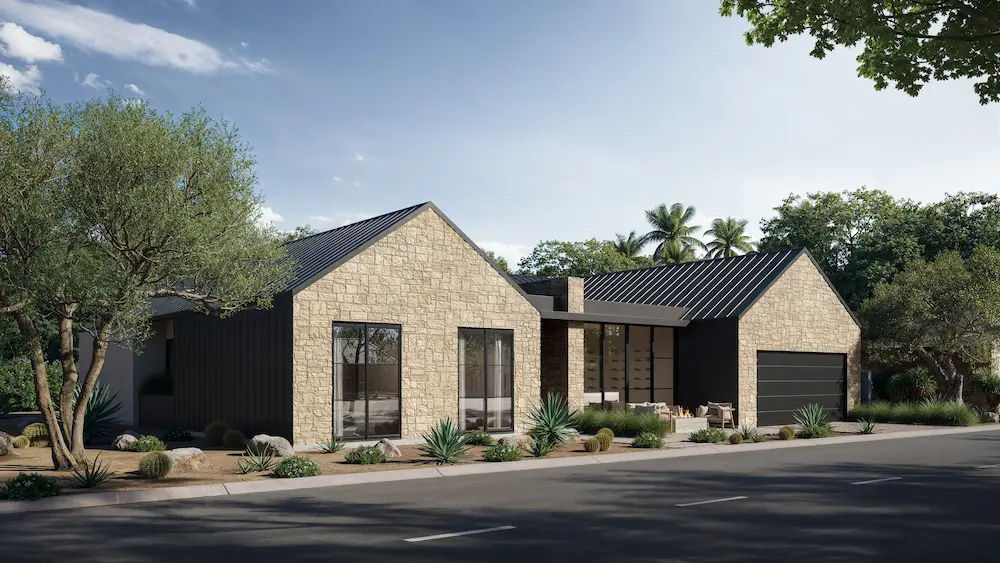
The Cost of Building an ADU in Phoenix, Arizona

Phoenix, Arizona, is experiencing a surge in the popularity of Accessory Dwelling Units (ADUs) as homeowners seek innovative ways to maximize their property value, provide additional housing solutions, and earn rental revenue. ADUs are secondary housing units located on the same lot as a primary residence, offering numerous advantages from increased rental income to enhanced property value. Let’s dive into the costs of building an ADU in Phoenix, the growing trend of ADUs, the benefits they offer, and how our team at Minimal Living Concepts are making the process more efficient. <br> The Growing Popularity of ADUs in Phoenix <br> ADUs have become increasingly popular in Phoenix due to several factors: <br> Housing Demand: As Phoenix’s population grows, the demand for affordable housing options has risen. ADUs provide a flexible and cost-effective solution to this demand. Rental Income: Homeowners are attracted to the potential rental income from ADUs, which can significantly offset mortgage costs and provide financial stability. Property Value: An ADU can enhance the overall value of a property, making it a wise investment for homeowners. Flexible Living Arrangements: ADUs offer versatile living solutions, accommodating elderly parents, adult children, or guests without the need for major property modifications. <br> Advantages of Building an ADU on Your Property <br> Building an ADU on your property comes with numerous benefits: <br> Increased Property Value: An ADU adds significant value to your property, making it more attractive to potential buyers. Additional Income Stream: Renting out an ADU can provide a steady source of income, helping to cover mortgage payments and other expenses. Versatility: ADUs can serve multiple purposes, such as housing for family members, rental units, home offices, or guest houses. Cost-Effective Housing: ADUs offer affordable living solutions for tenants, contributing to the availability of lower-cost housing options in the community. Sustainable Living: ADUs promote efficient land use and can be designed with sustainable building practices, reducing the environmental impact. <br> Minimal Living Concepts: Speed and Efficiency in ADU Construction <br> Minimal Living Concepts is a specialized company in Phoenix that focuses on building ADUs efficiently and effectively. Our specialization brings several advantages: <br> Expertise: With a deep understanding of ADU design and construction, our team streamlines the building process, ensuring high-quality results. Efficiency: Specializing in ADUs allows the company to implement efficient construction practices, reducing build time and minimizing disruption to homeowners. Cost Savings: By focusing solely on ADUs, Minimal Living Concepts can leverage economies of scale within this unique product type, lowering construction costs and passing savings on to homeowners. Customization: The company offers a range of customizable designs, ensuring that the ADU meets the specific needs and preferences of the homeowner. <br> Costs Involved in Building an ADU in Phoenix <br> The cost of building an ADU in Phoenix can vary based on several factors: <br> Size and Design: The larger and more complex the design, the higher the construction costs. Simple designs with standard materials will cost less than custom, high-end finishes. Site Preparation: Costs can increase if significant site preparation is needed, such as grading, utility hookups, or demolition of existing structures. Permitting and Fees: Obtaining the necessary permits and paying associated fees can add to the overall cost. Working with a specialized company like Minimal Living Concepts can help navigate this process efficiently. Construction Materials: The choice of materials impacts the cost. Sustainable or premium materials will increase the budget compared to standard options. Labor Costs: Skilled labor is required for ADU construction, and labor costs can vary depending on the complexity of the project and local market rates. Utilities and Infrastructure: Extending utilities (water, sewer, electricity) to the ADU may require upgrades to neighborhood transformers or other utility enhancements if the property is not already set up for an additional unit. Finishing Touches: Interior finishes, fixtures, and appliances will also impact the final cost. Homeowners can choose to splurge on high-end finishes or save with more economical options. <br> Simplification in building with Minimal Living Concepts <br> We aim to simplify the costs in building an ADU by wrapping all of the predictable project costs into the singular price of your unit. <br> FLEX (322 sq ft): $159,000 LIVE (576 sq ft): $175,000 LIVE+ (741 sq ft): $228,000 DWELL (1,178 sq ft): $298,000 <br> What’s included in the unit cost? <br> Drafting. Structural engineering, electrical engineering, mechanical engineering, and plumbing engineering. Permitting Fees. Management of the entire permitting process. The complete construction of you move in ready unit including all cabinetry and appliances. <br> What’s separate from the unit costs? <br> Site costs such as tree removal, demolition of existing structures, fill and compaction if a specific area must be built up. External utility costs such as panel upgrades to the main home, septic tanks, and water meter upgrades. Special permitting fees or processes such as variances, hillside studies, or flood studies. <br> Conclusion <br> Building an ADU in Phoenix presents a smart investment for homeowners looking to increase property value, generate rental income, and provide flexible living solutions. The growing popularity of ADUs in the city highlights their role in addressing housing demand and offering cost-effective living arrangements. Companies like Minimal Living Concepts bring expertise and efficiency to the construction process, making it easier for homeowners to add these valuable units to their properties. While the costs of building an ADU can vary, the long-term benefits often outweigh the initial investment, making ADUs a compelling option for Phoenix homeowners.

The Benefits of ADUs for Single Family Rental Investors in Phoenix

In the competitive real estate market of Phoenix, single-family rental investors are constantly seeking innovative ways to maximize their returns. One increasingly popular strategy is the construction of Accessory Dwelling Units (ADUs).

Building an ADU vs. Opting for an Assisted Living Facility for Aging Parents: A Financial and Lifestyle Comparison

As our parents age, finding the best living arrangement for them becomes a priority. Two of the most popular options we are seeing today include building an Accessory Dwelling Unit (ADU) on your property or moving them into an assisted living facility. Each has its unique benefits and financial implications. Let’s take a moment to explore these two choices, highlighting the benefits of building an ADU versus opting for an assisted living facility.   Financial Benefits   Initial and Ongoing Costs: – ADU Construction Costs: Building an ADU involves a meaningful upfront investment. Depending on location, size, and design, the cost can range from $180,000 to $300,000. However, once built, the ongoing maintenance costs are relatively low, akin to maintaining a regular home.   – Assisted Living Facility Costs: Assisted living facilities charge a monthly fee that can range from $3,000 to $7,000 or more, depending on the level of care and amenities provided. In Arizona, the average monthly costs of assisted living are roughly $6,000. Over time, these costs can accumulate significantly, often surpassing the one-time construction cost of an ADU.   Long-Term Value: – ADU: An ADU can increase the overall value of your property, making it a worthwhile investment. It can also provide rental income if used as a rental unit in the future, offering a continuous return on investment.   On average, having a 576 square foot one bedroom ADU built on your property by Minimal Living Concepts will cost roughly $218,000 or $380/square foot. Most of our clients live in neighborhoods where homes are worth roughly $500/square foot. This means that the $218,000 that the homeowner paid for the unit adds approximately $288,000 or a $70,000 gain not including rental income and tax benefits.   – Assisted Living Facility: Payments to an assisted living facility do not contribute to building equity or increasing personal assets. The money spent is a continuous outflow with no financial return.   Tax Implications: – ADU: Homeowners can benefit from potential tax deductions on mortgage interest and property taxes. Additionally, rental income from an ADU may qualify for favorable tax treatment under certain conditions. – Assisted Living Facility: While some medical expenses in assisted living facilities may be tax-deductible, the overall financial benefits are generally less favorable compared to owning an ADU.   Lifestyle Benefits   Proximity and Family Interaction: – ADU: Building an ADU allows aging parents to live close to their family, fostering daily interactions and support. This proximity can improve their emotional well-being and quality of life. – Assisted Living Facility: While some facilities are well-equipped and offer a community environment, they may lack the personal touch and frequent family interactions that come with living close to loved ones.   Personalized Care and Independence: – ADU: Parents can maintain a higher degree of independence in an ADU, with the added benefit of personalized care from family members or specialists. This setup can be particularly beneficial for those who value their privacy and autonomy. – Assisted Living Facility: These facilities provide professional care and support, which is crucial for individuals with significant health issues. However, the level of independence can be less compared to living in an ADU.   Flexibility and Multi-Use Potential: – ADU: As an ADU will be fixed on a property for 100+ years and out last us all, it can serve various purposes, such as a rental unit, guest house, or home office. This flexibility adds long-term value and utility to your property. – Assisted Living Facility: The space and resources in an assisted living facility are not flexible and cannot be repurposed for other uses.   Customization and Comfort: – ADU: You can design and customize an ADU to meet the specific needs and preferences of your parents, ensuring their comfort and convenience. Features like ramps, grab bars, and non-slip floors can be included to enhance safety. – Assisted Living Facility: While many facilities offer excellent amenities and care, they may not always align with the personal preferences and comfort levels of your parents.   Conclusion   While both options have their merits, building an ADU on your property offers significant financial and lifestyle benefits compared to an assisted living facility. An ADU is a long-term investment that not only enhances your property’s value but also provides a flexible and personalized living space for aging parents. The close proximity ensures family bonds are strengthened, and the financial advantages make it a practical choice for many families. As you consider the best living arrangement for your aging parents, weigh the benefits of an ADU against the costs and lifestyle implications of assisted living to make an informed decision that best suits your family’s needs.

The Differences Between ADUs and Tiny Homes

Both provide alternative living spaces but differ in various ways, from their purpose and design to regulatory considerations. Understanding these differences can help homeowners and potential residents make informed decisions about which option suits their needs best.

Arizona’s Senate Bill 1415: A Positive Legislative Effort for Arizona ADU’s & Guest Homes!

Learn about the benefits, including increased housing supply, affordability, and economic opportunities, as Arizona tackles its housing crisis with this landmark legislation.

8 Top Reasons to Build an ADU in Arizona

Since the start of Minimal Living Concepts just 3 years ago, we’ve built over 100 of our units all here in Phoenix, Arizona, and have encountered nearly every great reason our clients choose to build and ADU on their property. Here are the top reasons to consider building an ADU in Arizona:
At Home Gym | Minimal Living Concepts

Your Phoenix Tiny Home Builder Partner

At Minimal Living Concepts (MLC), we're driven by a passion for creating exceptional tiny homes in Phoenix, AZ. We recognize the growing desire for a simplified, more intentional lifestyle, and we're here to guide you on your tiny living journey.

Minimal Living Concepts vs Boxabl: Custom Comfort or Prefabricated Efficiency?

This guide will explore the key distinctions between our custom ADU builder services and Boxabl's prefabricated units, empowering you to make an informed choice in favor of the perfect fit for your needs.
expert 1

Ready to speak with a new home expert?

Schedule a Call >

The Typical Building Process

The ol' fashioned way.

Find an architect

An architect designs your home without discussions with engineers, builders and interior designers. You can’t walk through the home design and experience the layout, proportions of the spaces and quality of the fixtures and fittings.

Hope the design is buildable

An architect designs your home without discussions with engineers, builders and interior designers. You can’t walk through the home design and experience the layout, proportions of the spaces and quality of the fixtures and fittings.

Engineering

The engineer designs the structural systems of the house without any consultations with the contracting builder. They may find costly structural issues with the plan which needs to go back to the architect for alterations, adding to the client’s overall costs.

Collect quotes

The client is happy with the design but at this stage won’t know the true costs of the build or whether it’s on budget until they quote it out to different builders. Often quotes come back with varying degrees of build quality, assumptions, and unknown estimates that don't reflect the real cost of construction.

Quote and fees

It’s up to the client to determine which builder quotes will deliver the best final outcome for them. Throughout the whole process, the architect’s fees are paid as each stage is completed with many architects charging around 6%-18% of your final build costs.

Variable pricing

Because the design team are separate from the construction team, unexpected issues can arise which may add to the build cost. Materials, fittings and features often have to be custom-made to the architect’s and engineer’s specifications, therefore adding to the overall build cost.

Change orders

Because the builder was not involved in the design process and doesn't have a complete understanding of the project, it is very likely that you will experience several cost escalation change orders. The worst part is, the builder profits on these price increases that should have been predicted at the project start.

Our Method

Creating a seamless path to new construction.

Experts working together

Our design and construction team work together on each home design. Our architect, interior designer, engineer and builder collaborate to devise solutions that don’t compromise the style or functionality of the home. This all occurs before a design ever lands on our website.

Curated and custom designs

With MLC, you can choose from a range of meticulously crafted home designs or work with our design team to, alter those designs or create a bespoke design tailored to your unique needs and lifestyle.

Holistic design and build solution

Our streamlined approach saves you time and cost while providing one dedicated team for every aspect of your project. The construction costs are a key consideration throughout the design process for peace of mind, efficiency and certainty.

Transparent pricing

For our pre-designed homes, inclusions and costs are finalised before you commit to building your home. There are no hidden or additional costs due to design revisions once your contract is signed. If an unforeseen condition occurs, we never profit on it. This way our incentives align with you.

Design a bespoke home

Our ‘Bespoke Option’ involves personalised brief-development sessions with our architect and sales teams to fully understand your design parameters. New plans and 3D model elevations and site locality plans will be developed following your brief and in collaboration with our team.

01

Initial brief development consultation

02

Bespoke floor plan presented to client for approval

03

3D model elevation and site locality plan presented to client

04

Site visit to understand the plan in its context and make any design changes needed
05

Finalise the revised floor plans and elevations


06

Select your home’s finishes

Schedule a Call