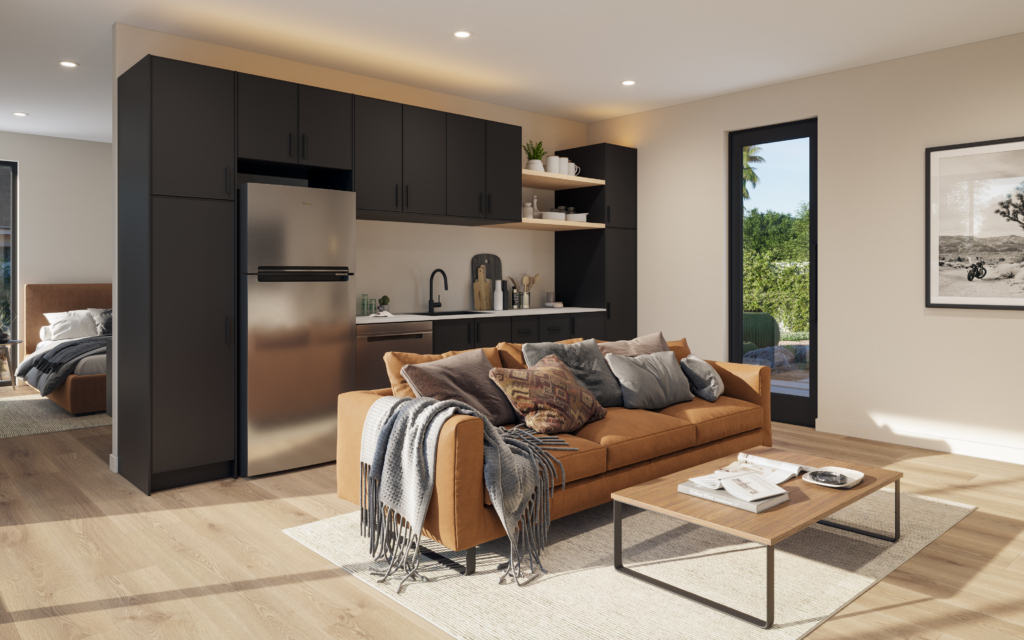
Tiny Home Cost | Minimal Living Concepts

JANUARY 2ND

Tiny Home Cost: Understanding the Real Investment in Minimal Living

Back to all articles

The tiny home cost conversation starts with a number, but it ends somewhere far more interesting.

“Why does this cost more than the $50,000 I saw on Instagram?” 

A friend asked me this recently, genuinely puzzled, and I had to laugh. 

It’s a fair question. 

The tiny home that launched a thousand Pinterest boards rarely comes with a price tag that tells the whole story. 

Site prep, utility connections, permits, design choices that compound in unexpected ways, but the real investment in minimal living deserves an honest breakdown.

In this post, we’re going to focus on what that looks like, where money actually gets spent, and what investment in minimal living delivers across timelines that matter.
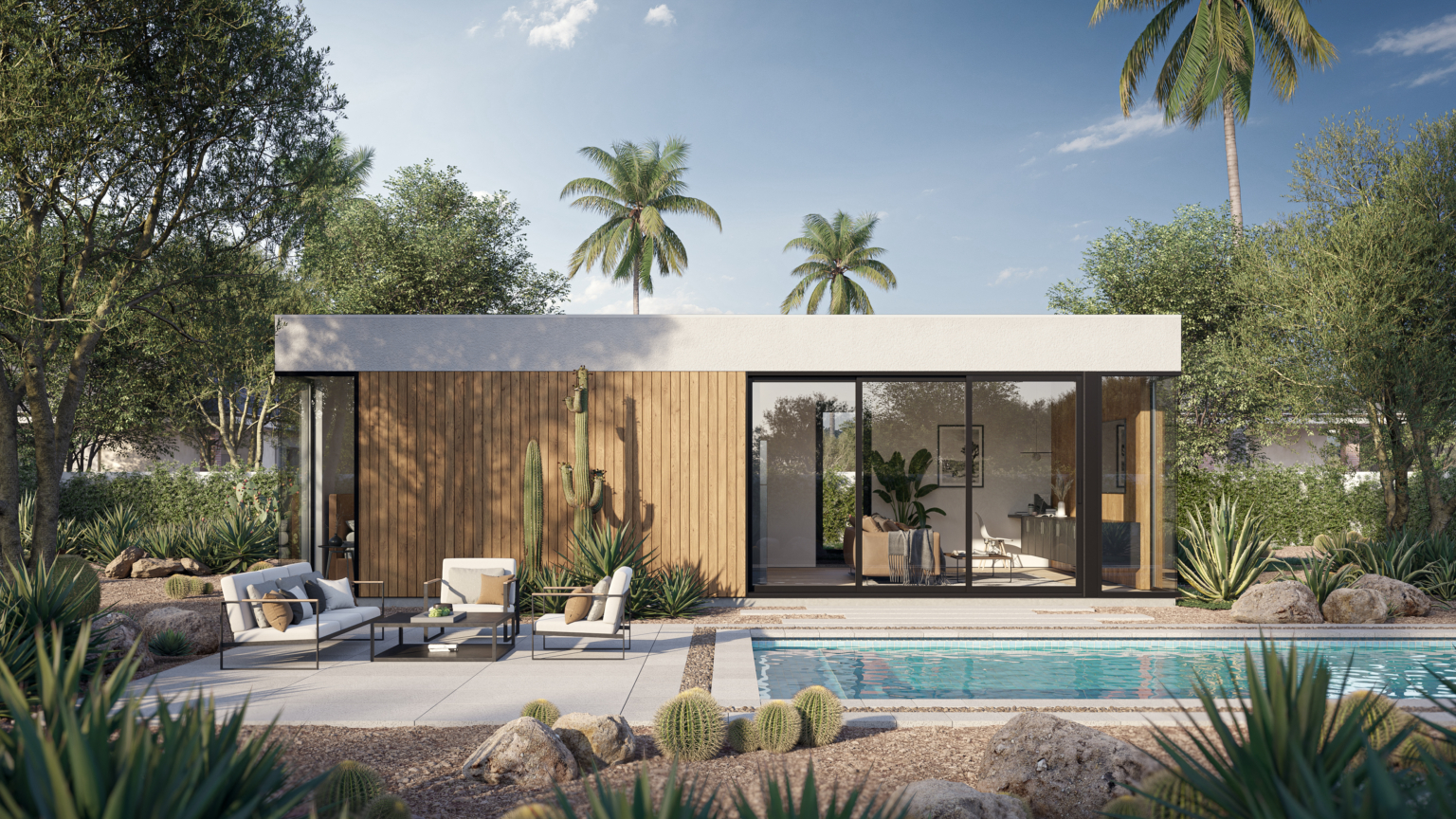
Tiny Home Cost | Minimal Living Concepts

The Foundation Question (It’s More Interesting Than It Sounds)

Tiny house cost calculations diverge dramatically based on one fundamental decision: permanent or portable.

Those trailer-mounted tiny homes that dominated early movement aesthetics? 

They carry a certain appeal (mobility, theoretically simplified permitting, romantic notions of freedom). 

But they also introduce complications that impact long-term costs substantially. 

Trailers require specialized construction to withstand road travel. 

They depreciate rather than appreciate. 

Banks won’t finance them as real estate. 

Insurance runs higher. 

And honestly, in many Phoenix municipalities, they face zoning restrictions that make legal placement genuinely challenging.

Arizona Senate Bill 1415 has actually streamlined ADU approval for permanently-sited structures, but this legislative support doesn’t extend to mobile units. 

The distinction matters enormously, both for upfront tiny home cost and long-term financial implications.

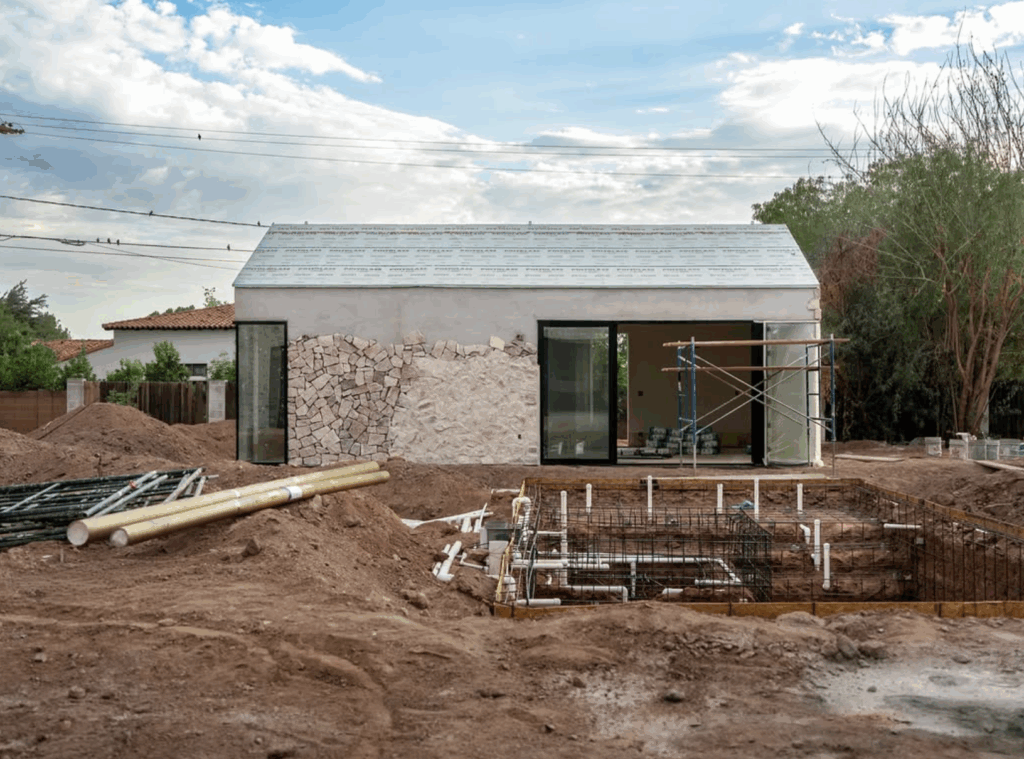
Our approach involves traditional construction on permanent foundations

Yes, this introduces higher initial costs. 

But it delivers structures that banks will actually finance, cities will permit without extraordinary effort, and future buyers will recognize as legitimate property improvements. 

Research shows permanently-sited ADUs typically return 60-80% of construction costs in immediate property value increase, something trailer-mounted units simply cannot claim.

The foundation itself? 

We’re talking $8,000-$15,000 depending on soil conditions. 

That’s a substantial line item, absolutely. 

But it’s also the difference between a depreciating asset and an appreciating one, between something you can finance and something requiring cash payment upfront.
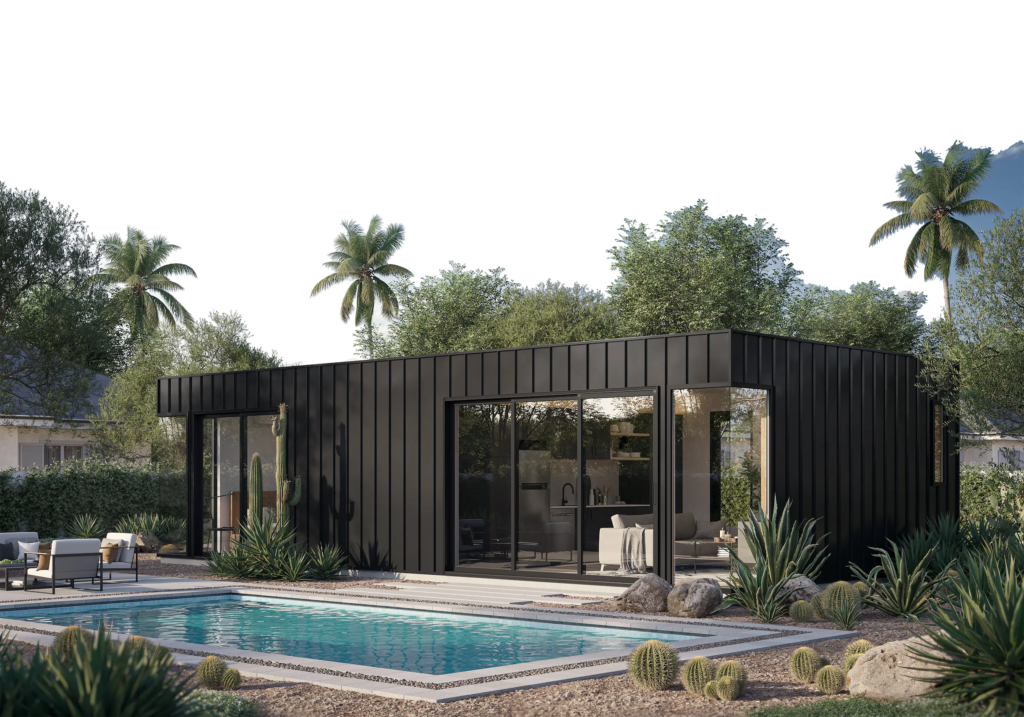
Building a Home | Minimal Living Concepts

Breaking Down the Build (Where Your Money Goes)

Let me walk you through where tiny house cost actually accumulates in a typical 400-square-foot studio build.

  • Site preparation often surprises people.

    Even when you own the land, getting it build-ready involves grading, clearing, establishing access for construction equipment, and often protecting existing landscaping. Budget $5,000-$10,000 here.

    A sloped lot requires more extensive grading. Properties with established trees need careful equipment routing. Desert landscaping demands restoration post-construction.
  • Foundation and framing represent the structural core, roughly $20,000-$30,000 for a quality build using our traditional construction methods.

    This includes concrete work, lumber framing, roof trusses, and sheathing.

    The precision required in small spaces actually increases per-square-foot costs compared to larger structures.

    Every inch matters when you’re working with 400 square feet.
  • Utility connections add another $8,000-$15,000.

    Running electrical service from your main panel, connecting to existing water lines, tying into sewer or septic systems, and none of this is optional.

    Some properties need utility capacity upgrades to handle additional load.

    Most require trenching across landscaped areas.
  • Windows and doors in compact spaces carry a disproportionate impact on livability.

    We’re talking $3,000-$6,000 for well-insulated, properly-sealed openings.

    Arizona heat makes this non-negotiable.

    Cheap windows might save $1,500 upfront but cost multiples of that in cooling expenses, as the Department of Energy research clearly demonstrates.
  • Interior finishes represent where tiny home cost diverges most dramatically based on your choices.

    A basic bathroom with standard fixtures runs $8,000-$12,000.

    Upgrade to custom tile work and higher-end fixtures?

    You’re looking at $15,000-$20,000 pretty quickly.

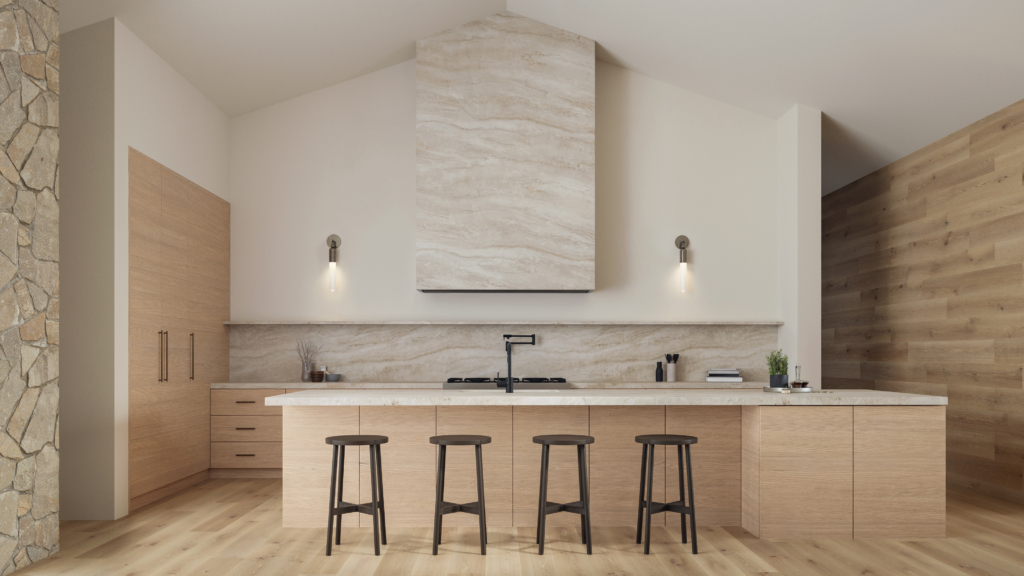
    Kitchen installations (even compact ones) range from $6,000 for simple setups to $15,000+ for thoughtfully designed spaces.
  • HVAC systems run $4,000-$7,000 for mini-split installations that efficiently heat and cool small spaces.

    These systems deliver targeted climate control without extending whole-home ductwork, making them ideal for ADU applications.
  • Flooring, drywall, painting, trim work (these “finish” items collectively add another $12,000-$18,000).

    None of these categories feels individually extravagant, but they compound quickly.
  • Permits and fees in Phoenix typically run $2,000-$4,000, varying by municipality and project scope.

    The permit approval process
    involves plan reviews, multiple inspections, and administrative fees that exist regardless of structure size.
ADU Kitchen Renovation Costs | Minimal Living Concepts

Why the Design Premium Matters

Here’s something worth understanding: design quality matters exponentially more in compact spaces than conventional homes.

Poor space planning in a 2,000-square-foot house means one awkward room. 

Poor space planning in a 400-square-foot dwelling? 

That’s daily frustration with every single activity. 

This is why our design consultation process involves detailed conversations about how you’ll actually use the space, not just aesthetically, but functionally across different times of day and seasons.

Custom design adds $3,000-$8,000 to project costs typically, but the return shows up in livability that off-the-shelf plans simply cannot deliver. 

One client described their M1 design as “the first tiny space that didn’t feel like I was constantly working around the architecture.” 

That’s what thoughtful planning delivers.

Storage solutions in minimal spaces require creative thinking. 

Standard closets and cabinets waste precious volume. 

Multi-functional furniture, built-in storage, vertical space optimization, these elements demand design attention that generic plans overlook. 

Research on small-space living shows perceived space quality correlates more strongly with storage adequacy than actual square footage.


The Arizona Context 

Tiny home cost calculations in Phoenix carry specific regional considerations that impact budget significantly.

Summer cooling demands serious attention. 

Inadequate insulation or undersized HVAC creates miserable living conditions from May through September. 

We’ve found that investing an additional $2,000-$3,000 in enhanced insulation and appropriately-sized cooling systems pays back through reduced utility costs within three years. 

The Phoenix climate makes cutting corners on temperature control a particularly poor economy.

Desert landscaping restoration after construction typically runs $3,000-$5,000. 

The gravel and native plants that characterize regional landscaping require careful removal, storage, and replacement around new structures.

Water efficiency features (low-flow fixtures, tankless water heaters, efficient appliances) add modest upfront costs but deliver ongoing savings in a region where water rates continue climbing, according to Phoenix Water Services.

Sun exposure creates both challenges and opportunities. 

Southern and western exposures generate intense heat gain but also enable passive solar strategies that reduce heating costs during winter. 

Thoughtful window placement and shade structures can reduce cooling loads by 15-25%.


Financing the Investment (The Practical Stuff)

The tiny house cost conversation inevitably leads here: how do people actually pay for these projects?

Cash payment remains common, particularly for smaller builds under $60,000. 

Many homeowners tap home equity through cash-out refinancing or home equity lines of credit, which offer favorable interest rates since the loan is secured by their primary residence. 

We explored this extensively in our piece on financing ADUs in Arizona.

Construction loans work well for traditionally-built permanent structures but typically aren’t available for trailer-mounted units. 

This financing limitation represents a hidden cost of mobile tiny homes: when you can’t finance, you need cash, which means opportunity costs on that capital.

HomeStyle Renovation loans allow buyers purchasing properties to include ADU construction costs in their mortgage, spreading what might seem like prohibitive upfront costs across 30-year amortization. 

This approach has opened minimal living to buyers who couldn’t otherwise afford the cash outlay.

The investment perspective matters here. 

As we discussed in our analysis of ADUs for rental investors, these structures generate rental income that can offset financing costs substantially. 

A 400-square-foot studio renting for $800-$1,200 monthly produces cash flow that transforms the financial equation entirely.
Hidden Costs and Surprises

Let me be honest about where tiny home cost exceed initial projections, because these surprises create genuine frustration mid-project.

  • Furniture and appliances sized for compact spaces often cost more than standard options.

    Apartment-sized appliances, space-efficient furniture, custom storage solutions: these aren’t cheaper simply because they’re smaller.

    Budget $3,000-$6,000 for furnishing appropriately.
  • Landscaping and pathways connecting the new structure to your main house add $2,000-$5,000 typically.

    You’ll want safe, well-lit access.

    You’ll likely want some privacy screening.

    These elements enhance livability substantially.
  • Utility capacity upgrades occasionally become necessary when adding substantial load to existing systems.

    Older homes might need panel upgrades or water line replacements.

    Budget $2,000-$5,000 contingency.
  • Unexpected site conditions (poor soil requiring additional foundation work, rock requiring excavation equipment upgrades, drainage issues demanding correction) occur frequently enough to warrant contingency planning.

    We typically recommend adding 10-15% to projected tiny house cost for such eventualities.


The Value Proposition (What You’re Actually Getting)

Now let’s talk about what these investments deliver beyond the structure itself.

  • Property value increase typically returns 60-80% of construction costs immediately.

    A $90,000 ADU adds $55,000-$70,000 to property value in most Phoenix neighborhoods.

    That represents remarkable return compared to many home improvements.
  • Rental income potential transforms the calculation entirely.

    Phoenix rental market data
    shows 400-square-foot studios commanding $800-$1,300 monthly.

    That’s $9,600-$15,600 annually, enough to recoup construction costs within 6-10 years through rental income alone.
  • Multigenerational living opportunities deliver value that’s harder to quantify but no less real.

    Housing aging parents on-property while maintaining everyone’s independence?

    That’s worth substantial premium over assisted living costs, something we analyzed in our comparison of ADUs versus assisted living.
  • Flexible space for life changes (adult children returning home, work-from-home offices, creative studios, guest accommodations) provides adaptability that single-use room additions cannot match.

    Life doesn’t follow linear paths.
The Timeline 

Tiny home cost includes temporal considerations that impact both budget and planning.

The typical timeline we work within breaks down roughly into: one month for design and permitting, six months for construction, and one month for finishes and final inspections.

Weather delays, material availability issues, or inspection scheduling can extend this, so realistic planning assumes 8-10 months from initial consultation to certificate of occupancy.

Carrying costs during construction (continuing to pay rent if you’re building for eventual occupancy, or forgoing rental income if you’re building an investment property) represent real expenses.

For a build costing $90,000, a two-month timeline extension might add $2,000-$3,000 in foregone rent.


Making the Decision

The tiny house cost question ultimately resolves into whether the investment aligns with your specific circumstances.

We’ve found that clients who benefit most from ADU investments typically fall into several categories: parents needing space for adult children, homeowners planning to age in place who want future flexibility, investors seeking rental income, remote workers needing dedicated office space, or families wanting guest accommodations beyond spare bedrooms.

Touring completed projects helps enormously.

Seeing how another homeowner configured their 400 square feet, observing the quality of finishes, feeling the spatial experience: these tangible encounters inform better choices than renderings ever could.

One client noted in our reviews that “visiting the model completely changed what we thought we wanted.”

The cost question becomes clearer when you consider alternatives.

Renting comparable space costs $800-$1,300 monthly in perpetuity with zero equity building.

Buying a separate property involves dramatically higher costs: median home prices in Phoenix hover around $400,000 according to current market data, making a $90,000 ADU look remarkably economical.

Room additions to existing homes often run $200+ per square foot for quality work, making a 400-square-foot addition cost $80,000+ with less flexibility.

Compared to this, a detached guest home at similar or even slightly higher cost delivers superior lifestyle benefits.


The Path Forward

Your property likely holds potential for minimal living that you haven’t fully considered.

That side yard, that underutilized corner, that space that’s always felt transitional, it could become income-generating, it could house family, it could serve as your workspace or creative sanctuary.

Tiny home cost represents investment rather than expense when approached thoughtfully.

You’re not just building square footage.

You’re creating flexibility, generating income potential, adding property value, and establishing infrastructure for whatever life transitions come next.

We welcome conversations about what’s possible on your specific property.

Getting your quote
begins with understanding your goals, timeline, and how you envision using additional space.

Our pricing structure reflects transparent accounting of where costs accumulate and what investment delivers.

The tiny house cost question has honest answers that respect both your intelligence and your budget.

Let’s explore those answers together and see what makes sense for your property and circumstances.

 

You might be also interested in.

Prebuilt Homes | Minimal Living Concepts

​​Prebuilt Homes and the Arizona ADU Movement: Why Traditional Construction Still Wins

The tiny home cost conversation starts with a number, but it ends somewhere far more interesting. “Why does this cost more than the $50,000 I saw on Instagram?”  A friend asked me this recently, genuinely puzzled, and I had to laugh.  It’s a fair question.  The tiny home that launched a thousand Pinterest boards rarely comes with a price tag that tells the whole story.  Site prep, utility connections, permits, design choices that compound in unexpected ways, but the real investment in minimal living deserves an honest breakdown. In this post, we’re going to focus on what that looks like, where money actually gets spent, and what investment in minimal living delivers across timelines that matter. The Foundation Question (It’s More Interesting Than It Sounds) Tiny house cost calculations diverge dramatically based on one fundamental decision: permanent or portable. Those trailer-mounted tiny homes that dominated early movement aesthetics?  They carry a certain appeal (mobility, theoretically simplified permitting, romantic notions of freedom).  But they also introduce complications that impact long-term costs substantially.  Trailers require specialized construction to withstand road travel.  They depreciate rather than appreciate.  Banks won’t finance them as real estate.  Insurance runs higher.  And honestly, in many Phoenix municipalities, they face zoning restrictions that make legal placement genuinely challenging. Arizona Senate Bill 1415 has actually streamlined ADU approval for permanently-sited structures, but this legislative support doesn’t extend to mobile units.  The distinction matters enormously, both for upfront tiny home cost and long-term financial implications. Our approach involves traditional construction on permanent foundations.  Yes, this introduces higher initial costs.  But it delivers structures that banks will actually finance, cities will permit without extraordinary effort, and future buyers will recognize as legitimate property improvements.  Research shows permanently-sited ADUs typically return 60-80% of construction costs in immediate property value increase, something trailer-mounted units simply cannot claim. The foundation itself?  We’re talking $8,000-$15,000 depending on soil conditions.  That’s a substantial line item, absolutely.  But it’s also the difference between a depreciating asset and an appreciating one, between something you can finance and something requiring cash payment upfront. Breaking Down the Build (Where Your Money Goes) Let me walk you through where tiny house cost actually accumulates in a typical 400-square-foot studio build. Site preparation often surprises people. Even when you own the land, getting it build-ready involves grading, clearing, establishing access for construction equipment, and often protecting existing landscaping. Budget $5,000-$10,000 here. A sloped lot requires more extensive grading. Properties with established trees need careful equipment routing. Desert landscaping demands restoration post-construction. Foundation and framing represent the structural core, roughly $20,000-$30,000 for a quality build using our traditional construction methods. This includes concrete work, lumber framing, roof trusses, and sheathing. The precision required in small spaces actually increases per-square-foot costs compared to larger structures. Every inch matters when you’re working with 400 square feet. Utility connections add another $8,000-$15,000. Running electrical service from your main panel, connecting to existing water lines, tying into sewer or septic systems, and none of this is optional. Some properties need utility capacity upgrades to handle additional load. Most require trenching across landscaped areas. Windows and doors in compact spaces carry a disproportionate impact on livability. We’re talking $3,000-$6,000 for well-insulated, properly-sealed openings. Arizona heat makes this non-negotiable. Cheap windows might save $1,500 upfront but cost multiples of that in cooling expenses, as the Department of Energy research clearly demonstrates. Interior finishes represent where tiny home cost diverges most dramatically based on your choices. A basic bathroom with standard fixtures runs $8,000-$12,000. Upgrade to custom tile work and higher-end fixtures? You’re looking at $15,000-$20,000 pretty quickly. Kitchen installations (even compact ones) range from $6,000 for simple setups to $15,000+ for thoughtfully designed spaces. HVAC systems run $4,000-$7,000 for mini-split installations that efficiently heat and cool small spaces. These systems deliver targeted climate control without extending whole-home ductwork, making them ideal for ADU applications. Flooring, drywall, painting, trim work (these “finish” items collectively add another $12,000-$18,000). None of these categories feels individually extravagant, but they compound quickly. Permits and fees in Phoenix typically run $2,000-$4,000, varying by municipality and project scope. The permit approval process involves plan reviews, multiple inspections, and administrative fees that exist regardless of structure size. Why the Design Premium Matters Here’s something worth understanding: design quality matters exponentially more in compact spaces than conventional homes. Poor space planning in a 2,000-square-foot house means one awkward room.  Poor space planning in a 400-square-foot dwelling?  That’s daily frustration with every single activity.  This is why our design consultation process involves detailed conversations about how you’ll actually use the space, not just aesthetically, but functionally across different times of day and seasons. Custom design adds $3,000-$8,000 to project costs typically, but the return shows up in livability that off-the-shelf plans simply cannot deliver.  One client described their M1 design as “the first tiny space that didn’t feel like I was constantly working around the architecture.”  That’s what thoughtful planning delivers. Storage solutions in minimal spaces require creative thinking.  Standard closets and cabinets waste precious volume.  Multi-functional furniture, built-in storage, vertical space optimization, these elements demand design attention that generic plans overlook.  Research on small-space living shows perceived space quality correlates more strongly with storage adequacy than actual square footage.   The Arizona Context  Tiny home cost calculations in Phoenix carry specific regional considerations that impact budget significantly. Summer cooling demands serious attention.  Inadequate insulation or undersized HVAC creates miserable living conditions from May through September.  We’ve found that investing an additional $2,000-$3,000 in enhanced insulation and appropriately-sized cooling systems pays back through reduced utility costs within three years.  The Phoenix climate makes cutting corners on temperature control a particularly poor economy. Desert landscaping restoration after construction typically runs $3,000-$5,000.  The gravel and native plants that characterize regional landscaping require careful removal, storage, and replacement around new structures. Water efficiency features (low-flow fixtures, tankless water heaters, efficient appliances) add modest upfront costs but deliver ongoing savings in a region where water rates continue climbing, according to Phoenix Water

She Shed | Minimal Living Concepts

The She Shed: How Arizona Homeowners Are Reclaiming Space Through Thoughtful ADU Design

The tiny home cost conversation starts with a number, but it ends somewhere far more interesting. “Why does this cost more than the $50,000 I saw on Instagram?”  A friend asked me this recently, genuinely puzzled, and I had to laugh.  It’s a fair question.  The tiny home that launched a thousand Pinterest boards rarely comes with a price tag that tells the whole story.  Site prep, utility connections, permits, design choices that compound in unexpected ways, but the real investment in minimal living deserves an honest breakdown. In this post, we’re going to focus on what that looks like, where money actually gets spent, and what investment in minimal living delivers across timelines that matter. The Foundation Question (It’s More Interesting Than It Sounds) Tiny house cost calculations diverge dramatically based on one fundamental decision: permanent or portable. Those trailer-mounted tiny homes that dominated early movement aesthetics?  They carry a certain appeal (mobility, theoretically simplified permitting, romantic notions of freedom).  But they also introduce complications that impact long-term costs substantially.  Trailers require specialized construction to withstand road travel.  They depreciate rather than appreciate.  Banks won’t finance them as real estate.  Insurance runs higher.  And honestly, in many Phoenix municipalities, they face zoning restrictions that make legal placement genuinely challenging. Arizona Senate Bill 1415 has actually streamlined ADU approval for permanently-sited structures, but this legislative support doesn’t extend to mobile units.  The distinction matters enormously, both for upfront tiny home cost and long-term financial implications. Our approach involves traditional construction on permanent foundations.  Yes, this introduces higher initial costs.  But it delivers structures that banks will actually finance, cities will permit without extraordinary effort, and future buyers will recognize as legitimate property improvements.  Research shows permanently-sited ADUs typically return 60-80% of construction costs in immediate property value increase, something trailer-mounted units simply cannot claim. The foundation itself?  We’re talking $8,000-$15,000 depending on soil conditions.  That’s a substantial line item, absolutely.  But it’s also the difference between a depreciating asset and an appreciating one, between something you can finance and something requiring cash payment upfront. Breaking Down the Build (Where Your Money Goes) Let me walk you through where tiny house cost actually accumulates in a typical 400-square-foot studio build. Site preparation often surprises people. Even when you own the land, getting it build-ready involves grading, clearing, establishing access for construction equipment, and often protecting existing landscaping. Budget $5,000-$10,000 here. A sloped lot requires more extensive grading. Properties with established trees need careful equipment routing. Desert landscaping demands restoration post-construction. Foundation and framing represent the structural core, roughly $20,000-$30,000 for a quality build using our traditional construction methods. This includes concrete work, lumber framing, roof trusses, and sheathing. The precision required in small spaces actually increases per-square-foot costs compared to larger structures. Every inch matters when you’re working with 400 square feet. Utility connections add another $8,000-$15,000. Running electrical service from your main panel, connecting to existing water lines, tying into sewer or septic systems, and none of this is optional. Some properties need utility capacity upgrades to handle additional load. Most require trenching across landscaped areas. Windows and doors in compact spaces carry a disproportionate impact on livability. We’re talking $3,000-$6,000 for well-insulated, properly-sealed openings. Arizona heat makes this non-negotiable. Cheap windows might save $1,500 upfront but cost multiples of that in cooling expenses, as the Department of Energy research clearly demonstrates. Interior finishes represent where tiny home cost diverges most dramatically based on your choices. A basic bathroom with standard fixtures runs $8,000-$12,000. Upgrade to custom tile work and higher-end fixtures? You’re looking at $15,000-$20,000 pretty quickly. Kitchen installations (even compact ones) range from $6,000 for simple setups to $15,000+ for thoughtfully designed spaces. HVAC systems run $4,000-$7,000 for mini-split installations that efficiently heat and cool small spaces. These systems deliver targeted climate control without extending whole-home ductwork, making them ideal for ADU applications. Flooring, drywall, painting, trim work (these “finish” items collectively add another $12,000-$18,000). None of these categories feels individually extravagant, but they compound quickly. Permits and fees in Phoenix typically run $2,000-$4,000, varying by municipality and project scope. The permit approval process involves plan reviews, multiple inspections, and administrative fees that exist regardless of structure size. Why the Design Premium Matters Here’s something worth understanding: design quality matters exponentially more in compact spaces than conventional homes. Poor space planning in a 2,000-square-foot house means one awkward room.  Poor space planning in a 400-square-foot dwelling?  That’s daily frustration with every single activity.  This is why our design consultation process involves detailed conversations about how you’ll actually use the space, not just aesthetically, but functionally across different times of day and seasons. Custom design adds $3,000-$8,000 to project costs typically, but the return shows up in livability that off-the-shelf plans simply cannot deliver.  One client described their M1 design as “the first tiny space that didn’t feel like I was constantly working around the architecture.”  That’s what thoughtful planning delivers. Storage solutions in minimal spaces require creative thinking.  Standard closets and cabinets waste precious volume.  Multi-functional furniture, built-in storage, vertical space optimization, these elements demand design attention that generic plans overlook.  Research on small-space living shows perceived space quality correlates more strongly with storage adequacy than actual square footage.   The Arizona Context  Tiny home cost calculations in Phoenix carry specific regional considerations that impact budget significantly. Summer cooling demands serious attention.  Inadequate insulation or undersized HVAC creates miserable living conditions from May through September.  We’ve found that investing an additional $2,000-$3,000 in enhanced insulation and appropriately-sized cooling systems pays back through reduced utility costs within three years.  The Phoenix climate makes cutting corners on temperature control a particularly poor economy. Desert landscaping restoration after construction typically runs $3,000-$5,000.  The gravel and native plants that characterize regional landscaping require careful removal, storage, and replacement around new structures. Water efficiency features (low-flow fixtures, tankless water heaters, efficient appliances) add modest upfront costs but deliver ongoing savings in a region where water rates continue climbing, according to Phoenix Water

ADU Plans | Minimal Living Concepts

ADU Plans: From Blueprint to Backyard Reality

The tiny home cost conversation starts with a number, but it ends somewhere far more interesting. “Why does this cost more than the $50,000 I saw on Instagram?”  A friend asked me this recently, genuinely puzzled, and I had to laugh.  It’s a fair question.  The tiny home that launched a thousand Pinterest boards rarely comes with a price tag that tells the whole story.  Site prep, utility connections, permits, design choices that compound in unexpected ways, but the real investment in minimal living deserves an honest breakdown. In this post, we’re going to focus on what that looks like, where money actually gets spent, and what investment in minimal living delivers across timelines that matter. The Foundation Question (It’s More Interesting Than It Sounds) Tiny house cost calculations diverge dramatically based on one fundamental decision: permanent or portable. Those trailer-mounted tiny homes that dominated early movement aesthetics?  They carry a certain appeal (mobility, theoretically simplified permitting, romantic notions of freedom).  But they also introduce complications that impact long-term costs substantially.  Trailers require specialized construction to withstand road travel.  They depreciate rather than appreciate.  Banks won’t finance them as real estate.  Insurance runs higher.  And honestly, in many Phoenix municipalities, they face zoning restrictions that make legal placement genuinely challenging. Arizona Senate Bill 1415 has actually streamlined ADU approval for permanently-sited structures, but this legislative support doesn’t extend to mobile units.  The distinction matters enormously, both for upfront tiny home cost and long-term financial implications. Our approach involves traditional construction on permanent foundations.  Yes, this introduces higher initial costs.  But it delivers structures that banks will actually finance, cities will permit without extraordinary effort, and future buyers will recognize as legitimate property improvements.  Research shows permanently-sited ADUs typically return 60-80% of construction costs in immediate property value increase, something trailer-mounted units simply cannot claim. The foundation itself?  We’re talking $8,000-$15,000 depending on soil conditions.  That’s a substantial line item, absolutely.  But it’s also the difference between a depreciating asset and an appreciating one, between something you can finance and something requiring cash payment upfront. Breaking Down the Build (Where Your Money Goes) Let me walk you through where tiny house cost actually accumulates in a typical 400-square-foot studio build. Site preparation often surprises people. Even when you own the land, getting it build-ready involves grading, clearing, establishing access for construction equipment, and often protecting existing landscaping. Budget $5,000-$10,000 here. A sloped lot requires more extensive grading. Properties with established trees need careful equipment routing. Desert landscaping demands restoration post-construction. Foundation and framing represent the structural core, roughly $20,000-$30,000 for a quality build using our traditional construction methods. This includes concrete work, lumber framing, roof trusses, and sheathing. The precision required in small spaces actually increases per-square-foot costs compared to larger structures. Every inch matters when you’re working with 400 square feet. Utility connections add another $8,000-$15,000. Running electrical service from your main panel, connecting to existing water lines, tying into sewer or septic systems, and none of this is optional. Some properties need utility capacity upgrades to handle additional load. Most require trenching across landscaped areas. Windows and doors in compact spaces carry a disproportionate impact on livability. We’re talking $3,000-$6,000 for well-insulated, properly-sealed openings. Arizona heat makes this non-negotiable. Cheap windows might save $1,500 upfront but cost multiples of that in cooling expenses, as the Department of Energy research clearly demonstrates. Interior finishes represent where tiny home cost diverges most dramatically based on your choices. A basic bathroom with standard fixtures runs $8,000-$12,000. Upgrade to custom tile work and higher-end fixtures? You’re looking at $15,000-$20,000 pretty quickly. Kitchen installations (even compact ones) range from $6,000 for simple setups to $15,000+ for thoughtfully designed spaces. HVAC systems run $4,000-$7,000 for mini-split installations that efficiently heat and cool small spaces. These systems deliver targeted climate control without extending whole-home ductwork, making them ideal for ADU applications. Flooring, drywall, painting, trim work (these “finish” items collectively add another $12,000-$18,000). None of these categories feels individually extravagant, but they compound quickly. Permits and fees in Phoenix typically run $2,000-$4,000, varying by municipality and project scope. The permit approval process involves plan reviews, multiple inspections, and administrative fees that exist regardless of structure size. Why the Design Premium Matters Here’s something worth understanding: design quality matters exponentially more in compact spaces than conventional homes. Poor space planning in a 2,000-square-foot house means one awkward room.  Poor space planning in a 400-square-foot dwelling?  That’s daily frustration with every single activity.  This is why our design consultation process involves detailed conversations about how you’ll actually use the space, not just aesthetically, but functionally across different times of day and seasons. Custom design adds $3,000-$8,000 to project costs typically, but the return shows up in livability that off-the-shelf plans simply cannot deliver.  One client described their M1 design as “the first tiny space that didn’t feel like I was constantly working around the architecture.”  That’s what thoughtful planning delivers. Storage solutions in minimal spaces require creative thinking.  Standard closets and cabinets waste precious volume.  Multi-functional furniture, built-in storage, vertical space optimization, these elements demand design attention that generic plans overlook.  Research on small-space living shows perceived space quality correlates more strongly with storage adequacy than actual square footage.   The Arizona Context  Tiny home cost calculations in Phoenix carry specific regional considerations that impact budget significantly. Summer cooling demands serious attention.  Inadequate insulation or undersized HVAC creates miserable living conditions from May through September.  We’ve found that investing an additional $2,000-$3,000 in enhanced insulation and appropriately-sized cooling systems pays back through reduced utility costs within three years.  The Phoenix climate makes cutting corners on temperature control a particularly poor economy. Desert landscaping restoration after construction typically runs $3,000-$5,000.  The gravel and native plants that characterize regional landscaping require careful removal, storage, and replacement around new structures. Water efficiency features (low-flow fixtures, tankless water heaters, efficient appliances) add modest upfront costs but deliver ongoing savings in a region where water rates continue climbing, according to Phoenix Water

expert 1

Ready to speak with a new home expert?

Schedule a Call >

The Typical Building Process

The ol' fashioned way.

Find an architect

An architect designs your home without discussions with engineers, builders and interior designers. You can’t walk through the home design and experience the layout, proportions of the spaces and quality of the fixtures and fittings.

Hope the design is buildable

An architect designs your home without discussions with engineers, builders and interior designers. You can’t walk through the home design and experience the layout, proportions of the spaces and quality of the fixtures and fittings.

Engineering

The engineer designs the structural systems of the house without any consultations with the contracting builder. They may find costly structural issues with the plan which needs to go back to the architect for alterations, adding to the client’s overall costs.

Collect quotes

The client is happy with the design but at this stage won’t know the true costs of the build or whether it’s on budget until they quote it out to different builders. Often quotes come back with varying degrees of build quality, assumptions, and unknown estimates that don't reflect the real cost of construction.

Quote and fees

It’s up to the client to determine which builder quotes will deliver the best final outcome for them. Throughout the whole process, the architect’s fees are paid as each stage is completed with many architects charging around 6%-18% of your final build costs.

Variable pricing

Because the design team are separate from the construction team, unexpected issues can arise which may add to the build cost. Materials, fittings and features often have to be custom-made to the architect’s and engineer’s specifications, therefore adding to the overall build cost.

Change orders

Because the builder was not involved in the design process and doesn't have a complete understanding of the project, it is very likely that you will experience several cost escalation change orders. The worst part is, the builder profits on these price increases that should have been predicted at the project start.

Our Method

Creating a seamless path to new construction.

Experts working together

Our design and construction team work together on each home design. Our architect, interior designer, engineer and builder collaborate to devise solutions that don’t compromise the style or functionality of the home. This all occurs before a design ever lands on our website.

Curated and custom designs

With MLC, you can choose from a range of meticulously crafted home designs or work with our design team to, alter those designs or create a bespoke design tailored to your unique needs and lifestyle.

Holistic design and build solution

Our streamlined approach saves you time and cost while providing one dedicated team for every aspect of your project. The construction costs are a key consideration throughout the design process for peace of mind, efficiency and certainty.

Transparent pricing

For our pre-designed homes, inclusions and costs are finalised before you commit to building your home. There are no hidden or additional costs due to design revisions once your contract is signed. If an unforeseen condition occurs, we never profit on it. This way our incentives align with you.

Design a bespoke home

Our ‘Bespoke Option’ involves personalised brief-development sessions with our architect and sales teams to fully understand your design parameters. New plans and 3D model elevations and site locality plans will be developed following your brief and in collaboration with our team.

01

Initial brief development consultation

02

Bespoke floor plan presented to client for approval

03

3D model elevation and site locality plan presented to client

04

Site visit to understand the plan in its context and make any design changes needed

05

Finalise the revised floor plans and elevations

06

Select your home’s finishes

Schedule a Call