The she-shed started as a bit of a joke, about reclaiming space in a crowded house when men had their man caves…
But somewhere along the way, it grew up, and what used to be an imagined escape has become an arguably much-required discussion about space, autonomy, and how we actually want to live inside our homes.
A she shed is not to be confused with a hobby hut or a weekend hideaway, at least not in our minds.
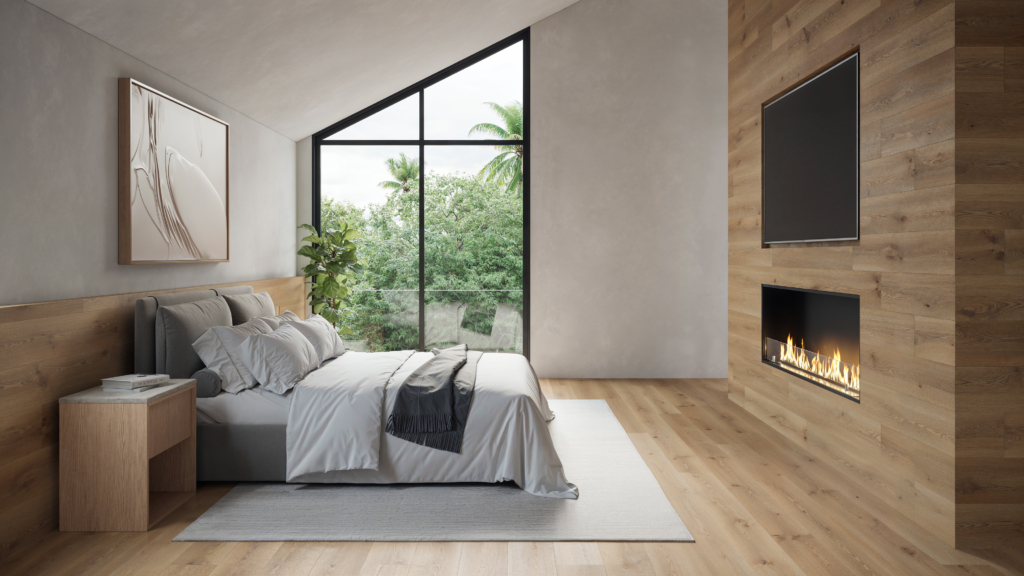
We’re talking about a real room, with everything you need for this to truly be a sanctuary within-and-away-from the home: climate-controlled, permanent, separate, quiet, and all yours.
For any woman who wants a threshold, a physical line you cross to move between different seasons of a single day, a she-shed might just be the way.
From Novelty to Necessity
The she shed started as a playful response to the man cave, a lighthearted spin on the concept, and a way of claiming space in a shared home.
But beneath humour, there is very often some underlying truth.
When we at MLC think about building she-sheds, we want the structures to reflect what is actually a deep, practical need for space that doesn’t answer to anyone else’s schedule, expectations, or demands.
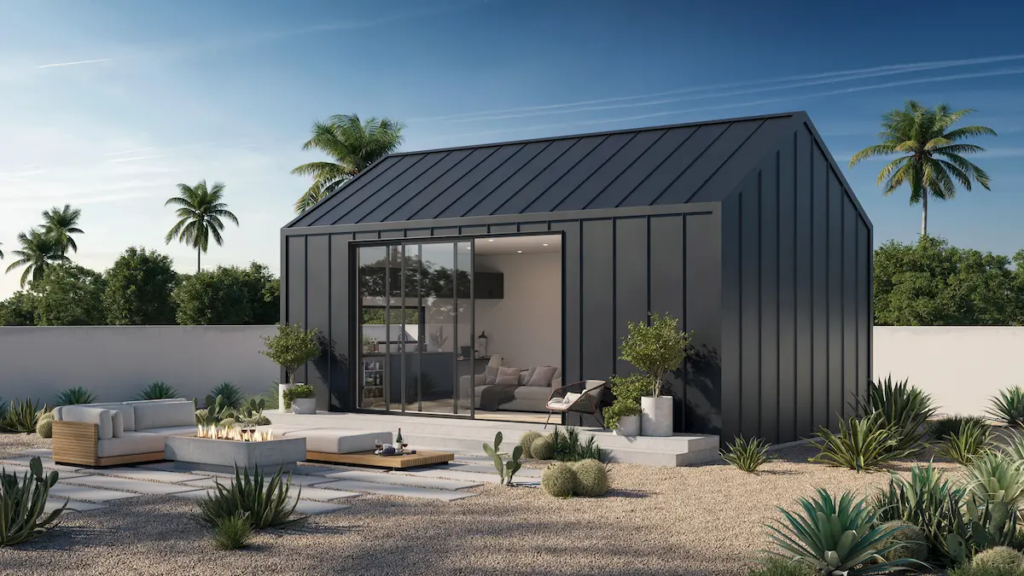
Our Flex studio ADU has become, unexpectedly, one of our most popular she-shed solutions.
At 322 square feet, it’s compact enough to fit in most backyards but substantial enough to feel like genuine architecture rather than a glorified storage shed.
As it turns out, ADU construction has increased by 65% in western states since 2020, with owner-occupied properties driving much of that growth.
That aligns with what we’ve seen on the ground, and it makes sense.
Women are requesting these spaces not as occasional retreats but as dedicated work studios, art spaces, wellness rooms, and offices that exist outside the domestic sphere even while remaining on the same property.
The Architecture of Autonomy
A proper she-shed, built as an ADU rather than a garden shed, opens up a ton of possibilities for how to make the space idiosyncratic, entirely yours, suited to your lifestyle.
We’re talking about permitted structures with proper electrical, plumbing, HVAC systems designed for Arizona’s demanding climate.
The difference between a hobby space and a professional workspace often boils down to these details.
One of our clients, a freelance graphic designer, explained it this way:
She told us her former office was the dining room table, so every evening, she’d have to pack up all her work so she and her family could eat dinner.
Every morning, she’d then have to unpack it again.
It’s a classic issue of an overlapping zone, and it’s psychologically tough to reckon with, not to mention a schlep.
With this in mind, you can think of a she-shed not merely as a space of quiet, isolation, or alone time.
It’s also a way to avoid having to justify that space, move it around, apologize for it, or shove it to the side of the daily flow.
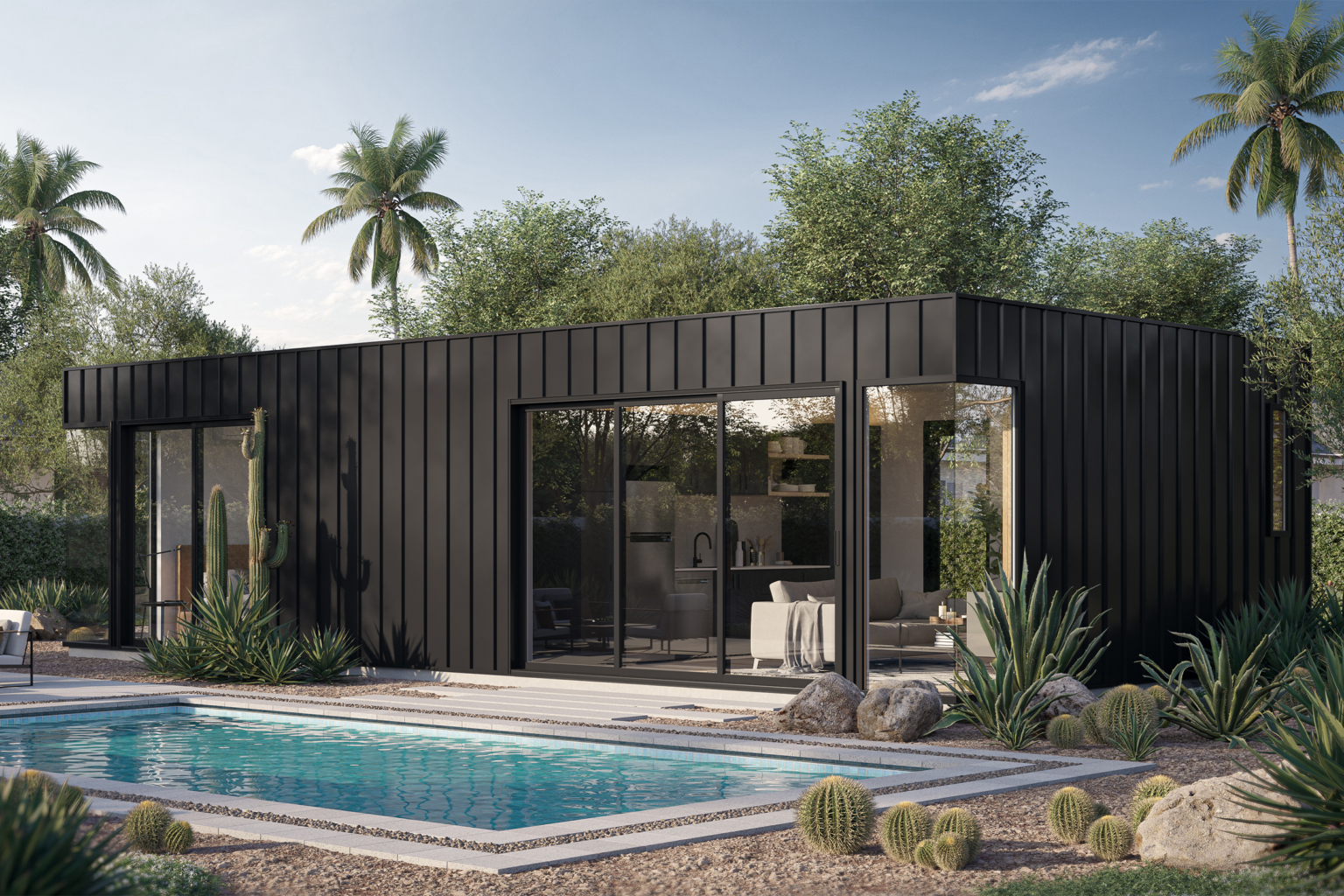
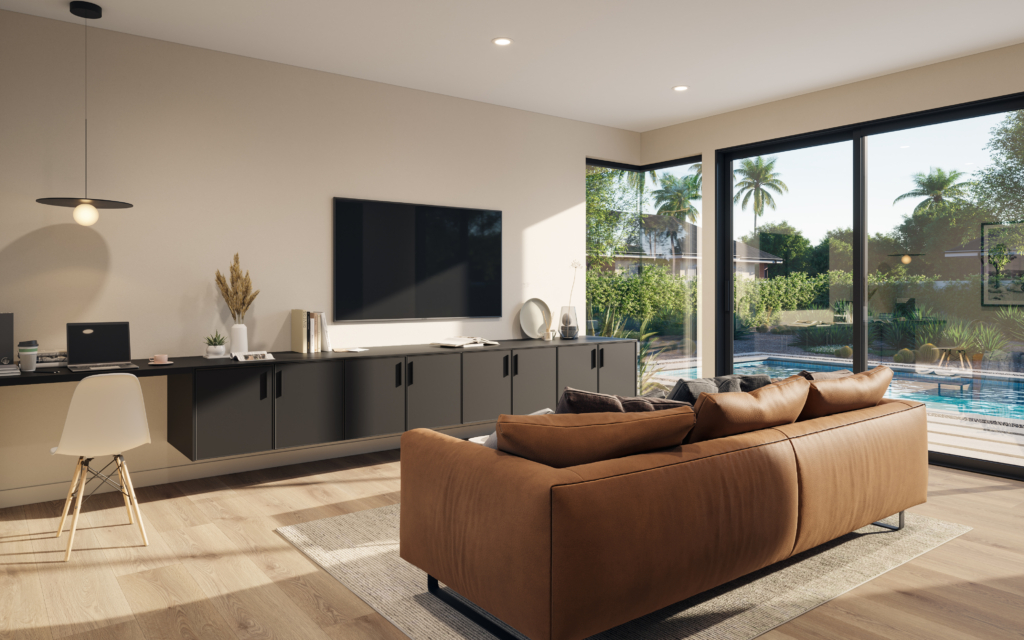
Now, her setup includes our Live model, configured as a studio with a small kitchenette and bathroom.
The 540 square feet gives her room for a proper desk, client meeting area, and storage for materials.
More importantly, the separation from the main house creates psychological distance.
When she crosses from the house to her studio in the morning, she’s commuting, just across thirty feet of patio rather than thirty miles of freeway.
Why She Sheds Succeed as ADUs
The evolution from shed to ADU addresses several practical realities that Pinterest-worthy garden sheds can’t solve:
Climate control
Phoenix summers don’t negotiate, as anyone who has lived here for even one of them will know.
A structure without proper insulation and HVAC isn’t a workspace.
It’s an oven with windows.
Our ADUs are designed specifically for desert conditions, with insulation packages and mechanical systems that maintain comfort year-round.
Legitimate work environments
The COVID-19 pandemic normalized remote work, but it also exposed how many homes lack dedicated professional space.
A she shed built as an ADU solves this with proper egress windows, adequate electrical capacity for computers and equipment, and internet infrastructure built into the structure from the beginning.
Long-term value beyond personal use
If rental income is part of the plan, compare current nearby studios and casitas before setting a monthly estimate.
A she shed that starts as personal studio space can transition to rental income if needs change, something a garden shed conversion can’t quite achieve. Our gardenhouse design guide offers another adaptable path from studio to guest or family use.
The Psychology of the Threshold
Working from home often means work bleeds into evening, leisure time becomes interrupted by professional obligations, and the boundaries between roles dissolve into a kind of exhausting omnipresence.
A she shed, when done right, restores those boundaries physically.
And there’s a certain kind of freedom that comes with this threshold-in-the-home.
Walking from the main house to a separate structure creates a “transitional ritual,” a physical movement that signals mental shift.
And there’s reason to insist on this divide, not least because physical separation between work and living spaces significantly reduces stress and improves work-life balance, even when that separation measures only dozens of feet.
Our Live+ model at 675 square feet offers enough space for something more than a simple office.
One client uses hers as a pottery studio and teaching space, and another has created a yoga and meditation room. For a more exercise-focused version, see our guide to a dedicated backyard gym.
A third works as a therapist and sees clients there, maintaining HIPAA-compliant separation from her family’s living space.

Beyond the Binary
The she shed versus man cave framing, while culturally resonant in so many (sometimes hilarious) ways, ultimately limits how we think about these spaces.
Let’s explore why for a second.
What we’re really discussing is the democratization of dedicated personal space, at least in our minds here at MLC.
We’re talking about the recognition that everyone deserves room that serves their needs without compromise or constant negotiation.
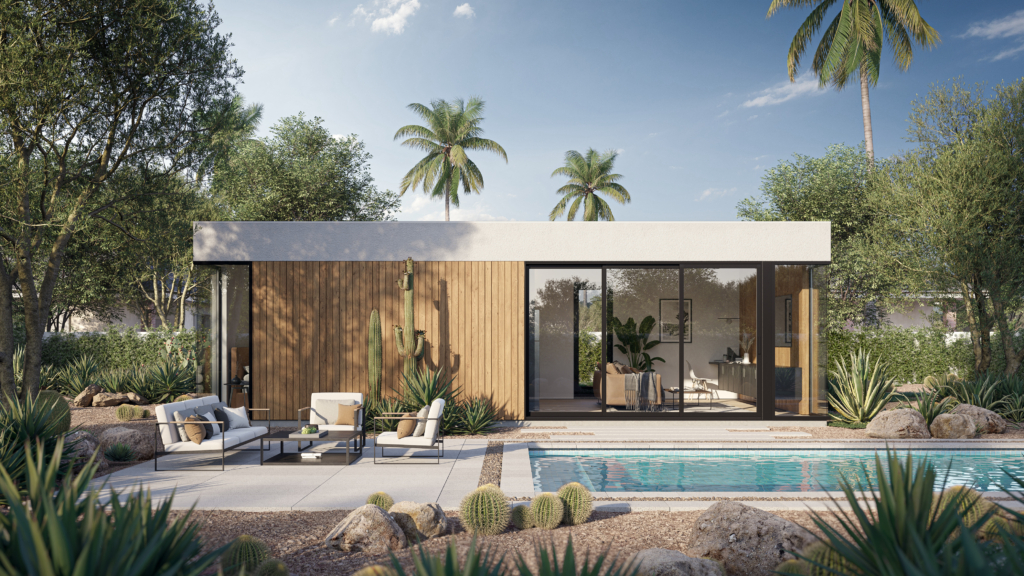
I’ve worked with male clients building art studios, female clients creating woodworking shops, couples who needed separate home offices, and retirees who wanted creative or recreational spaces, like poolhouses, that didn’t compete with guest room requirements.
The structure of an ADU accommodates all of it because it’s architecture that’s also solving real spatial problems.
Our Dwell model takes this flexibility far, at 872 square feet with two bedrooms.
It can function as a combination workspace and guest accommodation, or as a she shed that includes room for overnight stays during intensive creative projects.
The separate bedroom means you can work late without disturbing the main house, or have visiting collaborators stay on-site.
Design Considerations for She Shed ADUs
The difference between a space you use occasionally and one you inhabit daily comes down to thoughtful design.
Here are some elements we’ve learned matter most:
- Natural light, but controlled:
Arizona sun can be glorious or punishing, sometimes within the same afternoon.
Our ADUs include strategically placed windows with proper solar orientation, combined with quality window coverings that let you modulate light levels throughout the day. - Acoustics that support your work:
If you’re recording podcasts, teaching online classes, or simply want to play music without worrying about disturbing the main house, proper insulation and acoustic treatment make the difference.
That’s why we aim to build these considerations into the structure from the beginning. - Storage that disappears:
Small space living requires intelligent storage solutions.
Built-in shelving, under-bench storage, and multipurpose furniture transform a compact footprint into genuinely functional workspace. - Climate zones within the space:
A she shed that’s too warm in summer or drafty in winter won’t get used.
We design HVAC systems sized correctly for the space, with zones that allow for different temperature preferences than the main house.
Making It Real
If you’re reading this and recognizing your own need for dedicated space (whether you call it a she shed, studio, or an office), the question now is how to move from concept to reality.
Our process begins with understanding your property and vision.
We start with a feasibility study examining your lot dimensions, utility access, and local regulations.
With this knowledge, we aim to determine which models fit your property and what site work will be required.
From there, we handle permitting, construction, and installation, delivering a turnkey ADU ready for immediate use.
The timeline typically runs eight months from initial consultation to completion, and while that might sound long, keep in mind that you’re creating a permanent structure that will serve you for decades.
The patience required at the beginning pays dividends in daily use after the fact.
The Space You Deserve
The she shed phenomenon is just another iteration of the extended need for dedicated space for the pursuits that define people beyond their domestic roles.
That space doesn’t have to be large, but it does need to feel permanent, comfortable, and separate enough to provide psychological distance from household demands.
Arizona’s climate, property sizes, and regulatory environment make ADUs particularly viable here.
And our work at MLC focuses on translating those possibilities into actual structures that serve real needs.
Not everyone wants a she shed, but nearly everyone understands the desire for space that belongs entirely to them.
If that resonates with you, or if you’ve been imagining what your backyard could become, don’t hesitate to reach out to discuss the specifics.
We’ll start the conversation with your vision and end it with the details of the architecture that makes it possible.
Sometimes, some of the most valuable real estate you’ll ever own is thirty feet from your back door.