There’s a moment, about three weeks into any gym membership, when the excuses start winning.
The drive feels long.
Someone’s always hogging the squat rack.
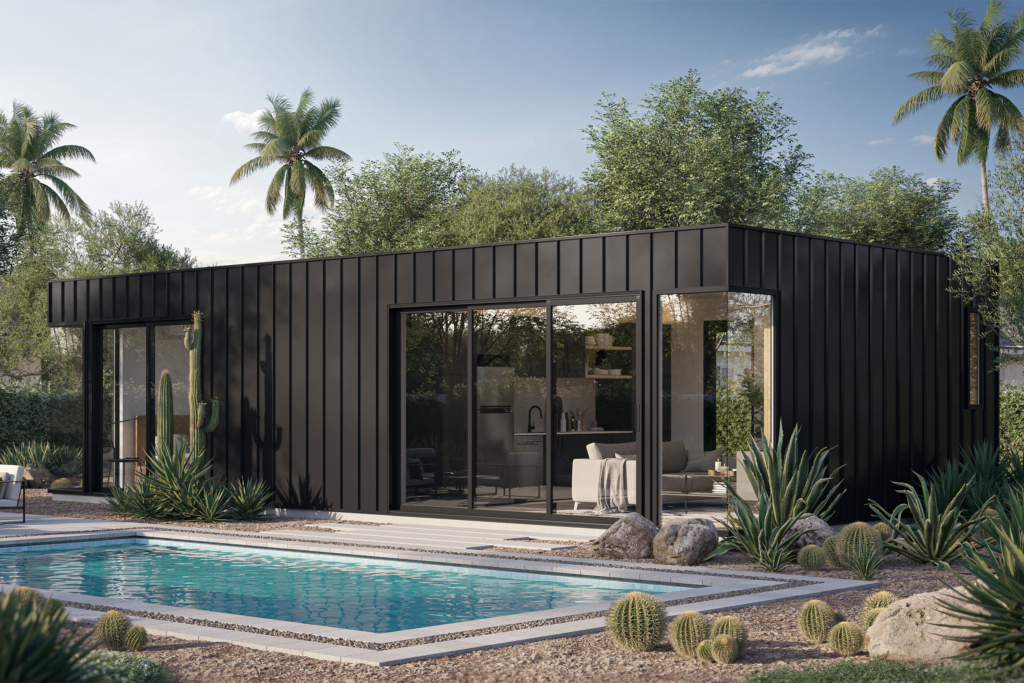
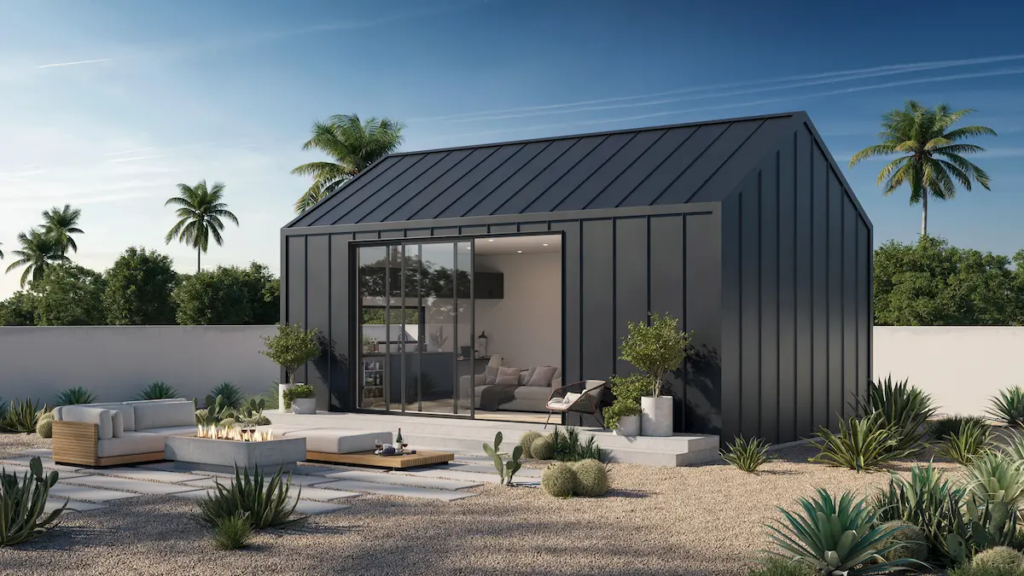
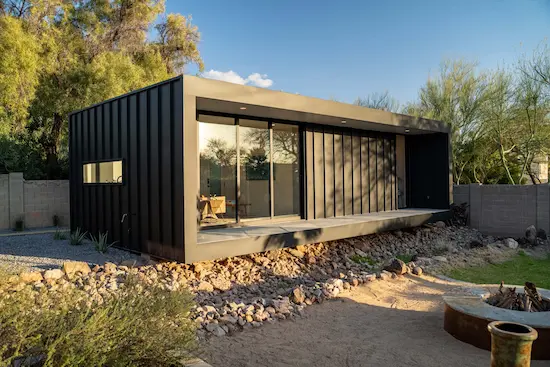
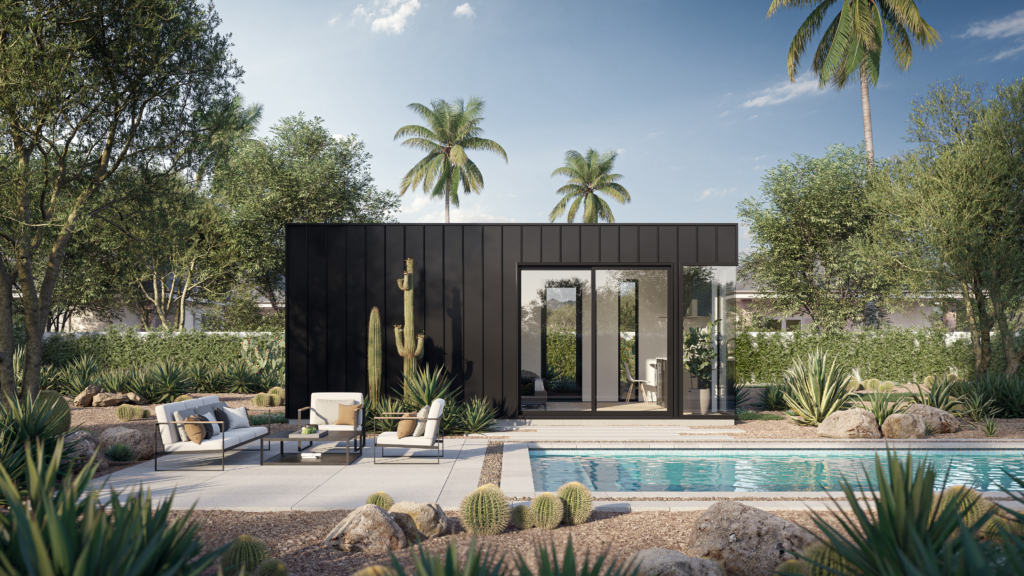
But what if the commute was twelve steps across your backyard?
We’ve been watching Phoenix homeowners completely rethink their relationship with exercise by building dedicated workout spaces on their own property, and the results go far beyond skipping traffic.
The Spatial Economics of Home Wellness
Traditional home gym equipment fills rooms in ways that most homeowners don’t anticipate.
A basic setup (power rack, bench, weights, cardio machine) requires roughly 150-200 square feet of dedicated space.
Add flooring considerations, ventilation needs, and mirror placement, and you’re looking at a significant spatial commitment.
This is where the conversation about ADUs in Arizona becomes particularly interesting.
Rather than converting existing living areas or crowding a garage, dedicated structures offer purpose-built solutions. The same design-first approach applies to a detached personal retreat built around hobbies or downtime.
A client recently described their Flex studio addition as “the room that changed how I start every day.”
They’d struggled with gym memberships, with motivation, with consistency.
But having an at home gym just steps from their main house, which was climate-controlled, private, and always accessible, changed their relationship with exercise completely.
Morning workouts became a simple step in the flow of routine rather than something preceded by a long mental negotiation.
There’s also money to consider, as ever.
Say a gym membership in Arizona runs around $58 monthly.
That will total nearly $700 annually.
Factor in drive time, scheduling constraints, and membership fees for multiple family members, and the investment in dedicated home gym equipment and space begins looking remarkably sensible.
Within 5-7 years, the space pays for itself through eliminated memberships alone, never mind the property value increase.
Design Principles for Movement Spaces
Creating an effective at home gym requires more than clearing floor space and ordering equipment.
The architecture matters, no doubt about it. Our guide to ADU planning for a purpose-built space covers site, layout, and permit-ready decisions.
And ceiling height, for one thing, can be more impactful than one might think.
Standard 8-foot ceilings feel constraining during overhead movements: pull-ups, overhead presses, even certain yoga poses.
Our traditional construction approach usually considers 9 or 10-foot ceilings, a way of opening the spatial experience considerably.
And then, as is always the case for a gym, flooring requires some careful consideration too.
Rubber mats work for basic setups, but serious home gym equipment, especially Olympic lifts or heavy deadlifts, demands proper subflooring.
We’ve found that reinforced floor joists and specialized rubber flooring prevent both structural damage and noise transmission.
And these considerations can be particularly important in two-story configurations or when the gym shares walls with living spaces.
While ventilation also often gets overlooked, it’s hard to forget about after that first summer workout.
Arizona heat is the kind of heat that makes climate control feel less like a luxury and more like basic survival.
And when you’re working out, home gyms churn out way more heat and humidity than a regular room.
In other words, they genuinely need extra air movement to stay comfortable.
That’s where mini-split systems come in.
They deliver cool, focused airflow right where you need it, without having to overhaul your entire home’s HVAC setup.
Efficient, cost-friendly, and wonderfully sensible (especially when you’re trying not to melt mid-workout).
And finally, natural light can completely change the experience.
Access to natural daylight during exercise, and a good view if you can get it, makes any workout that much more enjoyable.
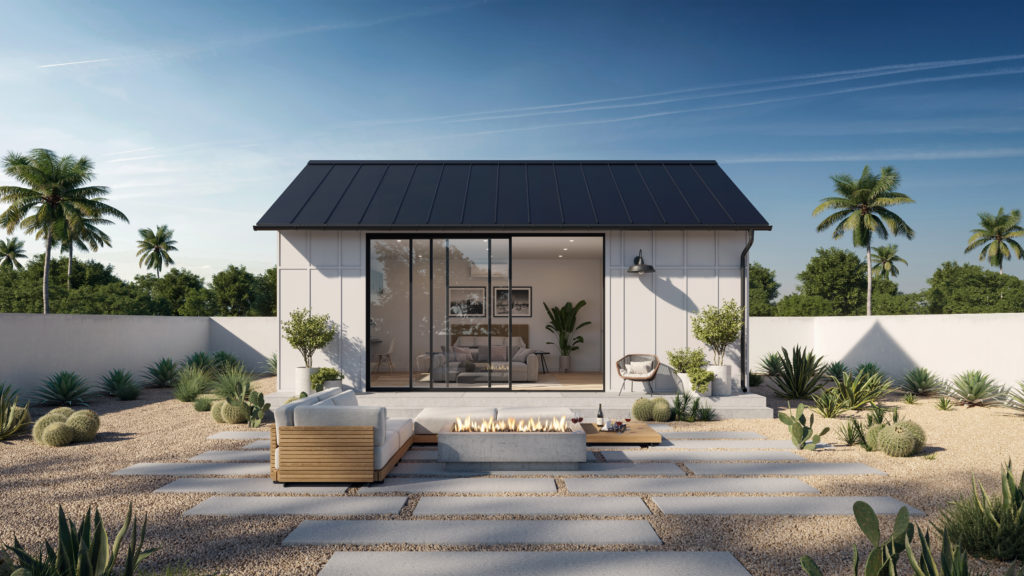
Our M2 design, among many others, incorporates substantial window placement that our clients consistently cite as their favorite feature, and that’s an approach we bring to gym-building too.
It makes the space feel lighter, more airy, bigger.
The Multigenerational Advantage
Convenience ranks as the primary factor in exercise adherence for older adults, as having equipment steps away eliminates transportation barriers while maintaining independence.
Aging parents who might struggle with gym commutes suddenly have accessible options.
That’s something we’ve explored in more detail in our piece on ADUs versus assisted living facilities.
On top of that, young children benefit from normalized movement patterns too.
An at home gym is a great way to integrate exercise into family culture rather than imposed obligation, and that’s especially true if you can lean into the joy, and playfulness, of working out.
Research on habit formation through environmental design supports the idea of environmentally embedding wellness behaviors.
You may not think it at first, but in our experience at MLC, an at home gym can serve multiple generations simultaneously, each with distinct needs and capabilities.
We’ve even had a client share how their guest homes evolved into teenage workout spaces, where their kids felt safe and enthusiastic about working out, providing an at-home outlet and valuable personal space in one go.
The Investment Perspective
Convenience is the thing that makes home gyms actually stick.
Research on exercise habits consistently shows that proximity beats motivation, when the barrier to working out is a twelve-second walk across your backyard rather than a twenty-minute drive, consistency follows.
That’s the practical advantage a dedicated fitness space delivers: it removes the friction that derails most fitness routines.
And building one has never been more straightforward.
House Bill 2720, Arizona’s current statewide ADU law requires larger municipalities to allow ADUs under minimum statewide standards, while Phoenix still controls local permitting.
The legislative environment now actively supports this kind of property enhancement.
Then there’s the financial upside.
Property values have a funny way of jumping when wellness features are part of the package.
Homes with dedicated fitness spaces tend to sell for noticeably more than comparable properties without them, as buyers aren’t just shopping for square footage anymore, they’re shopping for lifestyle.
A home gym signals thoughtfulness, health-consciousness, and a property that’s been genuinely invested in.
In competitive markets, that’s a powerful differentiator.
The real estate agent referral program we’ve developed reflects growing recognition among professionals that auxiliary structures, especially those designed for specific lifestyle purposes, significantly enhance marketability.
From a buyer’s perspective, a home with its own gym speaks directly to health-minded purchasers, often in higher income brackets, often knowing exactly what they want.
The Build Process
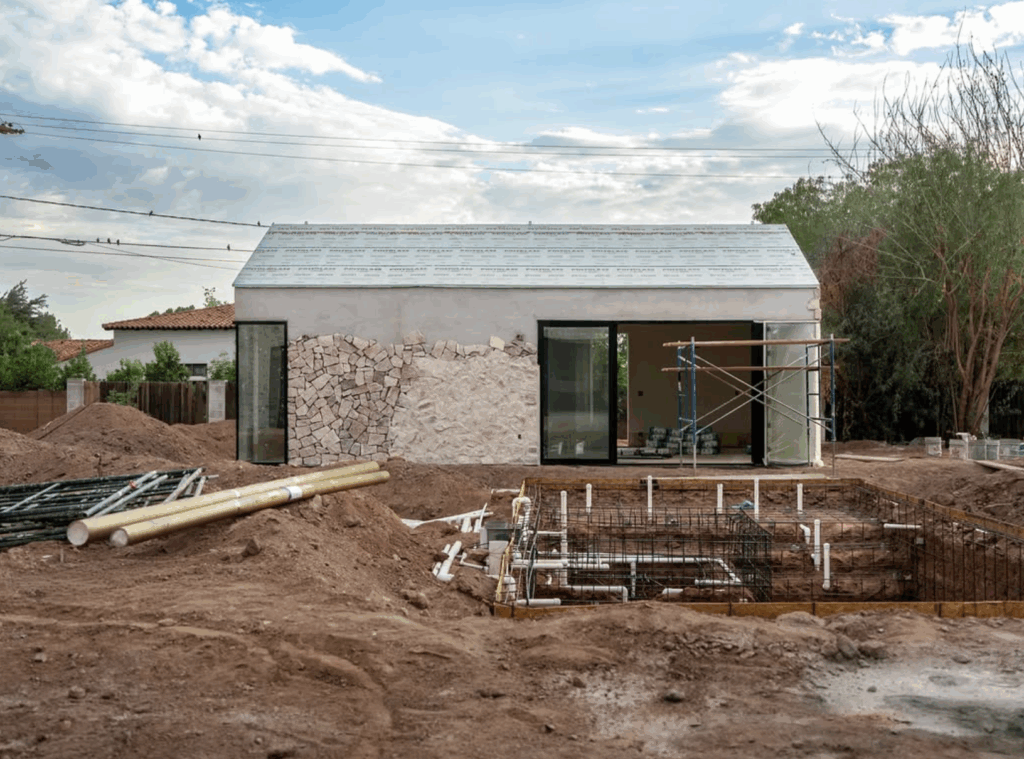
Traditional construction methods offer distinct advantages for fitness-specific structures.
Site-built approaches allow for electrical considerations that prefab solutions often miss: dedicated circuits for treadmills, proper lighting placement, strategic outlet positioning for different equipment configurations.
The timeline we typically work within includes consultation phases where we discuss exactly how you’ll use the space.
What equipment matters most?
What movements dominate your routine?
How does seasonal usage shift?
These conversations shape everything from window placement to floor reinforcement to the overall design approach.
Permit approvals proceed smoothly when dealing with traditionally-constructed buildings.
Municipalities understand conventional building methods.
Banks readily finance them, as we explored in our piece on financing options.
Future buyers recognize their value.
And in our experience, the path of least resistance often proves the wisest choice.
We’ve also found that clients appreciate the opportunity to tour completed projects before making decisions.
Seeing how another homeowner configured their workout space, observing the lighting quality at different times of day, feeling the ceiling height, these tangible experiences inform better design choices than any catalog ever could.
The Invitation
Your property holds potential you might not have fully considered.
That side yard, that underused corner, that space that’s always felt transitional, all of these could become the foundation for daily practice, lifelong wellness, the routines that define your best self.
An at home gym works the same way as any room: architectural support for human flourishing, spatial commitment to the person you’re becoming, investment in the daily rituals that, gathered up, create a life.
We’d welcome a conversation about what’s possible on your property, if building an at home gym is something you’re considering.
Getting your quote starts with understanding how you want to live, move, and grow within the space you call home.
Feel free to schedule a quick call with us, and we’ll gladly help you explore what that might look like.