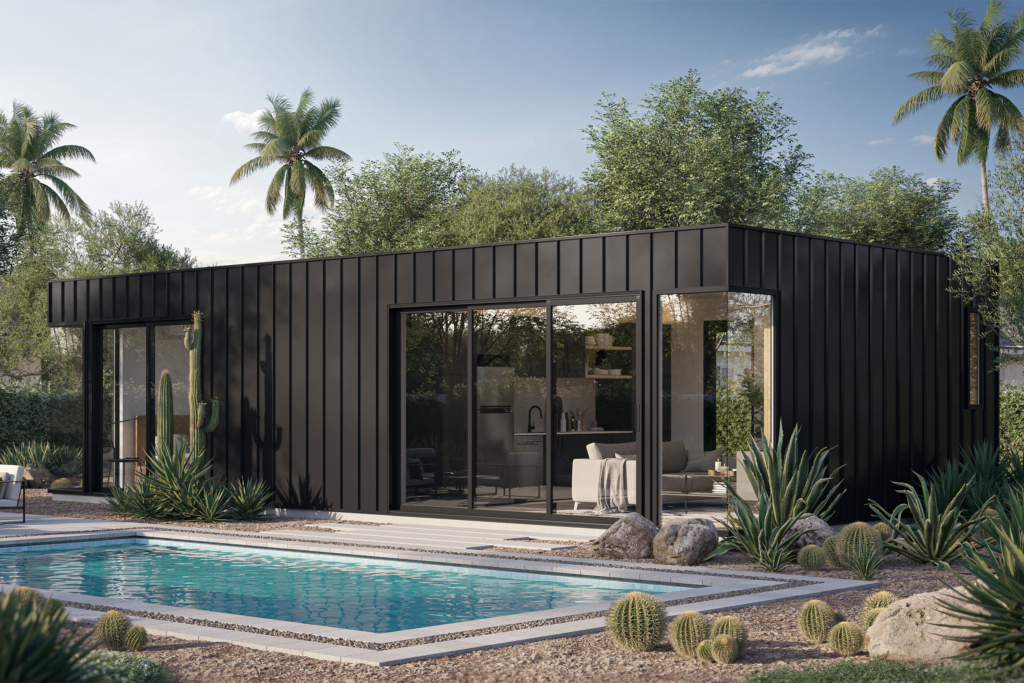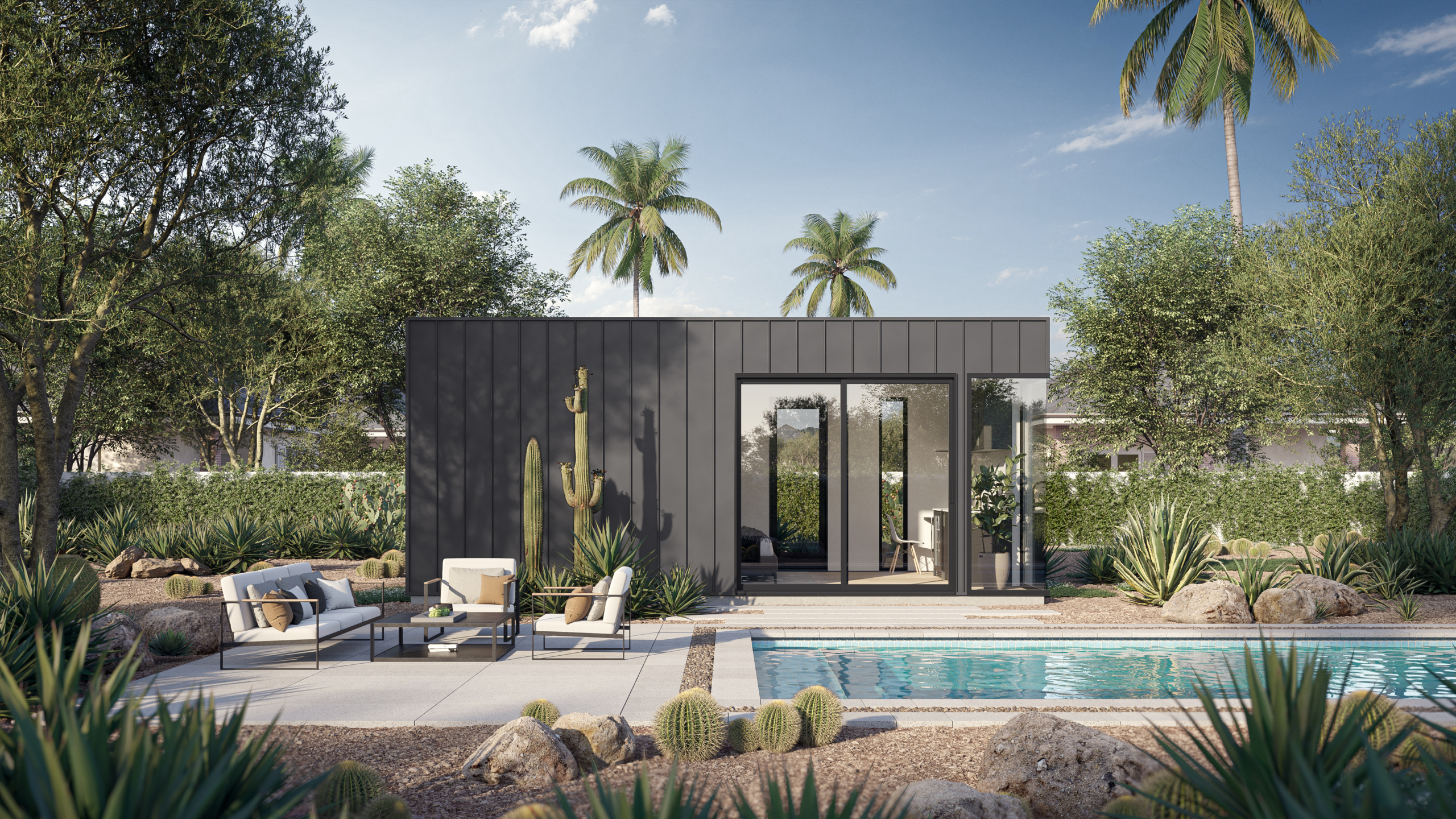
Last month, I watched sunlight pour through the windows of a neighbor’s newly completed ADU.
They’re using it as an art studio, which is a good reminder: these backyard buildings aren’t just about square footage.
They’re solving problems traditional housing markets can’t touch, from aging parents who need proximity to adult children priced out of rentals and remote workers desperate for dedicated space.
And sometimes, they’re just a place to paint.
So, what drives demand?
And how do ADU house design choices impact livability?
What’s the financial proposition, and why might it make increasingly compelling sense?
Let’s dive in.
Why Traditional Construction?
Here’s where we need to talk about something that sounds boring but genuinely isn’t: construction methodology.
I’ve watched this debate unfold countless times.
Prefabricated ADU houses promise rapid installation and lower costs.
The reality?
More complicated.
At MLC, our commitment to traditional construction methods comes from experience, not ideology.
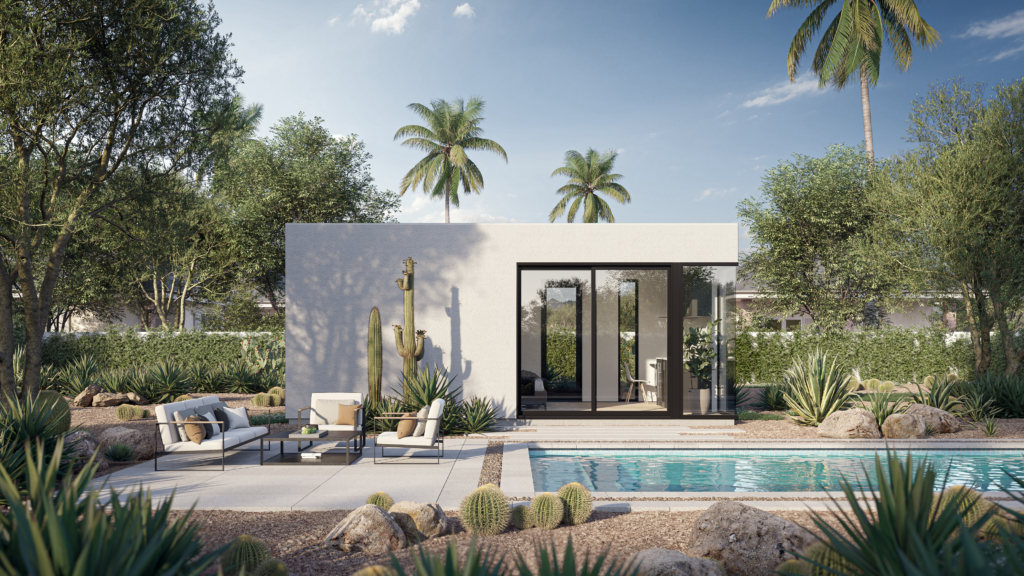
Site-built ADU houses respond to specific conditions, drainage patterns, solar orientation, prevailing winds, relationship to existing landscaping.
Prefab units impose standardized solutions onto unique contexts.
And here’s the kicker: banks actually care about this distinction.
Traditional construction gets financed as permanent property improvement.
Prefab units?
They occupy murky territory between manufactured housing and real estate, complicating both initial financing and eventual property sales.
The permit approval process proceeds more smoothly with traditional construction too.
Inspectors understand conventional systems.
This familiarity translates into fewer delays and faster completion.
From Studio to Two-Bedroom: Finding Your Fit
The ADU house category encompasses remarkable variety, each configuration serving distinct purposes.
And according to the National Association of Home Builders, nearly 40% of builders incorporated smaller auxiliary structures into projects in 2023.
In Arizona specifically, Senate Bill 1415 streamlined approval processes, removing regulatory barriers that made these projects prohibitively complex.
Our Flex studio design (roughly 400 square feet) works beautifully as home offices, guest accommodations, or rental units.
We’ve watched clients configure these in remarkably diverse ways.
One created a photography studio with specialized lighting.
Another generates $1,100 monthly rental income housing a graduate student.
The M1 design adds bathroom facilities and more deliberate separation between living and sleeping areas.
These appeal to families housing adult children or accommodating aging relatives who value independence.
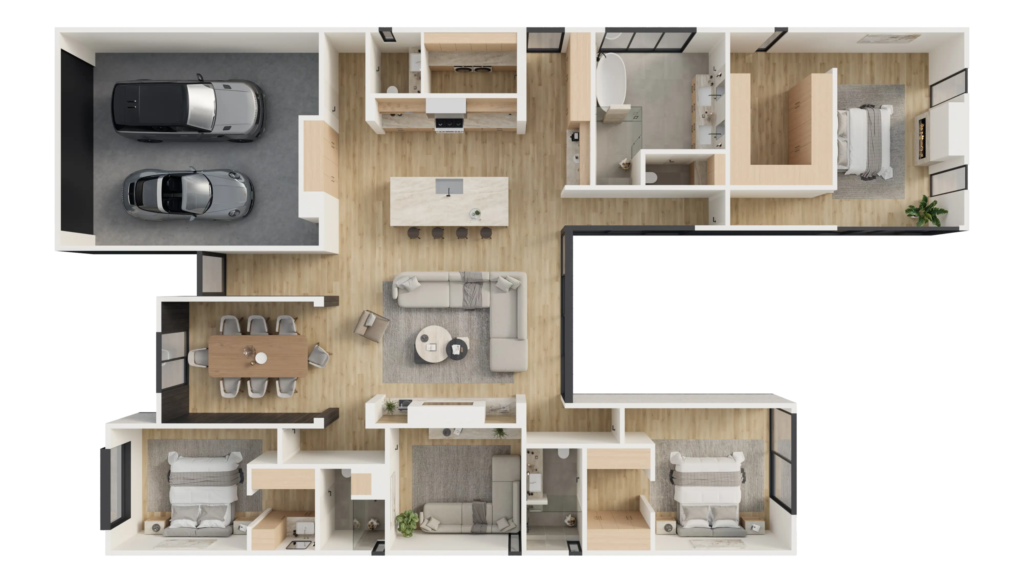
Our Live one-bedroom configuration (700-800 square feet) functions as complete residences with full kitchens, separate bedrooms, and living areas.
The Dwell two-bedroom approaches 1,000 square feet, accommodating small families comfortably.
Multigenerational Living Without the Friction
Here’s something that doesn’t show up in financial spreadsheets but matters enormously:
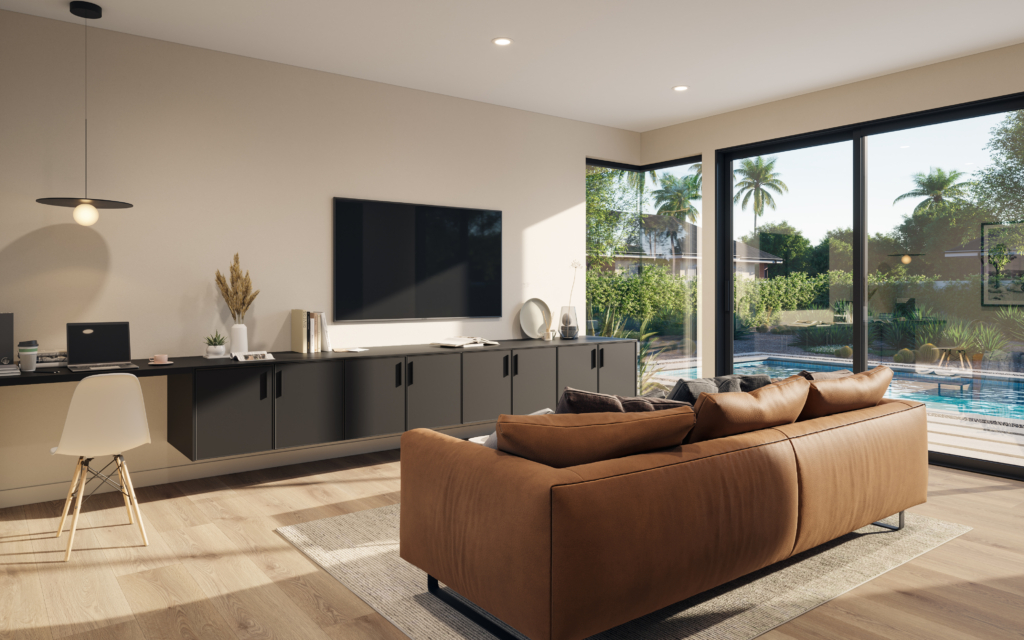
ADU houses solve the proximity-versus-privacy problem.
Traditional multigenerational living creates friction.
Different sleep schedules, varying cleanliness standards, dietary preferences, these accumulate into real stress.
But an ADU house offers an elegant resolution:
Proximity measured in footsteps, but separate thresholds, separate utility meters, separate living rhythms.
Adult children establishing careers appreciate affordable housing near family without surrendering autonomy.
Aging parents value assistance availability without becoming burdens.
We compared this against assisted living in our piece on ADUs versus assisted living facilities.
The financial comparison is striking: assisted living in Phoenix averages $4,500-$6,500 monthly according to Genworth’s Cost of Care Survey.
Even financing an ADU through home equity produces monthly costs substantially below this, while maintaining property ownership.
The Design in the Details
Creating successful ADU houses requires attention to nuances that distinguish adequate shelter from genuinely pleasurable spaces:
- Solar orientation in Phoenix carries huge implications.
Southern and western exposures generate intense heat (our M2 design incorporates passive solar strategies reducing summer cooling costs by 20-30% for this very reason). - Ceiling height profoundly affects perceived spaciousness.
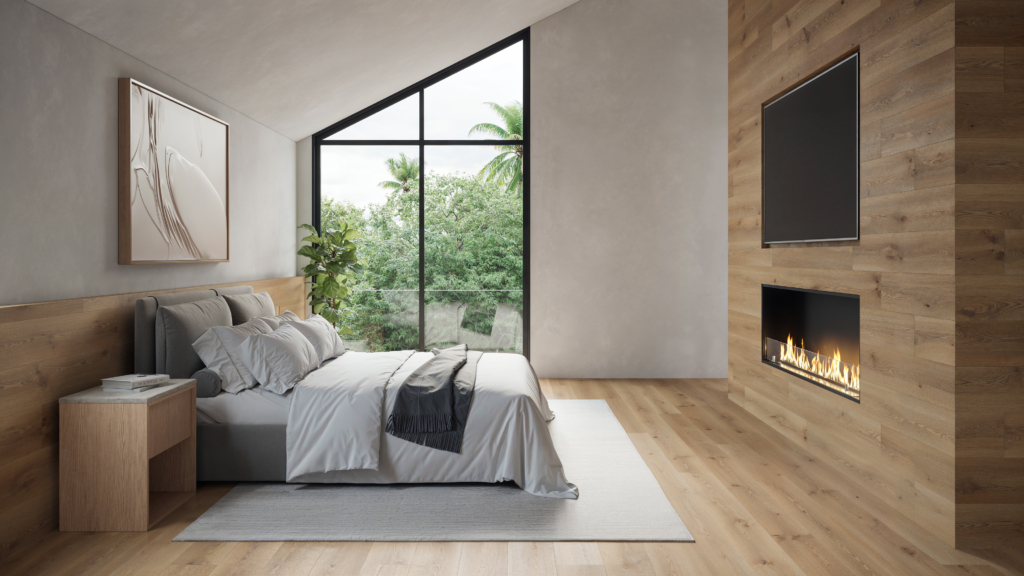
Standard 8-foot ceilings feel constraining.
Our preference for 9-10 foot ceilings transforms spatial experience, creating volume that compensates for limited floor area. - Storage design demands creativity beyond standard closets.
Built-in storage, vertical space use, multi-functional furniture … all these elements distinguish thoughtfully designed ADU houses from cramped boxes.
Research on residential satisfaction consistently identifies storage adequacy as among the strongest predictors of occupant satisfaction.
The Construction Journey
Building an ADU house follows a relatively predictable timeline when approached systematically.
Initial design consultation spans 2-4 weeks.
During this time, we encourage clients to tour completed ADU houses to experience actual spaces that take abstract discussions and spin them into a very clear, tangible understanding.
Permit processing occupies 4-8 weeks.
Site preparation and foundation work requires 2-3 weeks.
Framing and exterior closure takes 8-12 weeks.
Interior finishes require 8-10 weeks.
And all in all, the complete timeline typically spans 7-9 months, though we encourage planning for 8-10 months just to be sure there’s some cushion time.
The Rental Market Reality
The Phoenix ADU house rental market exhibits consistent demand across demographics.
- Young professionals value location over square footage (a 400-square-foot ADU in a desirable neighborhood commands premium rents).
- Graduate students seek quiet, affordable housing near campuses.
- Downsizing retirees increasingly seek small, manageable housing without multifamily environments.
Current Phoenix rental data shows consistent demand with vacancy rates substantially below multifamily markets.
Single-family neighborhoods with ADU availability remain relatively uncommon, creating supply constraints supporting stable rents.
Phoenix-Specific Considerations
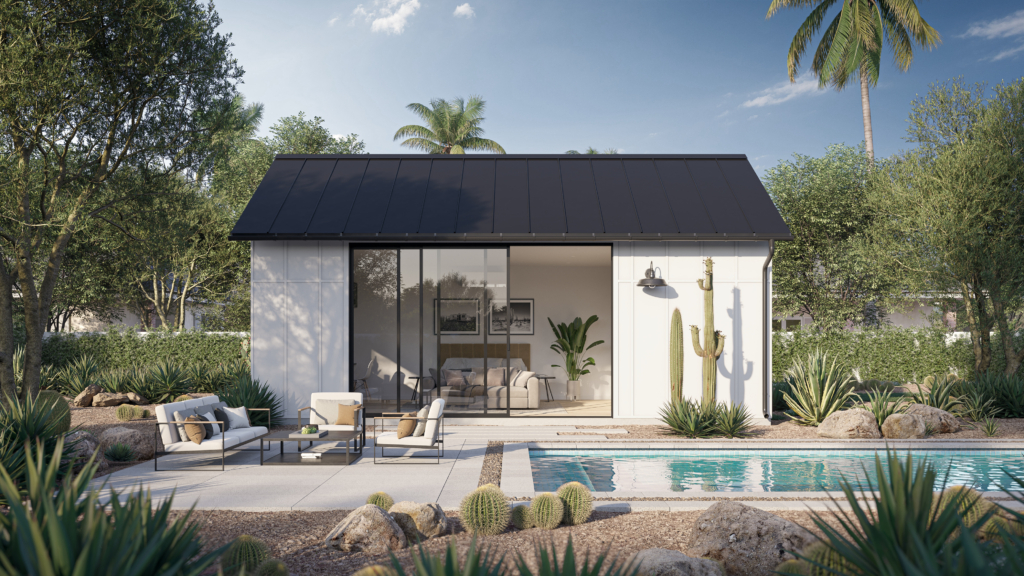
Climate control, in our beloved but baking-hot Phoenix, is always going to need some attention.
Summer temperatures regularly exceed 110°F, so undersized cooling or inadequate insulation isn’t merely uncomfortable but genuinely dangerous (and ultimatley, won’t cut it in the long term).
The Phoenix climate makes quality systems non-negotiable.
Water efficiency grows increasingly important as Arizona faces supply constraints.
Phoenix Water Services provides rebates for conservation measures, partially offsetting efficient fixture costs.
Making Your Decision
The ADU house question ultimately resolves into whether investment aligns with your specific circumstances.
Certain scenarios prove particularly compelling: homeowners with significant equity seeking retirement income, families anticipating adult children returning home, couples planning to age in place wanting housing flexibility, remote workers needing dedicated workspace, or investors seeking improvements generating immediate rental income while building equity.
Getting your quote begins with understanding your goals and constraints.
Our pricing structure reflects transparent accounting, where investment typically ranges $75,000-$150,000 depending on size and finishes, with most projects clustering around $100,000-$120,000.
We’re happy to chat through financing options too, of course.
The ADU house really does offer some fun-but-practical, rare opportunities for individual property improvements to address both personal and even broader societal needs, increasing housing supply, enabling multigenerational living, creating income opportunities.
Your backyard holds potential worth exploring carefully.
Schedule a call with us, and we’d be happy to chat through the details with you, on your terms.