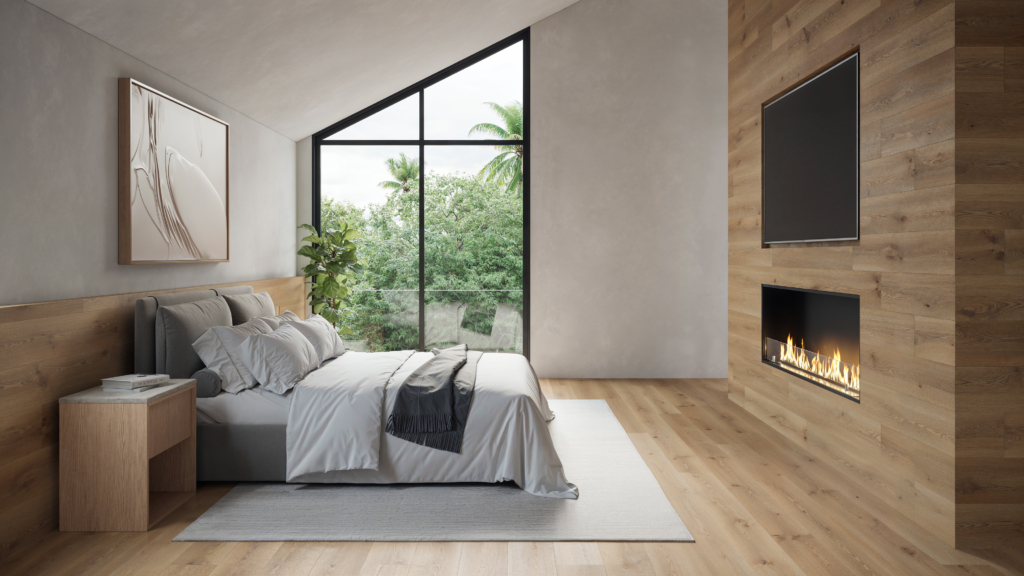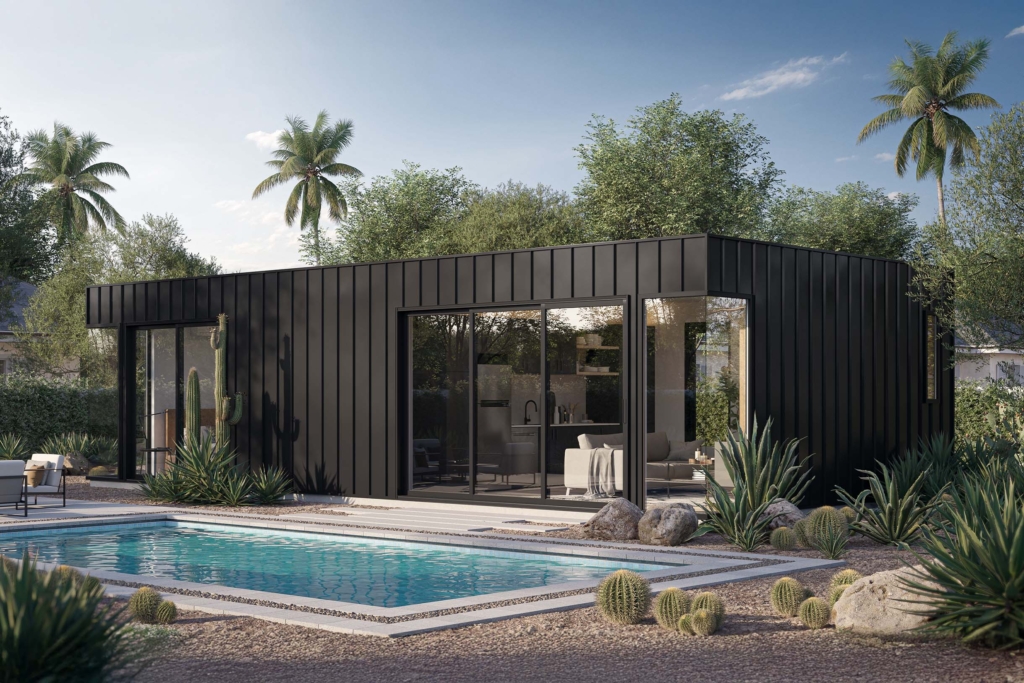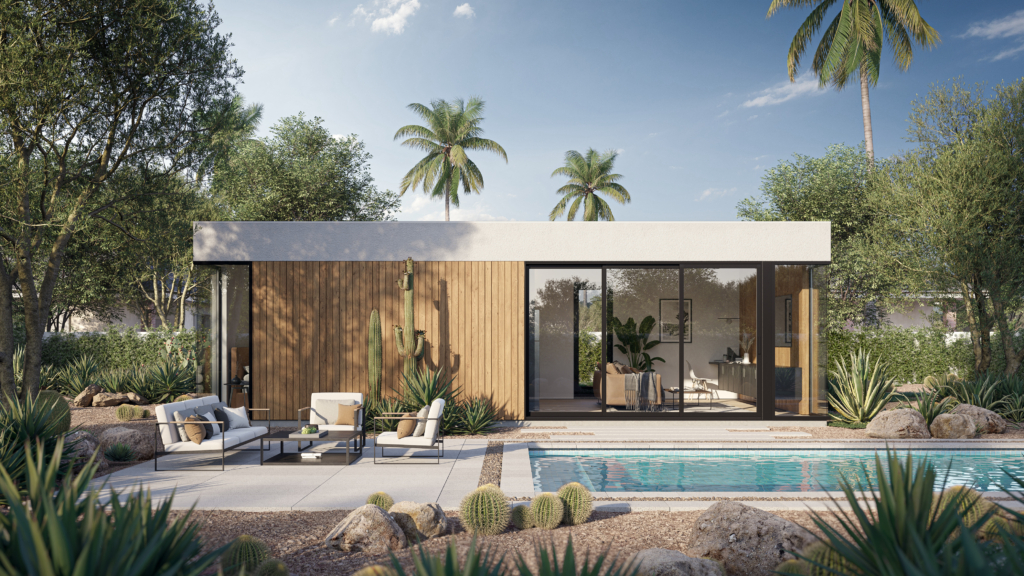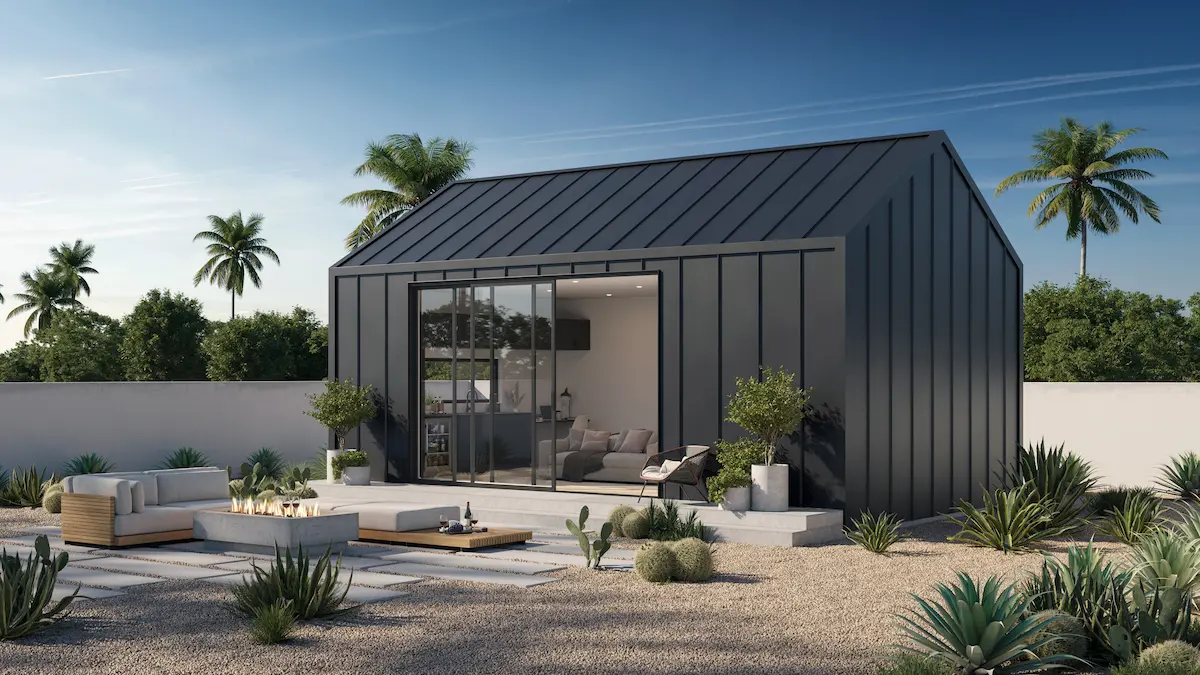
Okay, admittedly, man cave decor is a pretty funny phrase.
But if you’ve decided you want to grant yourself to build a space that answers to no one else’s aesthetic, no one else’s schedule, no one else’s definition of what a room should be, we’ve got some thoughts and inspiration we’d love to share.
For decades, men have carved out corners of basements and claimed sections of garages, hanging jerseys on cinder block walls and calling it sanctuary.
It’s something we’ve seen so often, to the point where we’ve come to acknowledge this feature of the homes we work on as an inevitable part of life.
And why not?
But a question worth asking is:
What if your man cave decor could exist without any compromise, without it being a hastily-put-together, liminal half-space in the house?
If you head in with clear intentions, what could you create instead?
What if the space itself, not just what you put inside it, could be designed entirely around what you want?
Here are some approaches we’ve tried and tested and now would like to share with you.
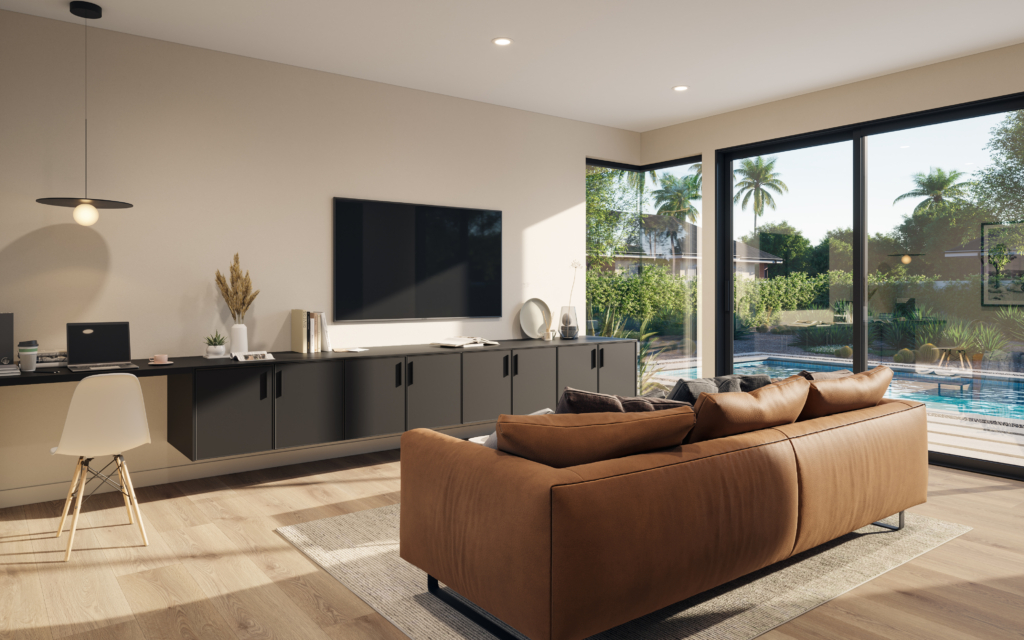
The Evolution of the Personal Retreat
The concept of man cave decor has transformed dramatically in recent years.
What once signified a hand-me-down couch and a television balanced on milk crates has become something far more intentional.
And rightly so.
According to the Bureau of Labor Statistics, men spend an average of 5.5 hours daily engaged in leisure activities.
That is a significant portion of life dedicated to unwinding, so it probably deserves better than a borrowed basement.
On top of that, the global bars and nightclubs market reached $101.9 billion in 2024, with sports bars leading the segment, clear evidence that men are eager to get into dedicated spaces for entertainment.
But when you’re out and about all the time, you’re sacrificing other things: proximity to family, for instance, or the ability to avoid spending too much money every time you want to unwind with friends.
Interior designers at HGTV have written about how the best man cave decor creates an atmosphere where interests become immersive experiences.
That can be achieved in sports bars with multiple screens, billiard rooms that rival private clubs, and home theaters where sound and darkness conspire to transport you elsewhere.
So after that, the question naturally becomes, where do you put all this in a home and make it work?
The Problem With Borrowed Space
Most man cave decor advice we’ve come across seems to assume you are working with what is left over, so that’s where we’re veering away from what you’ll traditionally find online as guidance here.
The unfinished basement springs to mind, as does the garage where the car used to live and the spare bedroom that never quite worked for anything else.
But what we’ve found is that borrowed space comes with borrowed compromises.
Your home theater disturbs the household, and your poker nights end early because the noise travels.
Or worse, your man cave decor choices (the vintage signs, the neon, the wall of guitars) clash with the aesthetic you and your partner have cultivated throughout the rest of the house.
That’s an interior designer’s worst nightmare!
These sorts of tensions, in our opinion, is not at all trivial because they impact the experience of living in a house as a whole, in a way that is disruptive where there should be cohesion.
With that in mind, it’s perhaps worth considering that a CNN survey of interior designers found that the most successful man caves share a common trait:
They exist as distinct environments, separated enough from daily household traffic that they feel genuinely like an escape.
That’s something we at MLC have found to be palpably true when building and designing homes.
Building Separation: The ADU Solution
Traditional man cave decor advice falls short when it tells you what to hang on the walls but not how to build walls worth hanging things on.
An ADU solves the separation problem entirely.
Instead of converting existing space, you create new space.
Instead of negotiating with the household aesthetic, you establish your own.
The ADU market has grown to $18 billion globally, driven partly by homeowners who want flexible space for work, guests, and, yes, personal retreats.
Building a dedicated structure for your man cave decor ambitions means soundproofing is built in from the start.
It means your cigar lounge does not leave your main house smelling like smoke, and it means the game goes into overtime without anyone asking you to turn it down.
What Man Cave Decor Really Requires
Before discussing leather recliners and neon beer signs, let’s talk about what your man cave decor actually needs from the building itself.
To begin with, we’ll go with two words: climate control.
Arizona summers exceed 115°F with brutal regularity.
Your man cave decor, from the pool table felt to the leather seating to the electronics, all suffer in poorly climate-controlled spaces.
Traditional garage conversions struggle with this; a purpose-built ADU handles it from the foundation up.
Then, there’s sound management.
We’ve found, through our building processes, that people want to watch games in immersive environments.
And that’s backed by the fact that the sports bar market alone holds billions of dollars of value.
Your home version needs sound that stays inside, and this requires planning during construction, not afterthought acoustic panels stapled to drywall.
And lastly, dedicated electrical.
Between the 75-inch television, the gaming console, the mini-fridge, the sound system, and whatever vintage arcade cabinet you have been eyeing, your man cave decor has major electrical demands that will need to be considered so you don’t overload your home.
A dedicated structure comes with dedicated circuits that will keep everything running without a hitch.
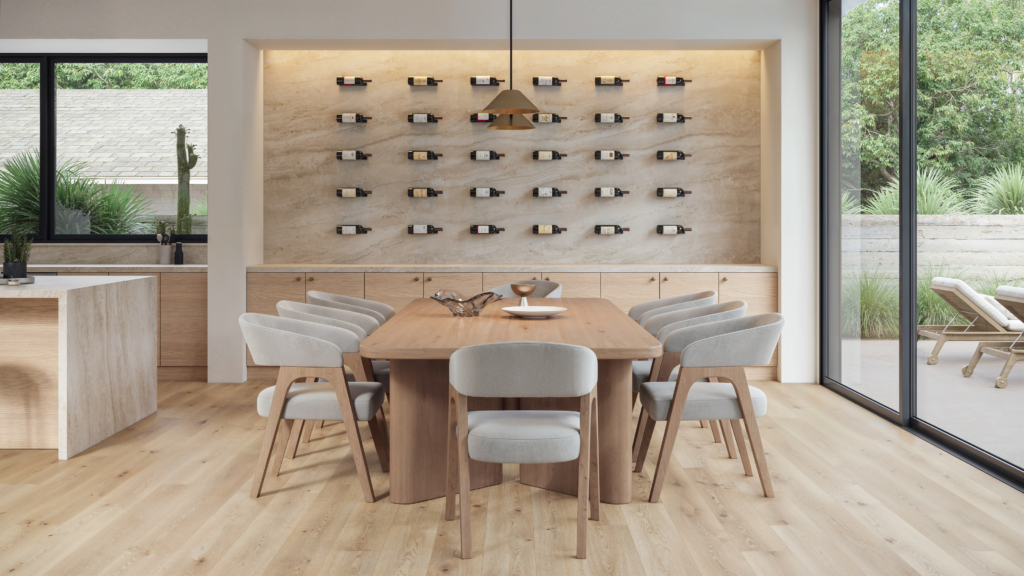
The Man Cave Decor Checklist
Once you have the right space, the fun begins (this is the part we really enjoy at MLC).
Here is what the best man caves share a lot of the time (with flexibility, of course):
- A focal point that reflects obsession.
This might be a home theater setup, a bar, a poker table, or a wall of memorabilia.
Whatever it is, it anchors the room and announces what matters to you. - Seating that invites staying.
We, among many designers, aim to highlight that large-scale upholstery with ample space around it creates the relaxed atmosphere a man cave requires. - Layered lighting.
Picture lights illuminate memorabilia, and dimmable overhead fixtures adjust for movie watching, while under-cabinet LEDs highlight the bar.
Man cave decor depends on lighting that adapts to its purpose. - Temperature-appropriate beverages.
This means either a mini-fridge or, if you are building a larger space like a DWELL two-bedroom, a proper wet bar with running water.
Why Arizona Makes This Possible
Senate Bill 1415 has expanded ADU opportunities across Arizona, making it easier than ever to add a structure to your property.
Phoenix homeowners can now build up to two ADUs on their lot, or three on properties over an acre.
The permitting process, while still requiring navigation, has become significantly more straightforward too.
And at MLC, our team handles permitting as part of the build process, which means you spend your energy on man cave decor decisions rather than zoning paperwork.
Our typical 8-month timeline includes everything from initial consultation to final inspection.
That’s where we do all we can to make the process as seamless and easy as it can possibly be.
The Investment Question
Building a dedicated man cave costs more than throwing a couch in the garage.
But if you’re already going to spend $20,000 to $50,000, which HomeAdvisor reports is the game room construction average on the higher end, then you need to make the investment worth it.
The good news is that, according to Remodeling’s Cost vs. Value Report, certain home additions return 100% or more of their investment, particularly those that add functional living space.
And that’s something we’ve seen in practice time and time again.
A dedicated ADU is also:
- Actual property value increase: Unlike a decorated garage that returns to being just a garage, an ADU adds permanent square footage to your property.
- Flexibility over time: Your man cave decor might evolve into a guest home when your interests change, or a rental property that generates income.
- Financing options that work: Because traditional construction adds tangible value, banks understand and readily finance these projects.
One of our clients, a Phoenix attorney with a passion for vinyl and vintage audio equipment, built a LIVE one-bedroom unit as his dedicated listening room.
He told us that he just could never have gotten the acoustics right in the main house, largely because he and his wife could never have tolerated speakers that size in the living room.
A new unit was the easy answer for him.
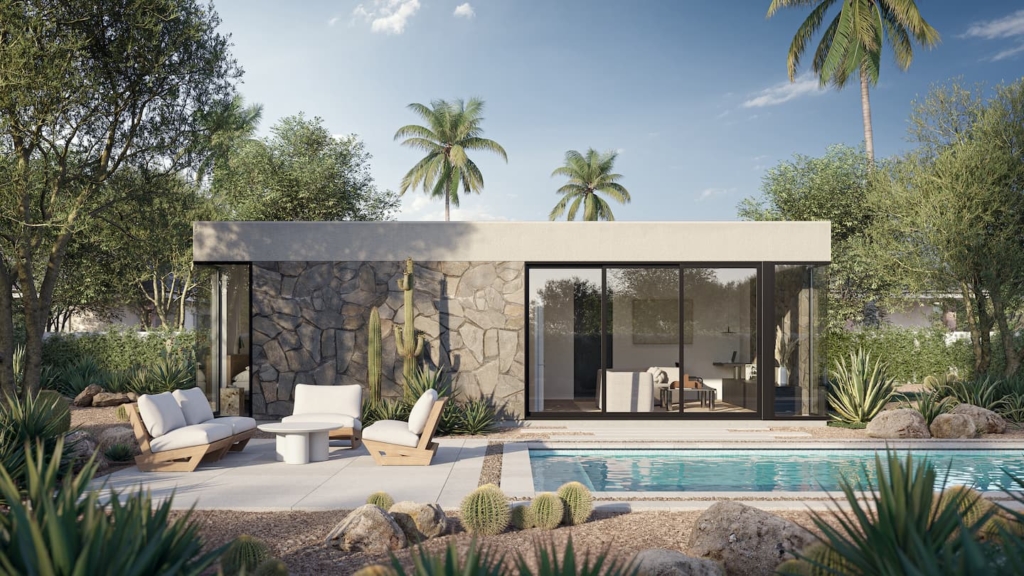
You Don’t Need Permission
Man cave decor is ultimately about building something that is entirely, unapologetically yours.
In shared households, this is rare.
Every room makes compromises, and every space negotiates between competing visions, but a dedicated structure in your backyard changes the equation.
It is not borrowed space, nor is it a converted space, and it shouldn’t be thought of as such when you’re trying to build something with investment value, something that lasts.
This is a space that exists because you decided it should, and there’s something thrilling but also, oddly, practical about that.
You can explore what that might look like by touring one of our completed units, if you’d like to.
Here, you can even walk through and imagine your man cave decor on those walls, your entertainment system in that climate-controlled comfort, your retreat just steps from your back door but a world away from everything else.
The basement is fine for storage, but in our minds, your sanctuary warrants its own foundation.
So, whether your vision involves a compact FLEX studio or a spacious LIVE+ design, it would be a joy for us to help you create the space you need to nourish your downtime and your interests.
Feel free to schedule a call with us, and we’d be delighted to better understand your needs and reflect on the many options you have available to you.